-
Die Evolution der Schärfe: Eine historische Zeitreise mit Capsaicin 🌶️
Das Phänomen der Schärfe beim Essen wird im Alltag meist rein kulinarisch bewertet. Aus evolutionsbiologischer und historischer Sicht handelt es sich dabei jedoch um ein hocheffizientes Abwehrsystem der Natur, das vom Menschen gezielt umgangen und für eigene Zwecke modifiziert wurde.
Die visuelle Telemetrie zeigt die schrittweise Transformation von der unstrukturierten biologischen Rohmasse bis zum finalen Aggregatzustand auf dem Teller.
Das initiale System-Setup vor dem Start
1/60s f/5 ISO 250/25° 16-50mm f/2,8 VR f=30mm/45mm
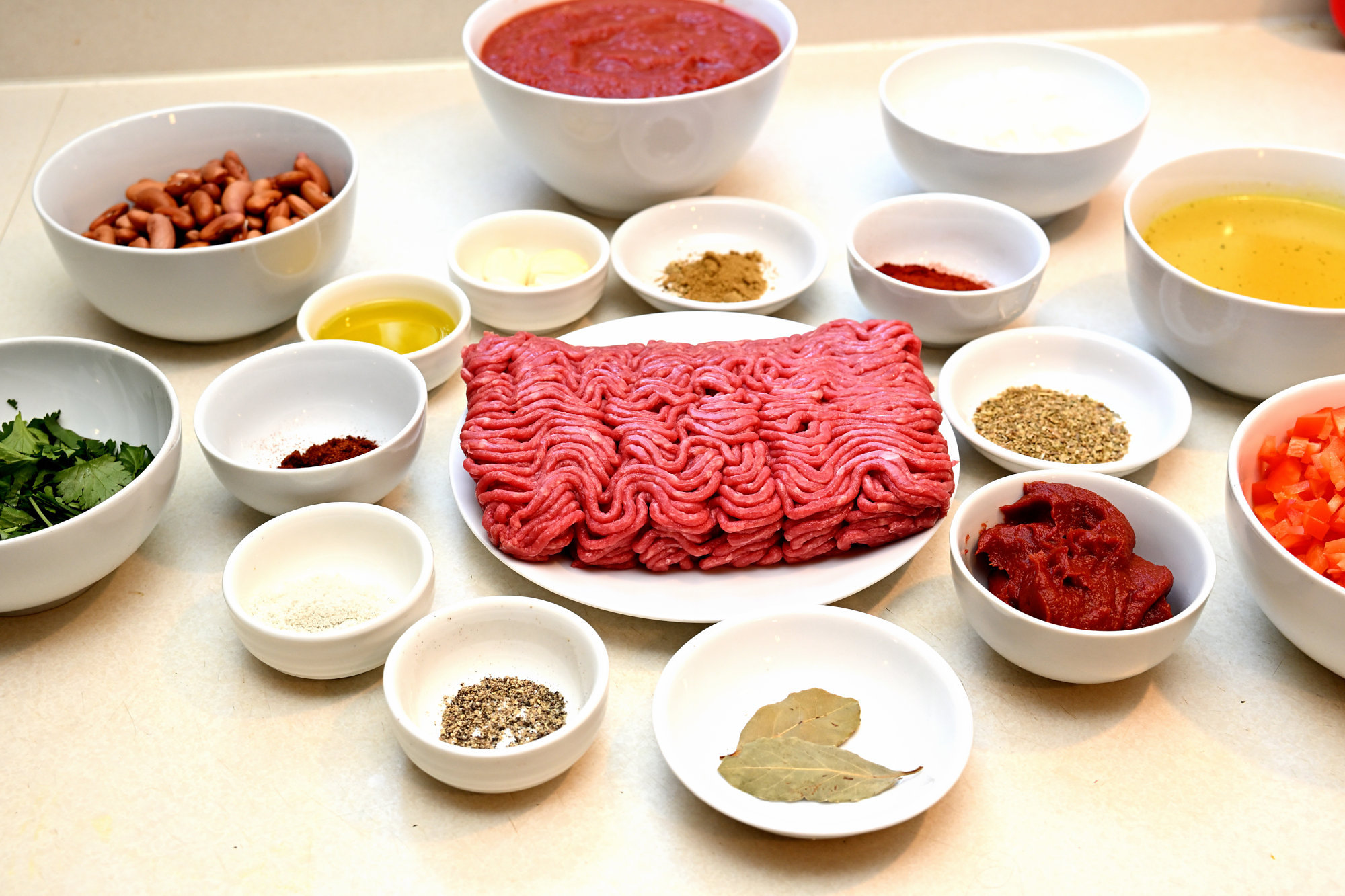
Chilis verdanken ihre Schärfe dem Alkaloid Capsaicin. Aus Sicht der Evolution ist dieser Stoff eine reine Abwehrwaffe. Pflanzen der Gattung Capsicum entwickelten den Mechanismus, um Säugetiere vom Verzehr abzuhalten, da deren Verdauungstrakt die Samen zerstört. Vögel hingegen besitzen keine Rezeptoren für Capsaicin; sie fressen die Früchte unbeschadet und sichern die Evolution der Pflanze durch die unversehrte Ausscheidung der Samen.Thermische Transformation im Kochgefäß
1/60s f/5 ISO 250/25° 16-50mm f/2,8 VR f=22mm/33mm
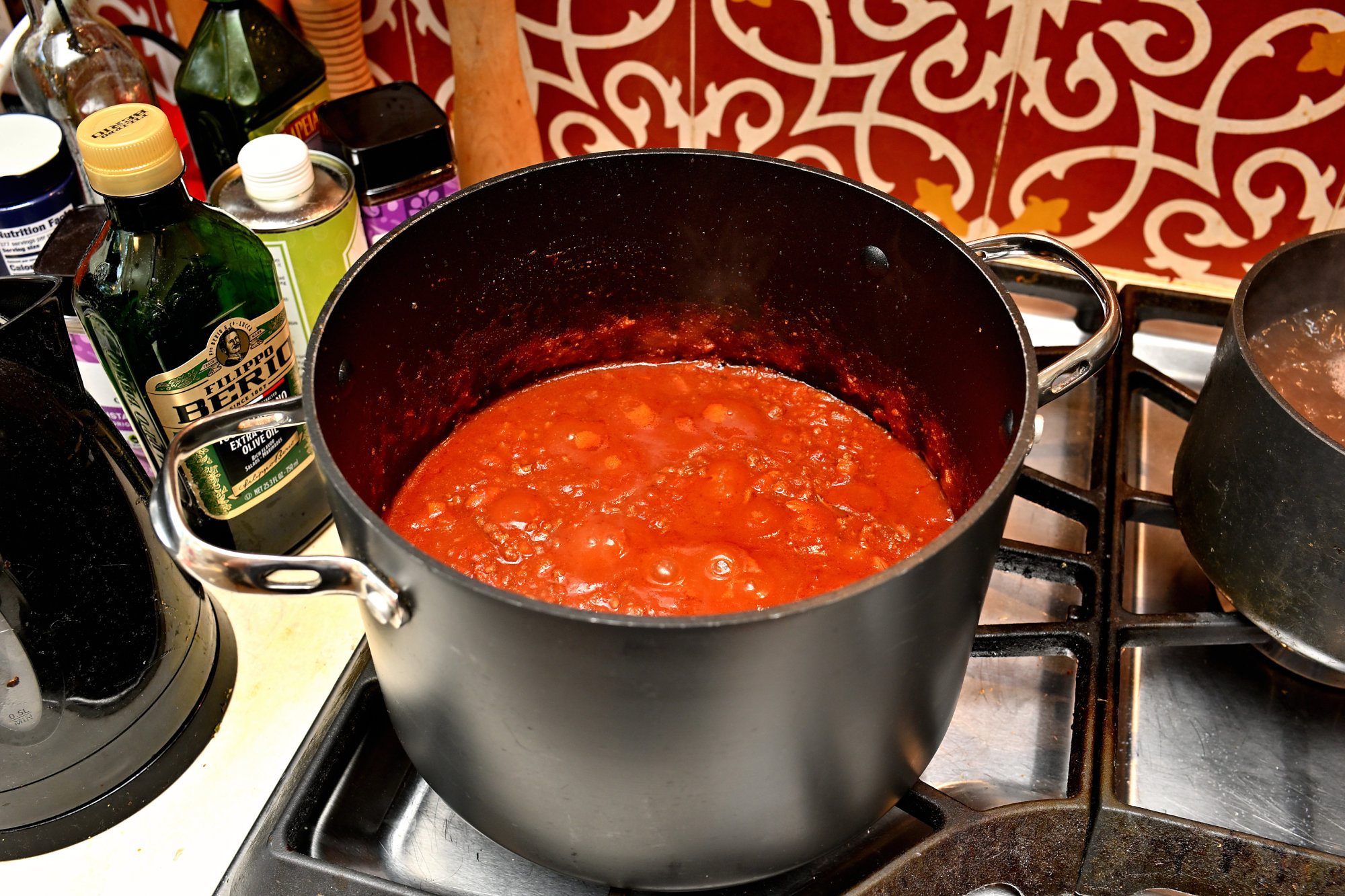
Die menschliche Reaktion auf diesen Abwehrmechanismus ist paradox: Statt die Pflanze zu meiden, kultiviert die Menschheit Chilis seit fast 10.000 Jahren und züchtet sie systematisch auf höhere Capsaicin-Konzentrationen. Beim Verzehr dockt das Molekül an die TRPV1-Rezeptoren1 der Nervenenden an. Diese sind eigentlich für die Erkennung von thermischer Hitze (ab 43 °C) zuständig. Dem Gehirn wird somit eine akute Verbrennung signalisiert, obwohl keine reale Gewebeschädigung stattfindet.Der biochemische Puffer (die vegetarische Begleitkomponente)
Ein reines Chili stößt schnell an die Grenzen der menschlichen Sensorik. Als funktionale System-Erweiterung auf dem Teller dienen hier selbstgemachte, fleischlose Gemüse-Patties.
1/60s f/5 ISO 250/25° 16-50mm f/2,8 VR f=22mm/33mm
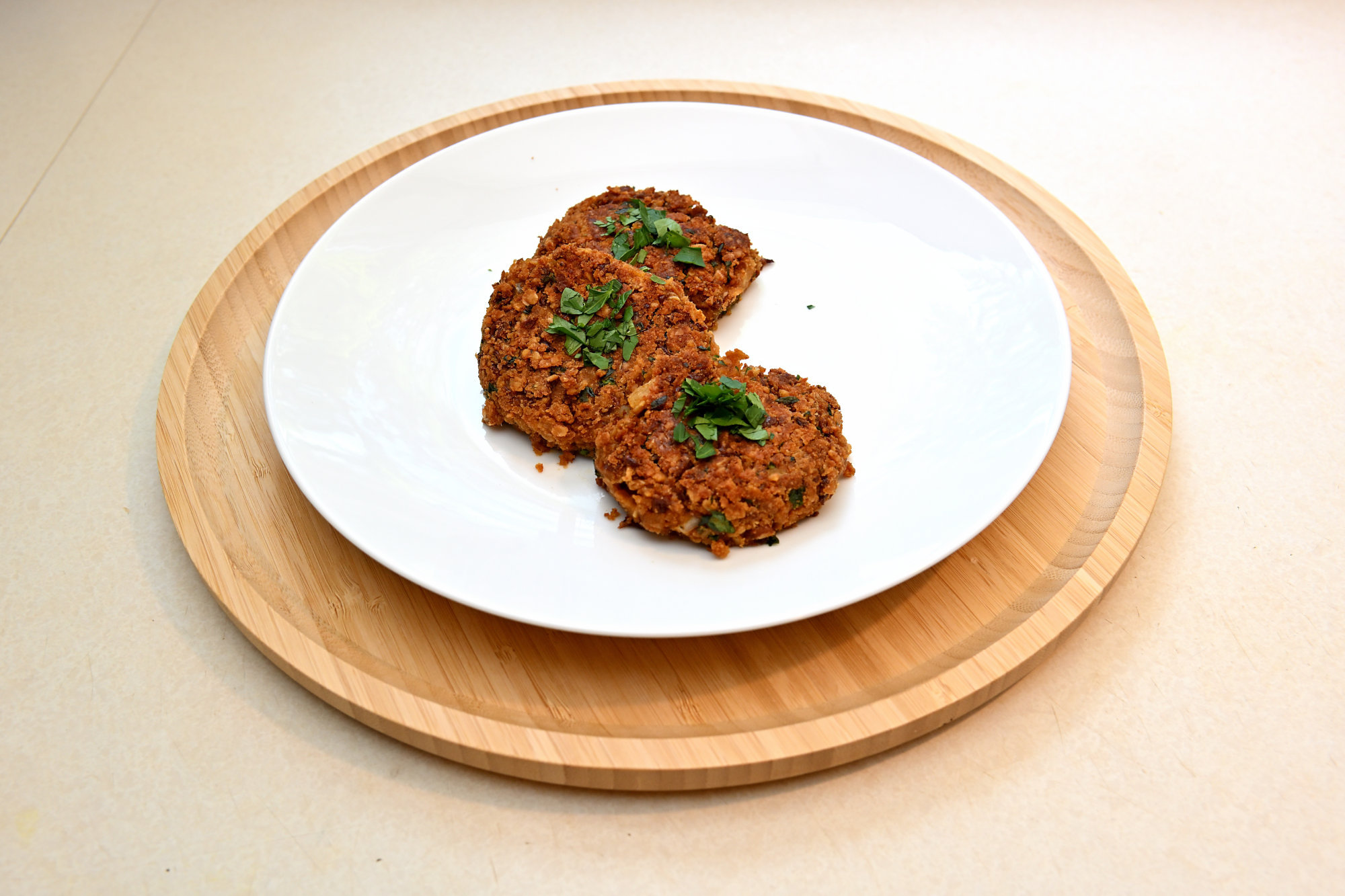
Das ist keine reine Geschmacksentscheidung, sondern angewandte Biochemie: Capsaicin ist extrem lipophil (fettlöslich). Die pflanzlichen Öle und Fette, die beim Anbraten der Patties zum Einsatz kommen, binden das Capsaicin im Mundraum und lösen es sanft von den TRPV1-Rezeptoren. Zusätzlich sorgt diese Kombination für ein biologisches Nährstoff-Upgrade: Die in den Chilis reichlich vorhandenen Vitamine A und E sind ebenfalls fettlöslich. Ohne die Fett-Matrix der angebratenen Gemüse-Patties könnte der menschliche Verdauungstrakt diese essenziellen Verbindungen gar nicht aufspalten und verwerten.Historischer Exkurs: Spuren der globalen Verbreitung
Abseits der Biologie hat die Verbreitung der Schärfe die Weltgeschichte durch höchst eigenwillige Dynamiken beeinflusst:
🌋 Die taktische Barriere der Maya
Bei kriegerischen Auseinandersetzungen verbrannten die Maya getrocknete Chilis im Wind. Der entstehende Rauch wirkte auf die feindlichen Linien wie ein primitives Tränengas. Es gilt als einer der frühesten dokumentierten Einsätze biologischer Reizstoffe in der Kriegsführung.
🦜 Der selektive Gartenfilter
Da die Schärfewahrnehmung bei Vögeln nicht existiert, nutzt die moderne Biologie Capsaicin-Pulver im Vogelfutter. Es fungiert als rein mechanischer Filter: Eichhörnchen und Nagetiere meiden das Futter aufgrund des brennenden Reizes, während Vögel die Nahrung ungestört aufnehmen können.
🧭 Das Pfeffer-Dilemma von Kolumbus
Als Christoph Kolumbus 1492 auf der Suche nach schwarzem Pfeffer in Amerika landete, stieß er auf die scharfen Schoten. Um seine europäischen Geldgeber zu beruhigen und den wirtschaftlichen Erfolg der Expedition zu sichern, deklarierte er sie fälschlicherweise als Verwandte des Pfeffers. Daher stammt die bis heute anhaltende begriffliche Verwirrung im englischen Raum (Chili Pepper).
Die kulinarische Komposition
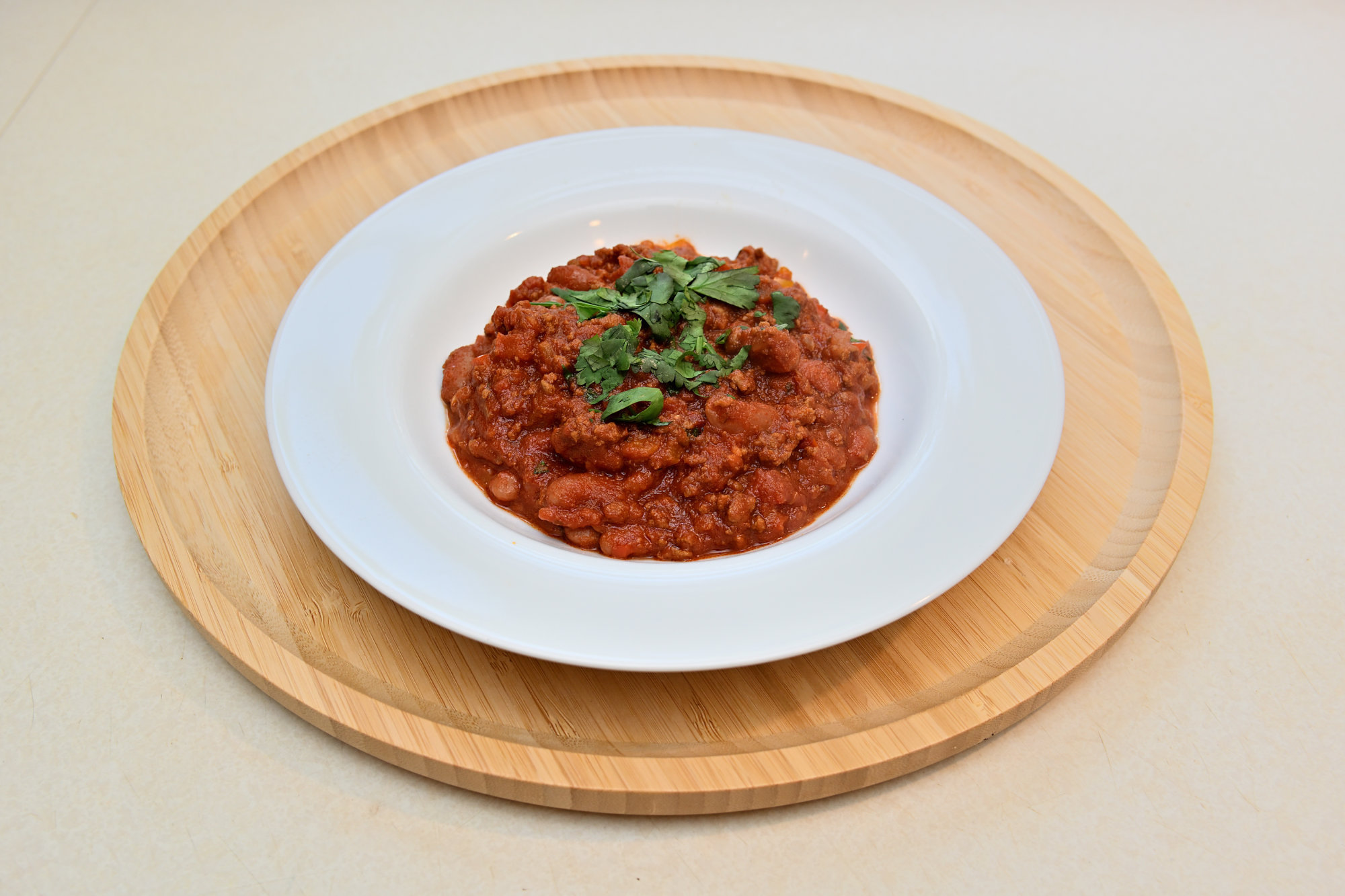
Am Ende steht ein vollendeter Teller auf dem Tisch. Das Zusammenspiel aus thermischer Hitze und der chemischen Täuschung unseres Nervensystems schließt den Kreis einer jahrtausendealten Evolutionsgeschichte.
Und während das Gehirn noch die simulierte Kernschmelze verarbeitet, meldet der restliche Organismus bereits die mit Abstand beste Mahlzeit der Woche.
1/60s f/5 ISO 250/25° 16-50mm f/2,8 VR f=22mm/33mm

[SYSTEM-LOG: Global release deployment successfully verified at: [0x7B774C:0x1E]]
-
Für die Entdeckung des TRPV1-Capsaicin-Rezeptors wurde 2021 der Nobelpreis für Medizin verliehen. Siehe offizielle Pressemitteilung des Nobelpreiskomitees: The Nobel Prize in Physiology or Medicine 2021. ↩
-
-
Der digitale Zombiemodus: Über die organisierte Verkümmerung unserer Neugier
Dopamin auf Knopfdruck
Wir leben in einer Welt, die geistig schleichend verkümmert, und wer heute noch einen Funken echter Kreativität in sich trägt, kann dabei fast schon schmerzhaft zusehen. Jeden Tag blicken wir in Gesichter, die stundenlang vom fahlen Licht ihrer Smartphones erleuchtet werden. Menschen, die im Sekundentakt durch endlose Timelines rutschen, Tausende von Beiträgen abklicken, scrollen und wischen, als wäre Aufmerksamkeit eine Ressource, die man ohne Folgen verbrauchen kann. Das ist kein harmloser Zeitvertreib. Das ist ein systematischer Ausverkauf unserer Aufmerksamkeit.
Unsere Schaltzentrale wird im Dauerfeuer mit billigen Dopamin-Häppchen vollgestopft. Am Ende des Tages bleibt von diesem gigantischen Konsum absolut nichts hängen. Keine tiefe Erkenntnis, keine echte Spur, kein echtes Staunen. Es ist eine organisierte Aufmerksamkeitsökonomie, die uns systematisch die Fähigkeit raubt, uns auf eine Sache einzulassen.
Schon 1971 stellte der Nobelpreisträger Herbert A. Simon fest: Ein Überfluss an Information erzeugt einen Mangel an Aufmerksamkeit. Heute ist genau das unser Alltag: Informationen gibt es im Überfluss, aber unsere Aufmerksamkeit ist das eigentliche, knappe Gut. Und weil die Apps nichts kosten, sind wir nicht die Kunden, sondern die Ware, deren Lebenszeit sekundenweise an die Werbeindustrie verscherbelt wird.
Wir sind längst so unbemerkt an diesen Zustand gewöhnt, dass uns der schleichende Fokusverlust im Alltag kaum noch auffällt. Die Neugier stirbt im Rauschen des Algorithmus.
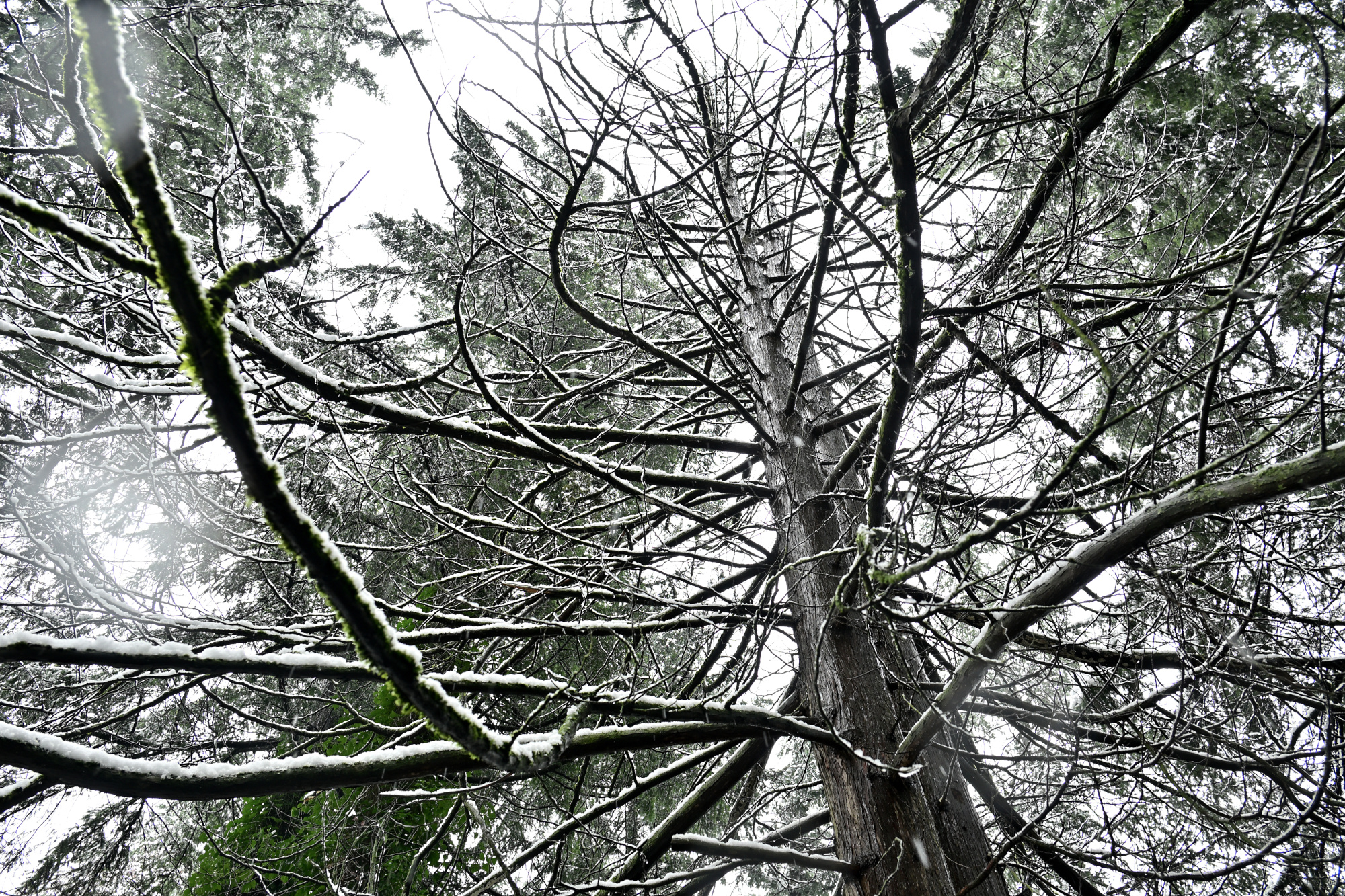
Vom Konsumenten zum Entdecker
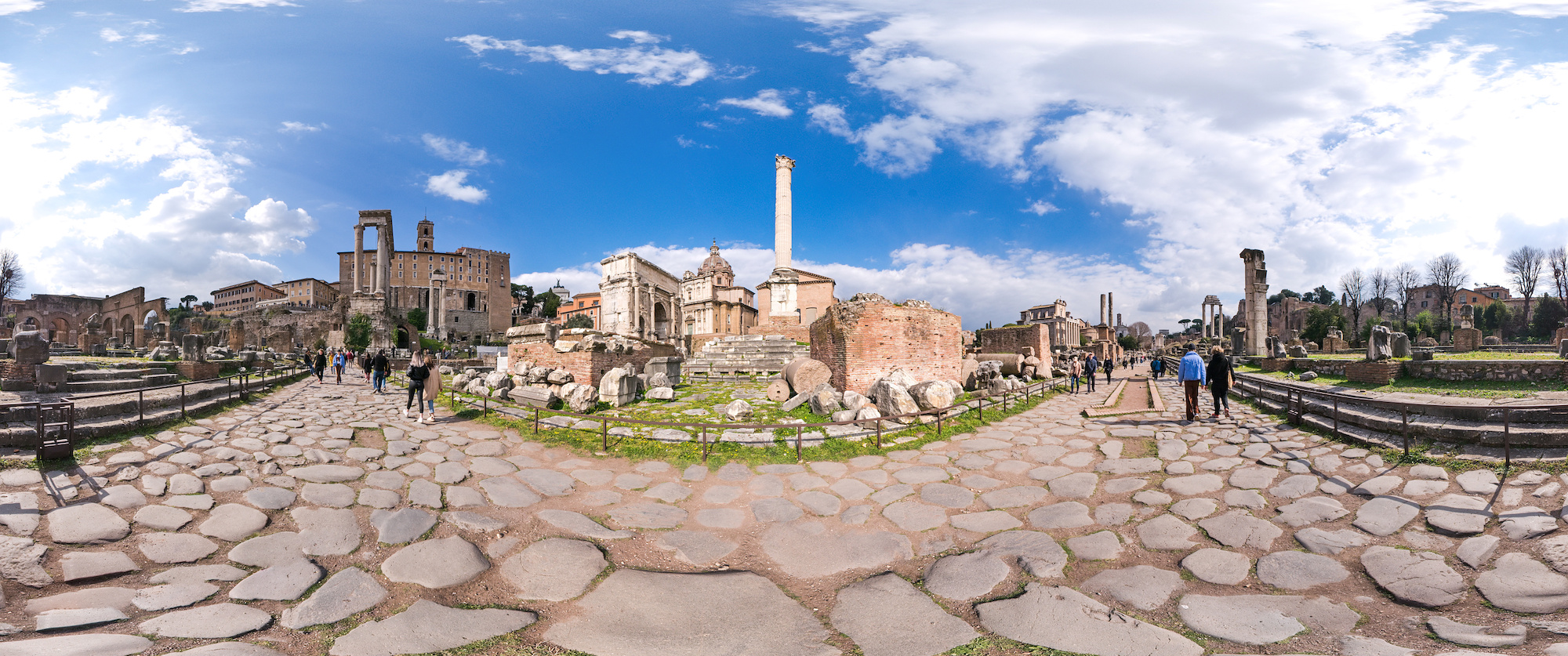
Dabei braucht es gar nicht viel, um aus dieser Routine auszubrechen. Oft reicht es schon, einfach mal wieder genauer hinzusehen.
Vor kurzem habe ich mitten in der Nacht drei einfache Freihand-Fotos von der partiellen Mondfinsternis gemacht. Ein paar schnelle Schnappschüsse, aus denen man einen standardmäßigen, faden Während-ihr-scrollt-Post hätte machen können: "Guck mal, der Mond war dunkel. Like hier." Kurz hochgeladen, kurz abgehakt.
Der eigentliche Unterschied liegt nicht im schnellen Post selbst, sondern darin, ob man dabei bleibt oder weiterfragt, sich vertieft und die Welt hinter dem ersten Eindruck zu entdecken beginnt.Vom kollektiven Erblindungsprozess
Statt gemeinsam staunend Neues zu entdecken, starrt man allzu oft isoliert in den eigenen Feed. Die digitale Wüste flutet uns mit ständiger Ablenkung und lässt uns verlernen, die reale Welt gemeinsam zu betrachten. Nicht, weil wir unfähig sind, sondern weil wir systematisch auf passive Reizaufnahme trainiert werden.

Doch wer die Welt mit der Kamera einfängt, sucht meistens nach mehr als nur nach dem nächsten flüchtigen Klick. Statt das Erlebnis einfach nur passiv abzuhaken, lohnt es sich, tiefer zu graben. Aus den paar Bildern kann ganz schnell eine faszinierende Reise durch die Physik unseres Planeten, die Astronomie und die Evolutionsbiologie werden.
Es ist absolut faszinierend zu lernen, dass das rote Leuchten des Blutmonds die Summe aller weltweiten Sonnenuntergänge ist. Oder dass Mistkäfer die Milchstraße als Navigations-Turbo nutzen, um ihr leckeres Mittagessen auf dem kürzesten Weg in Sicherheit zu bringen.

Genau hier liegt die Grenze zwischen digitaler Verdummung und echtem Fortschritt. Man sollte moderne Technologie und künstliche Intelligenz genau so nutzen: als einen unermüdlichen Sparringspartner, der einem hilft, die Welt besser zu verstehen, Fakten zu hinterfragen und die eigene Kreativität anzukurbeln, anstatt uns mit dem nächsten Algorithmus-Häppchen zu betäuben.
Erwischen verboten
Was in dieser digitalen Wüste am meisten fehlt, ist das gemeinsame Entdecken von Neuem. Früher hat man sich über skurrile Fakten oder faszinierende Phänomene unterhalten und sich gegenseitig inspiriert.

Heute verliert sich dieser Austausch jedoch im Rückzug auf den eigenen, maßgeschneiderten Feed, wodurch das gemeinsame Staunen gegen virtuelle Berieselung eingetauscht wird.
Wenn Kurzantworten die Kommunikation auf Werkseinstellungen schrumpfen lassen
Ein erschreckendes Symptom dieser digitalen Überfütterung zeigt sich im alltäglichen Kommunikationsverhalten. Wer heute komplexe Ideen, kreative Ansätze oder durchdachte Gedanken mit seinen Mitmenschen teilt, erntet immer häufiger statt eines echten Gesprächs nur noch ein einsilbiges, digitales Abwinken. Ein kurzes Cool, Passt oder ein simples 👍 muss reichen. Mehr kommt nicht. Stundenlang Reels durchrattern, aber dann an der Antwort sparen.
Diese einsilbige Reaktion entspringt der reinen Bequemlichkeit und ist der Notlaufmodus eines dauerhaft überreizten Verstandes. Wenn das Belohnungssystem permanent mit perfekt optimierten Reizen gefüttert wird, stumpfen die grauen Zellen gegenüber normalen, alltäglichen Impulsen ab. Das Normale und auch die echte, stille Qualität alltäglicher Dinge werden dadurch schlichtweg zu langweilig.
Das Ergebnis ist ein kollektiver Abstumpfungsprozess, der unsere gesamte Gesellschaft erfasst. Echte Kreativität und tiefgründige Themen erfordern vom Betrachter geistige Anstrengung, weil man sich darauf einlassen und mitdenken muss. Der Bildschirm verleitet zum Gegenteil: Hier muss man weder aktiv werden noch nachdenken oder Fehler riskieren.
Eigene Hobbys oder Kreativität erfordern jedoch Anstrengung. Diese Anstrengung fällt uns immer schwerer, weil der schnelle Kick auf dem Sofa viel leichter zu haben ist. Im passiven Konsumrausch geht uns schlicht die Übung in dieser Form der aktiven Zuwendung verloren. Der schnelle, mühelose Konsum auf dem Bildschirm hat die Messlatte so hoch gelegt, dass das echte Schaffen daneben verblasst.
Das standardisierte, hingeworfene Wort ist somit kein Zeichen von lässiger Zustimmung. Es ist der Schutzreflex eines erschöpften Geistes, der die mentale Energie für eine echte Interaktion gar nicht mehr aufbringen kann.
Das Methusalem-Paradoxon
Besonders skurril wird es, wenn man die ältere Generation beobachtet. Man sollte meinen, wer die Sechzig überschritten hat, nutzt seine im Leben gewonnene Weisheit als Schutzschild gegen diesen digitalen Unfug. Doch Pustekuchen. Statt altersweiser Gelassenheit sieht man oft dieselbe Abstumpfung wie bei der TikTok-Jugend.

Da stellt sich unweigerlich die kritische Frage: Wie mächtig müssen diese Algorithmen sein, wenn sie selbst jahrzehntelange Lebenserfahrung und Disziplin einfach aushebeln? Es zeigt, dass wir es nicht mit einem Mangel an Verstand zu tun haben, sondern mit einer Technologie, die unsere biologischen Schwachstellen perfekt auszunutzen weiß.
Aber am Ende liegt es an uns selbst, den Blick vom Bildschirm zu heben, die Systeme zu durchschauen und die Kontrolle zurückzugewinnen.
Wir ertappen uns ja alle hin und wieder selbst dabei, wie wir kostbare Lebenszeit an sinnlose Klicks verschwenden. Man muss über diese eigene Schwäche auch einfach mal lachen können. Aber genau das ist der Punkt: Wer über sich selbst lachen kann, hat zumindest noch ein Fünkchen Bewusstsein übrig. Der Rest scrollt einfach stumm weiter ins geistige Nirwana.
Den Stecker ziehen
Wir müssen lernen, Technologie wieder als Werkzeug für unsere echte, kindliche Neugier zu begreifen.
Wenn du das nächste Mal etwas siehst, das dein Interesse weckt, sei es der Mond am Himmel, ein seltsames Insekt auf dem Boden oder eine verrückte Struktur in der Natur: Klick nicht weiter. Nutze die Werkzeuge, die dir zur Verfügung stehen, um zu lernen, zu hinterfragen und zu kreieren.
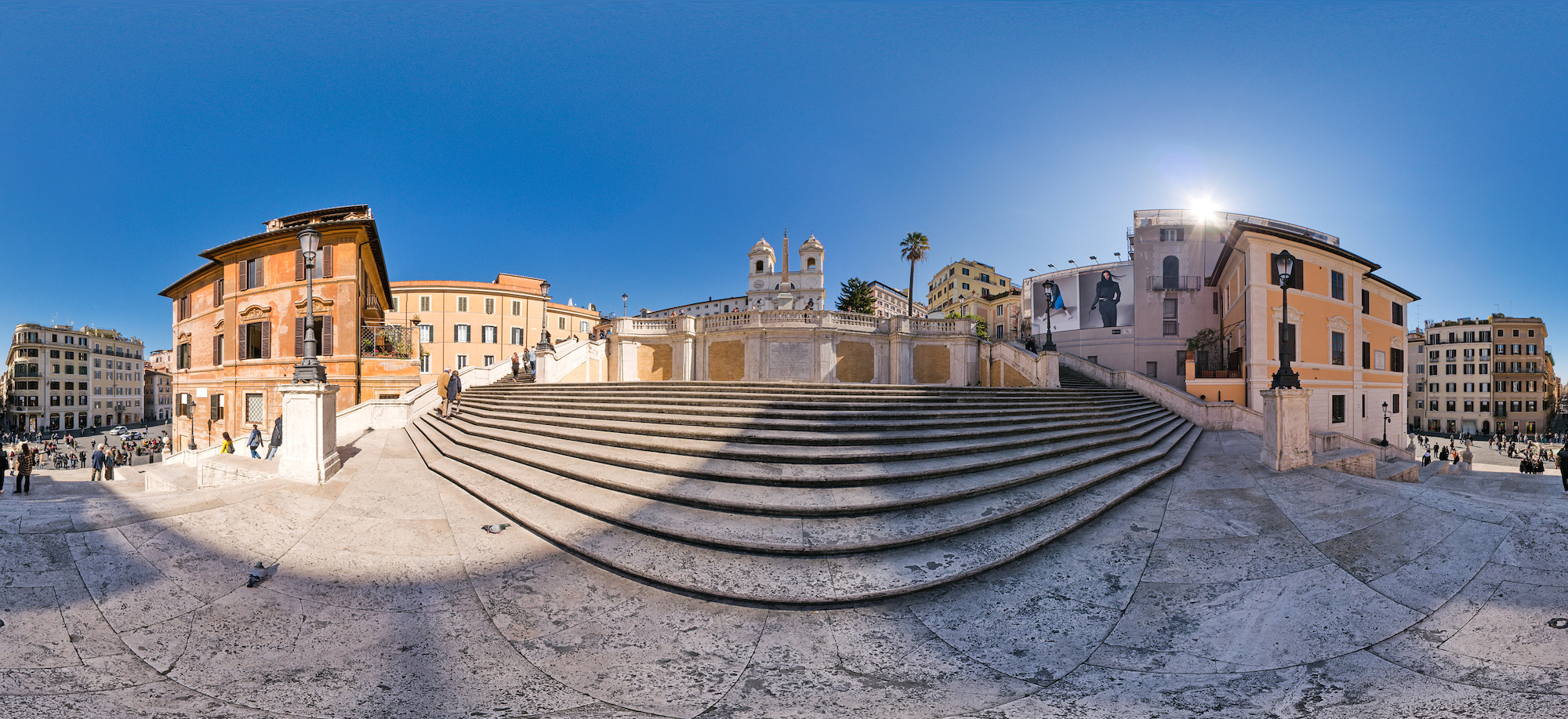
Der geistige Verfall erreicht uns erst dann, wenn wir aufhören, selbst zu denken. Bleibt kreativ unruhig. Es gibt da draußen viel zu viel zu entdecken, um es für ein Endlosband aus Sekunden-Häppchen auf dem Bildschirm einzutauschen.
-
Independence Day. As Planned. 🎆
In 1776, the paperwork started. Two hundred and fifty years later, the celebration was still loud enough to be photographed.
3,0s f/13 ISO 100/21° 50-250mm f/4,5-6,3 VR f=175mm/262mm

1,3s 4s, 4s, 5s f/13 ISO 100/21° 50-250mm f/4,5-6,3 VR f=175mm/262mm

5s 3s 4s 1,6s f/13 ISO 100/21° 50-250mm f/4,5-6,3 VR f=175mm/262m

I have watched over twenty of them. Was only supposed to be here for one.
Actually, it all started with Internet Explorer. That was the reason for the trip. One year, a browser, and then back.
Internet Explorer 4. Internal build. Not available in stores.2
The reason the one-year plan did not end on schedule.
And remember America Online? 100 free hours. At 28.8k, that was about 1.2 GB of theoretical ambition.

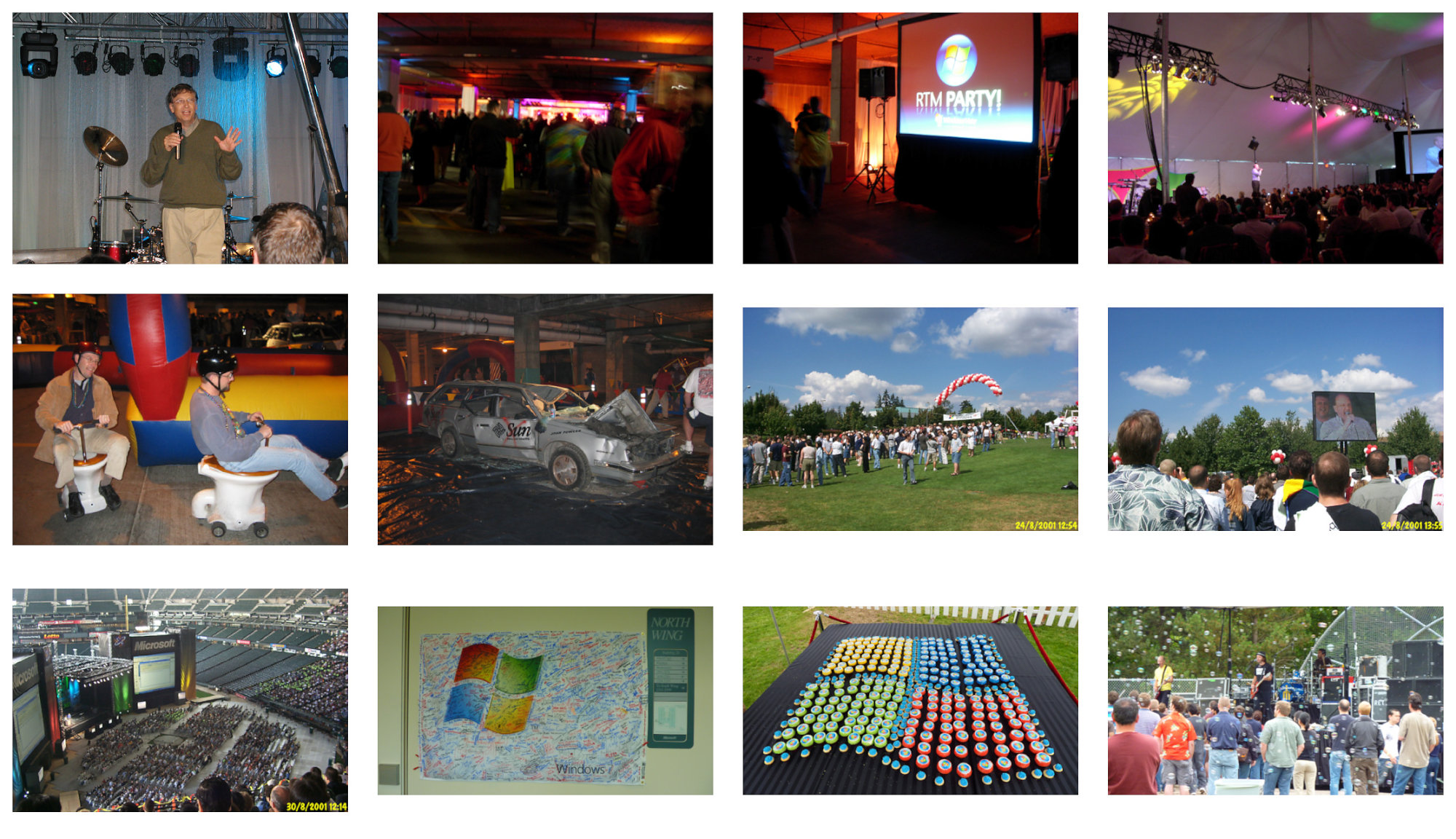
Eventually, there were ship parties.3
Major releases. Major parties.
The world kept changing around me. So did the work. The browser became Windows, the one you are probably running right now.
Windows Millennium Edition, Beta 2. The version before the version. Space Needle included.

Still waiting for first boot.

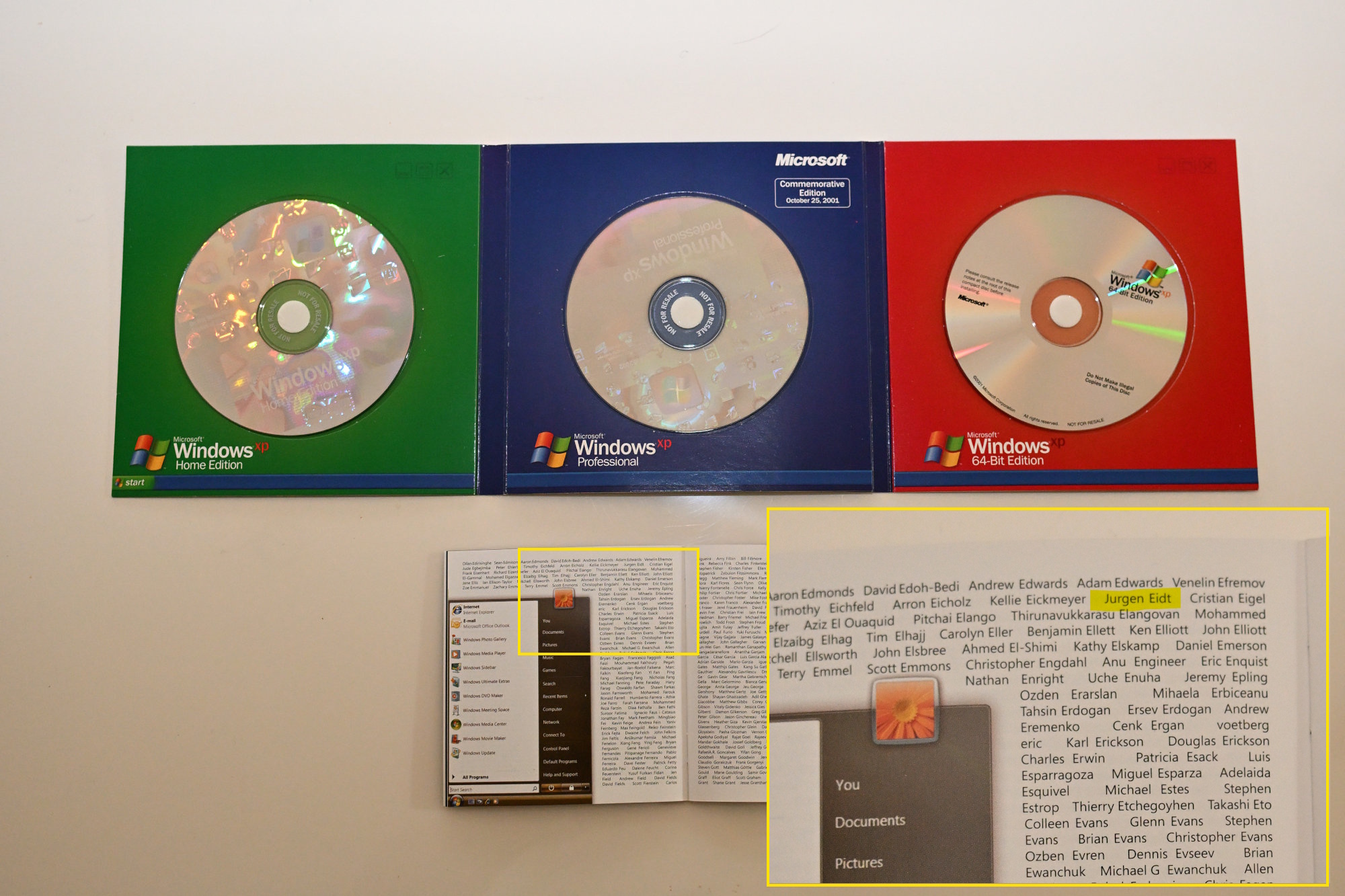
With the credits booklet. One highlight.
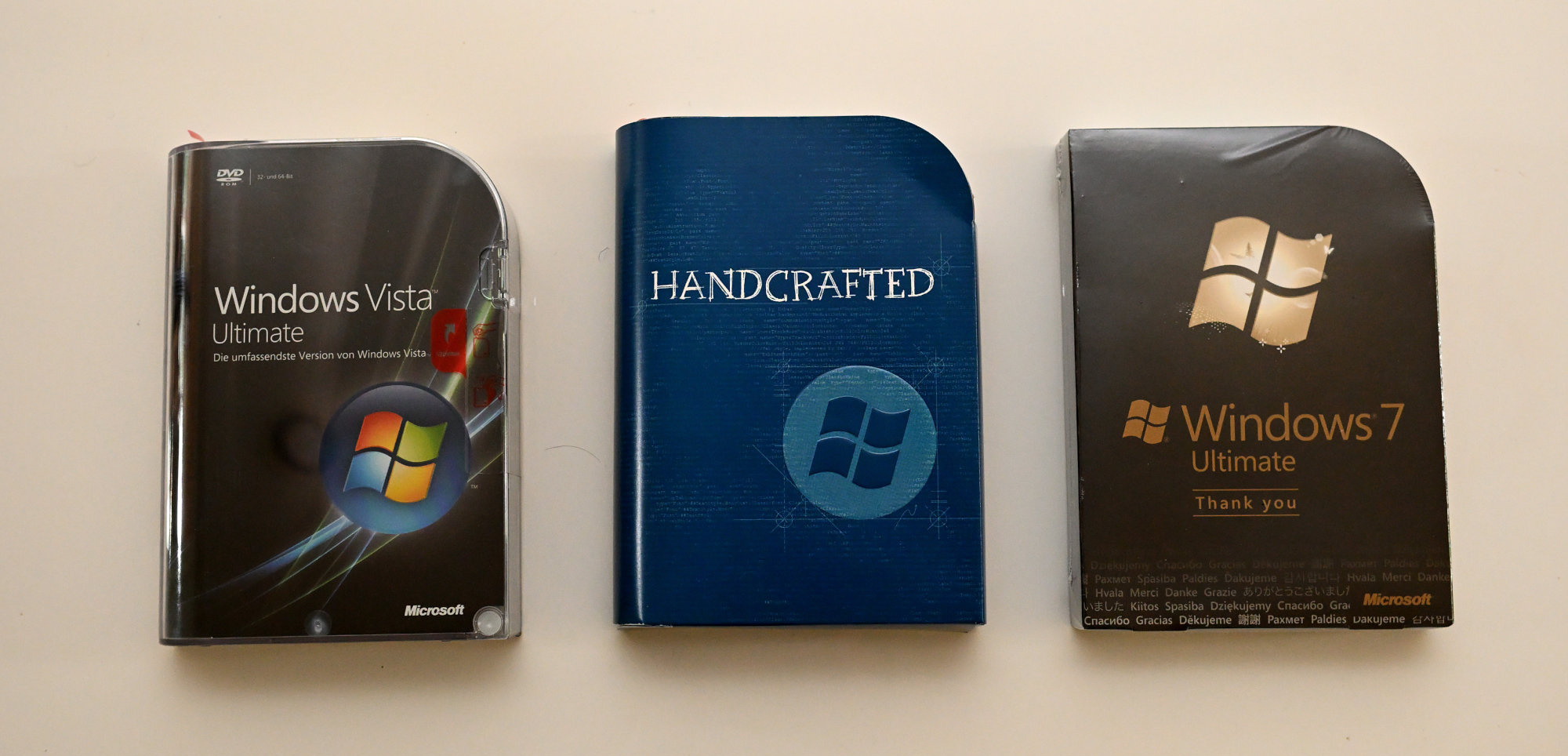
The foundation came first. The thank you came later.
And then AI arrived, and suddenly even the tools had tools. Maybe you asked one something today. That answer has a longer history than it looks.
The sky eventually reclaimed the agenda.
3,0s f/13 ISO 100/21° 50-250mm f/4,5-6,3 VR f=175mm/262mm

Photographing fireworks is practice in letting go of the plan. The light does what it wants. The camera catches what it can.4

The horizon always narrows, keeping your outlook undimmed. Rarely a moment ends entirely still.
-
Vault inventory was not loaded for this post. Selective deaccessioning is not out of the question. ↩
-
Release parties were the traditional proof that the build had escaped. Bill Gates is standing almost directly in front of me, making an announcement. I talked with him later. Another frame has Steve Ballmer on stage, doing exactly what you would expect. The 1990s were not subtle. ↩
-
Practical notes are here: Photographing Fireworks at a Distance 🎆. At 175 mm, even a tripod notices footsteps. ↩
-
-
Zwischen Code und Wok: Chow Mein
Chow Mein aus dem Wok 🍜
Nicht alles muss aus Code, Tools und Builds bestehen. Manchmal ist es ganz gut, zwischendurch etwas zu machen, das genauso viel Struktur hat, aber deutlich besser riecht. Diesmal: Chow Mein, also gebratene asiatische Nudeln mit viel Gemüse, Hitze aus dem Wok und genau diesem kurzen Moment, in dem aus einzelnen Zutaten plötzlich ein richtiges Gericht wird.
Ich mag an solchen Gerichten, dass sie schnell wirken, aber trotzdem präzise sind. Alles wird vorbereitet, liegt bereit, und dann geht es Schlag auf Schlag. Fast ein bisschen wie bei einem Deployment: Wenn das Setup stimmt, läuft der Rest sauber durch. Nur eben mit Knoblauch, Sojasauce und Sesamöl statt Logs und Pipelines.
Am Ende ist Chow Mein genau das, was gute Küche oft ist: unkompliziert, direkt und voller Aroma. Hier ein paar Bilder vom Entstehen.
Alle Zutaten im Überblick
Bevor der Wok heiß wird, kommt erst einmal Ordnung auf die Arbeitsfläche: Nudeln, Gemüse, Sauce und alles, was später in wenigen Minuten zusammenfinden soll. Bei so einem Gericht ist die Vorbereitung fast die halbe Miete.
1/40s f/5,6 ISO 100/21° 16-50mm f/2,8 VR f=32mm/48mm

Im Wok: die ersten Schritte
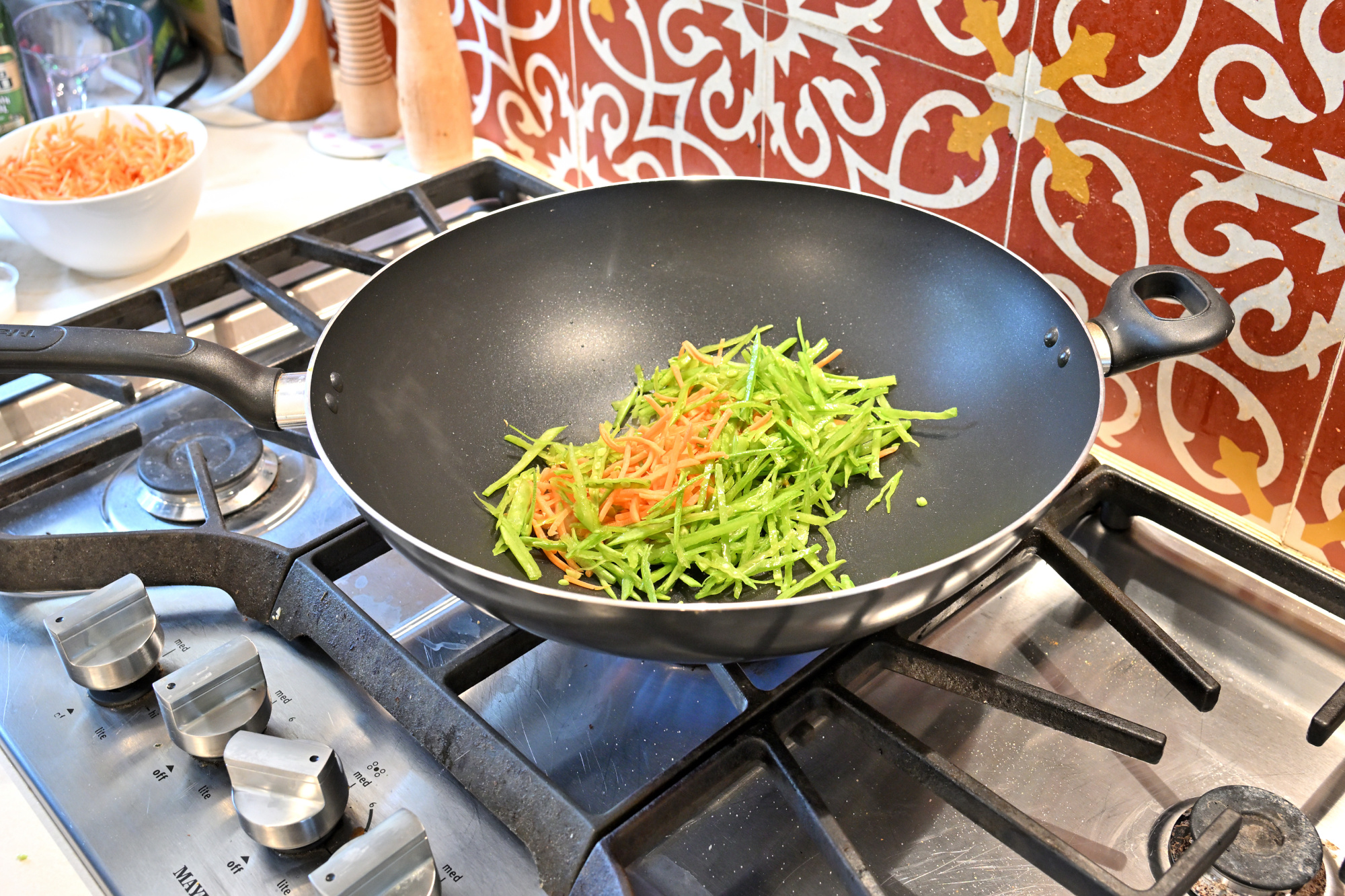
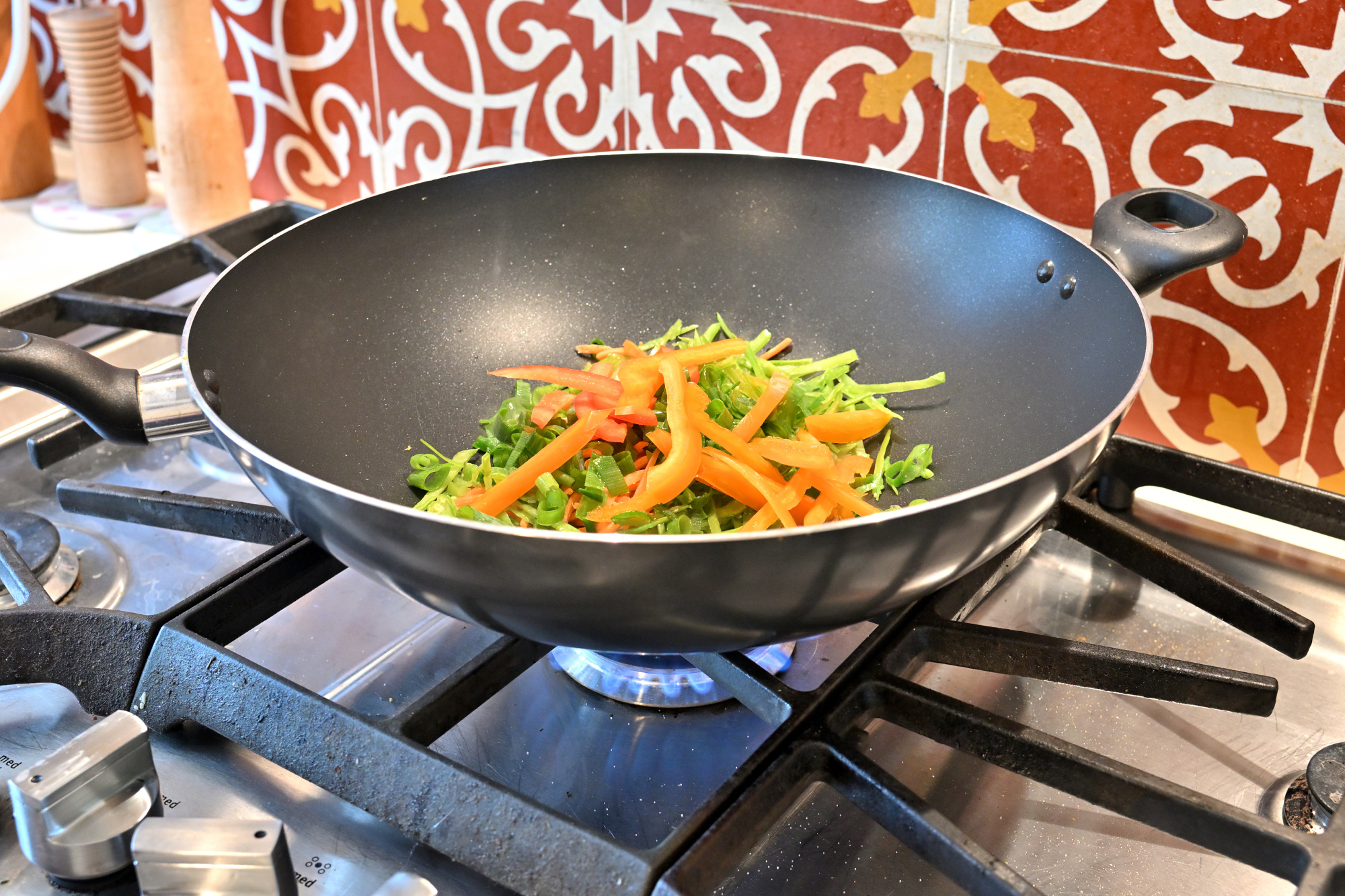
Jetzt wird es ernst. Das Gemüse kommt in den heißen Wok, alles bleibt in Bewegung, und nach den ersten Sekunden entsteht schon dieser typische Duft, bei dem klar ist: Das wird gut.
1/40s f/5 ISO 800/30° 16-50mm f/2,8 VR f=24mm/36mm
1/40s f/5 ISO 800/30° 16-50mm f/2,8 VR f=28mm/42mm
Im Wok: Nudeln und Sauce dazu
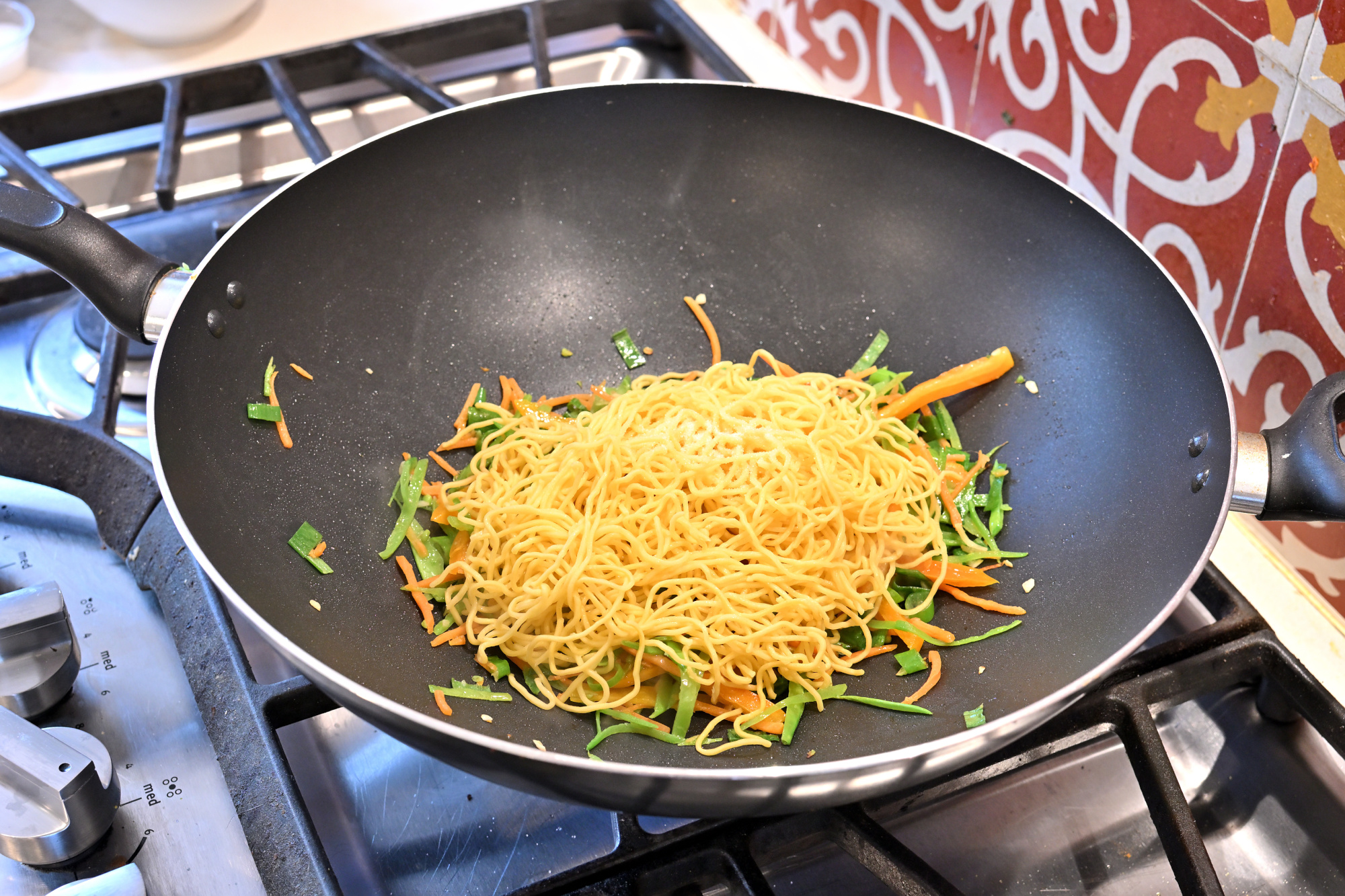
Sobald die Nudeln dazukommen, wird aus Vorbereitung ein Gericht. Die Sauce verbindet alles, der Wok gibt Röstaromen dazu, und plötzlich sieht es nicht mehr nach Zutaten aus, sondern nach Abendessen.
1/40s f/5 ISO 500/28° 16-50mm f/2,8 VR f=32mm/48mm
Kurz vor dem Finale
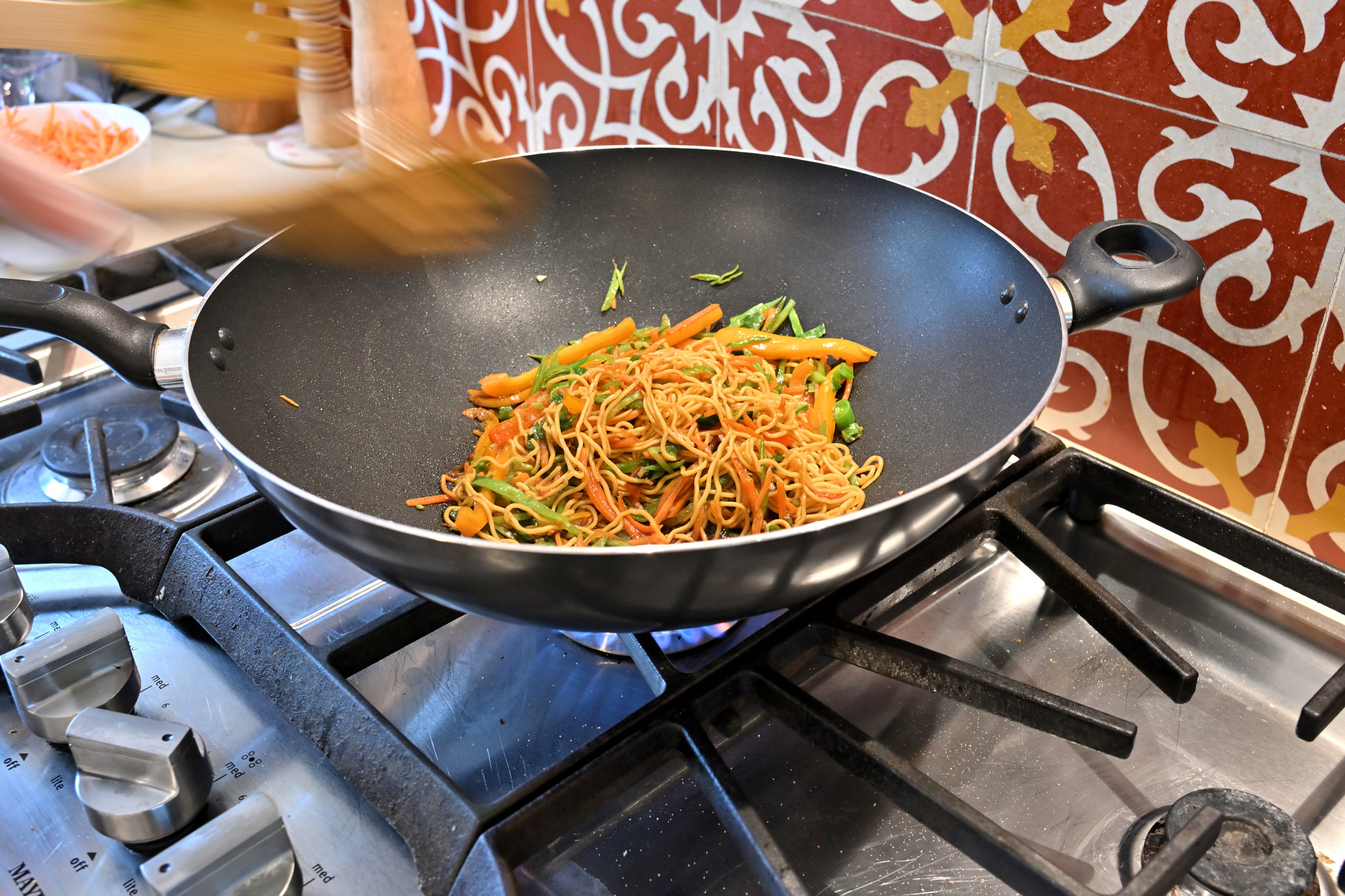
Jetzt passt alles zusammen: Farbe, Struktur und genau die Mischung aus gebraten, saftig und leicht karamellisiert, die Chow Mein ausmacht. Noch ein letzter Schwung im Wok, dann kann angerichtet werden.
1/40s f/5 ISO 500/28° 16-50mm f/2,8 VR f=24mm/36mm
Auf dem Teller
Fertig. Ein Teller Chow Mein, frisch aus dem Wok, heiß, würzig und genau richtig für einen Beitrag, der ausnahmsweise nicht von Technik handelt. Wobei: Ein gutes Ergebnis nach sauberer Vorbereitung ist am Ende doch wieder ziemlich vertraut.
1/40s f/5 ISO 100/21° 16-50mm f/2,8 VR f=33mm/49mm

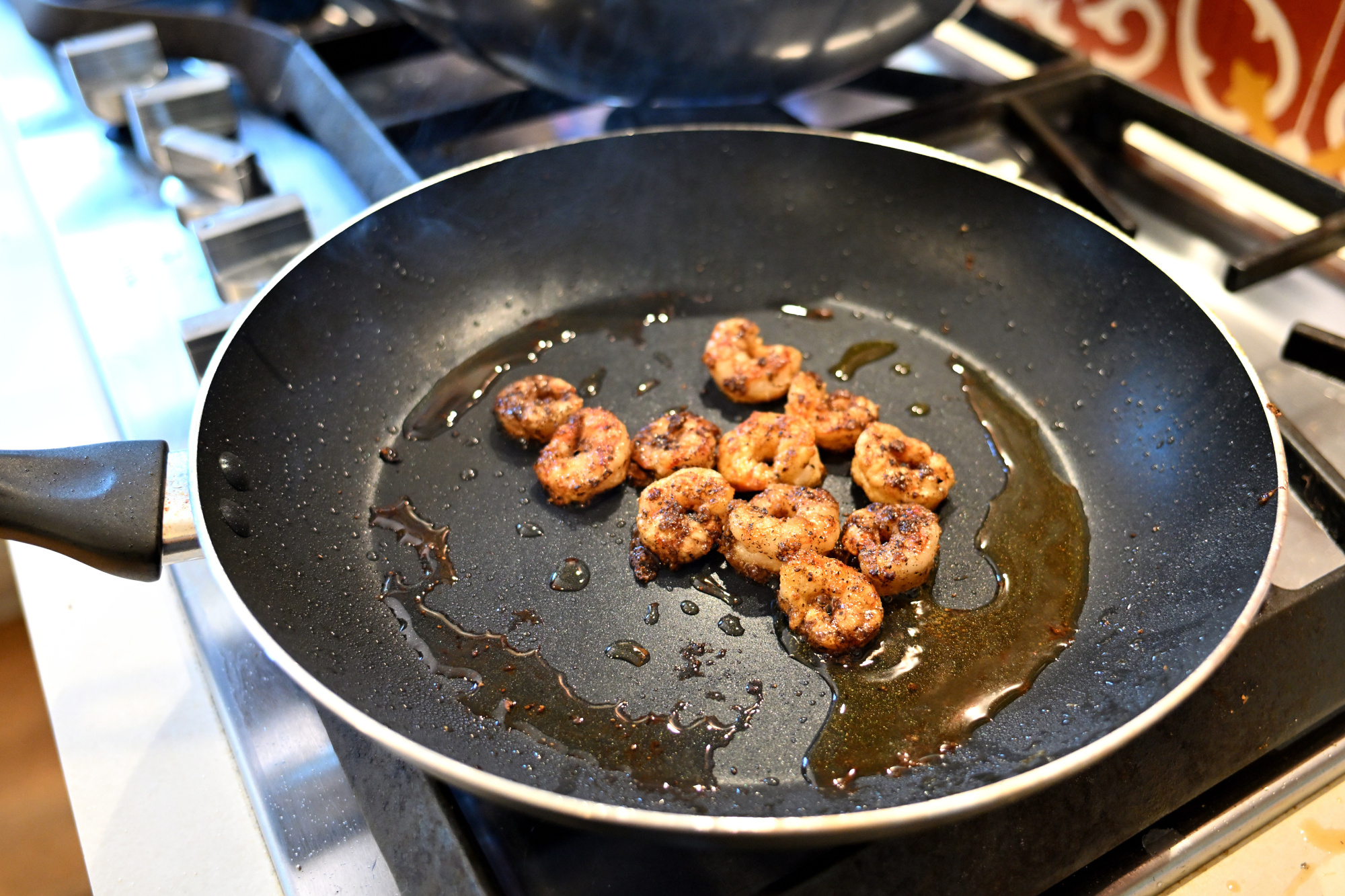
Mit Garnelen
Eine Variante, die dem Gericht nochmal eine etwas andere Richtung gibt. Die Garnelen passen sehr gut zu den gebratenen Nudeln und bringen noch einmal ihren eigenen Charakter mit.
1/125s f/2,8 ISO 1250/32° 16-50mm f/2,8 VR f=22mm/33mm
Fertig angerichtet
Am Teller sieht man dann, wie gut alles zusammenkommt: Farbe, Struktur und genau die Mischung aus Wok-Aroma und frischen Zutaten, die so ein Gericht ausmacht.
1/250s f/2,8 ISO 400/27° 16-50mm f/2,8 VR f=41mm/61mm

-
How Much Pi Do We Really Need
More than two thousand years ago, Archimedes6 tried to calculate the circumference of a circle. It was already known that larger circles have both a larger diameter and a larger circumference, but it was not clear whether the ratio between them would always remain the same.
By enclosing a circle between polygons with an increasing number of sides, he was able to show that this ratio is the same for every circle, and that its value can be bounded within steadily tightening intervals. Using a polygon of 96 sides, he proved that the value is contained in the interval
$$\frac{223}{71} < \pi < \frac{22}{7}$$
Archimedes narrowing the bounds
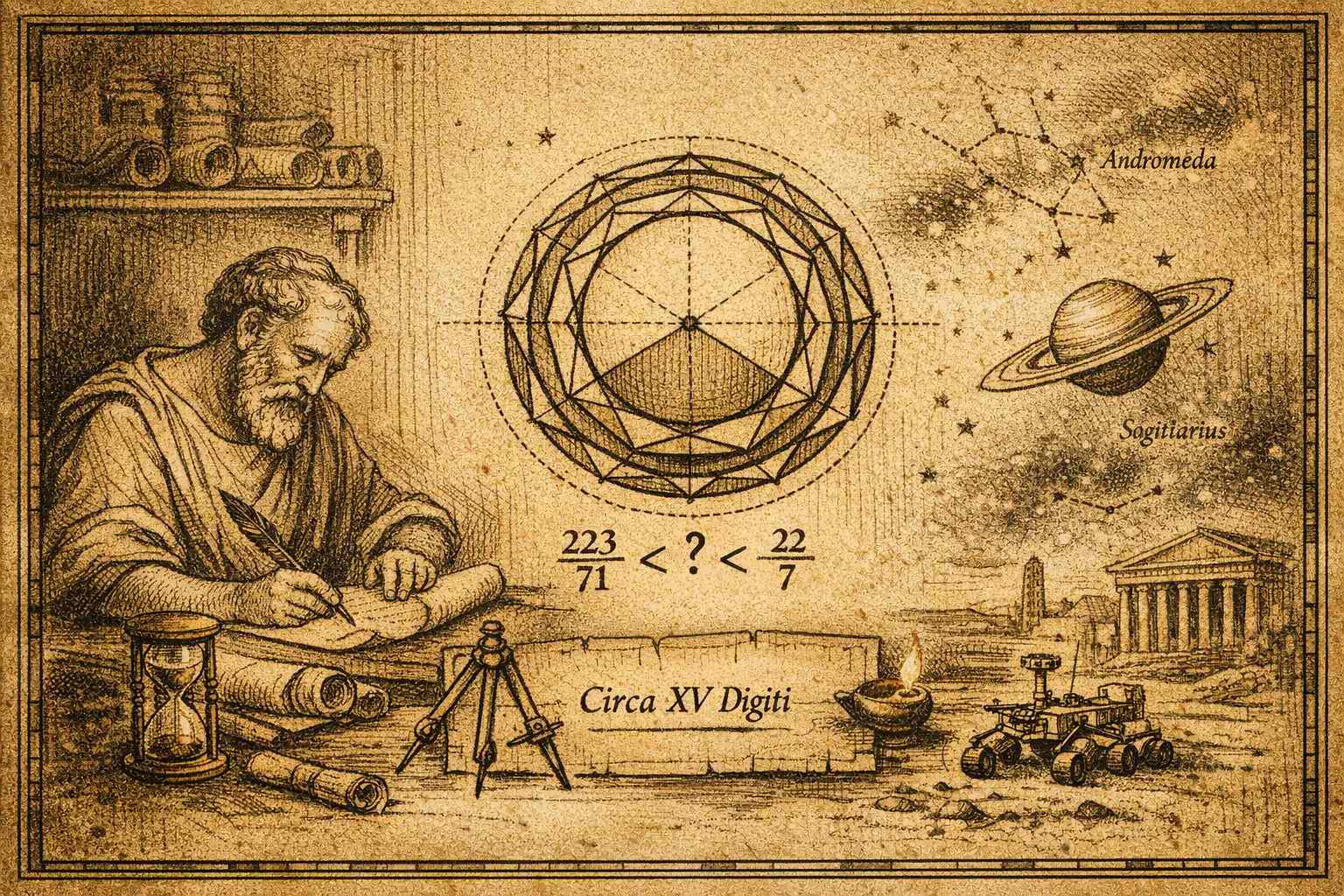
After Euler adopted the notation in 1736, the world denoted this value as $\pi$ 7
As an irrational number, its decimal expansion never repeats and never ends. And the search for more digits has never stopped.
This raises a simple question.
How many of those digits do we actually need to describe something real?
The circumference of a circle provides exactly that test.
The circumference of a circle is
$$C = \pi D$$
So any inaccuracy in $\pi$ directly affects the result.
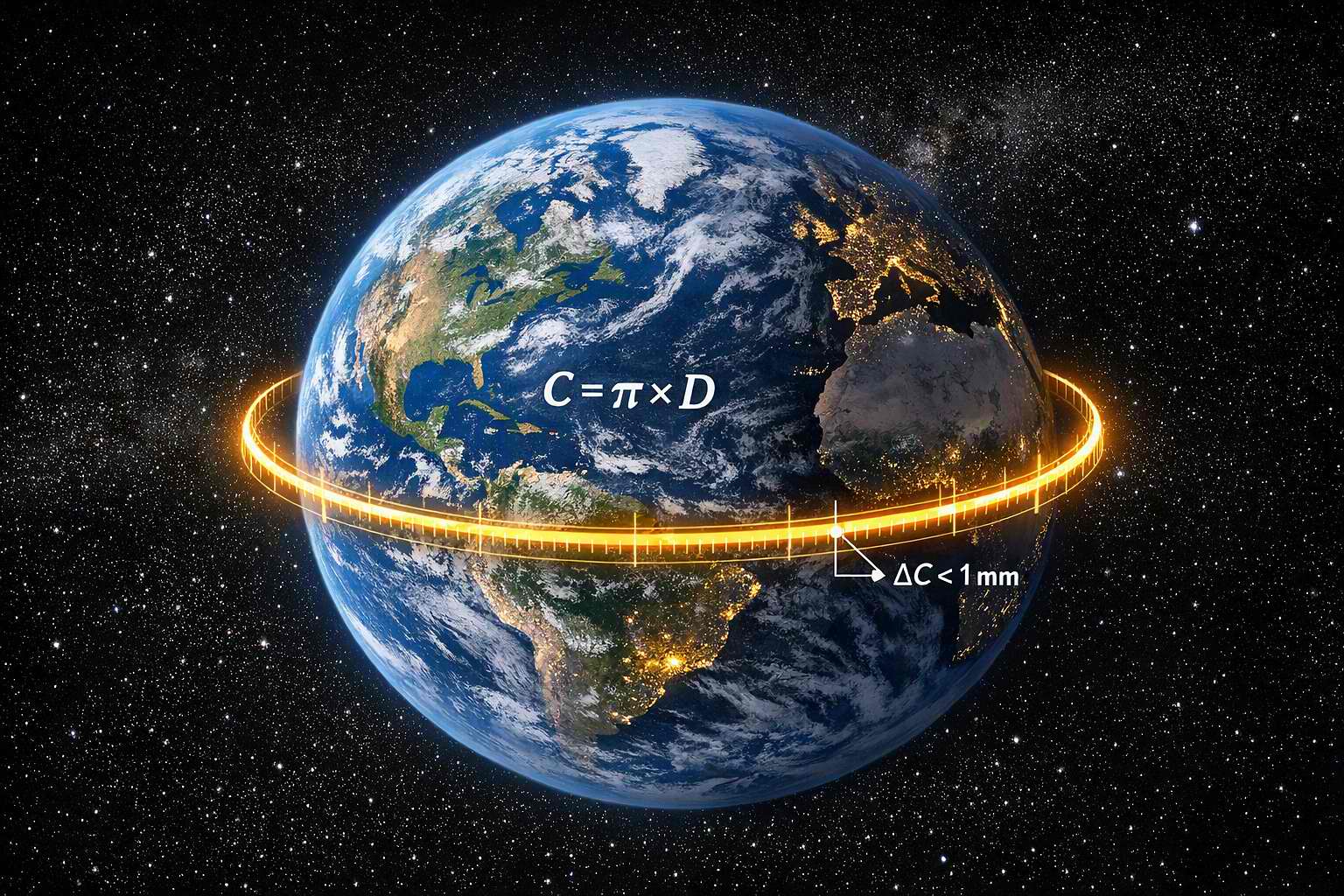
Example: The Earth
The diameter of the Earth is approximately
$$D_{Earth} \approx 12742\ km$$
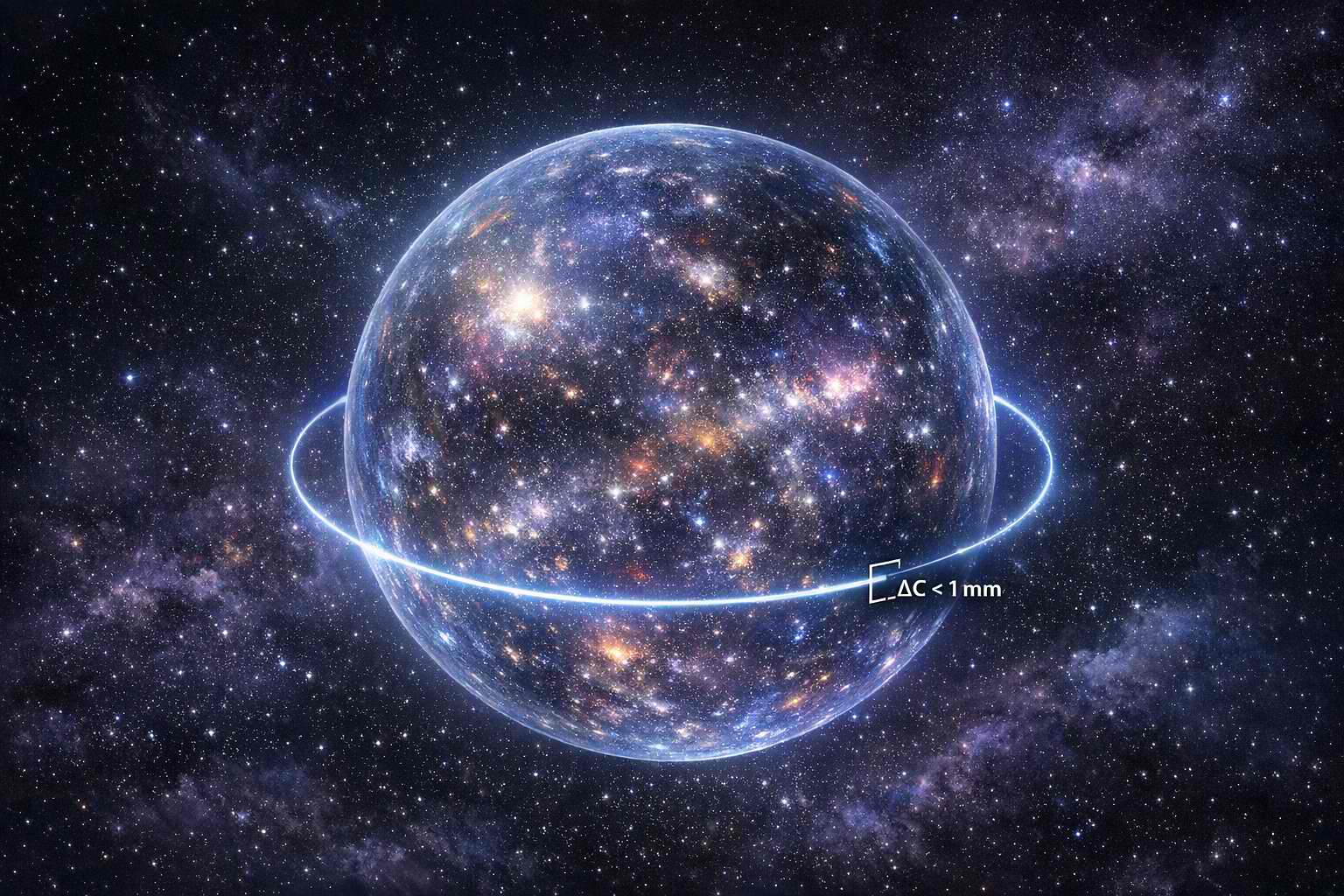
We want the circumference to be correct within
$$1\ mm = 0.001\ m$$
This means the allowed error in the circumference is
$$\Delta C \leq 0.001\ m$$
Since
$$C = \pi D$$
any error in $\pi$ causes
$$\Delta C = D \cdot \Delta \pi$$
So the required accuracy of $\pi$ must satisfy
$$D \cdot \Delta \pi \leq 0.001$$
Solving for $\Delta \pi$ leads to
$$\Delta \pi \leq \frac{0.001}{12742\cdot1000}$$
$$\Delta \pi \leq 7.85 \times 10^{-11}$$
That corresponds to roughly 10 decimal places of $\pi$. Using 10 places results in an error of about $10^{-11}$, which is within the required bound.
So if you use
$$\pi_{10} = 3.1415926536$$
you can calculate the circumference of the entire Earth with an error smaller than one millimeter.
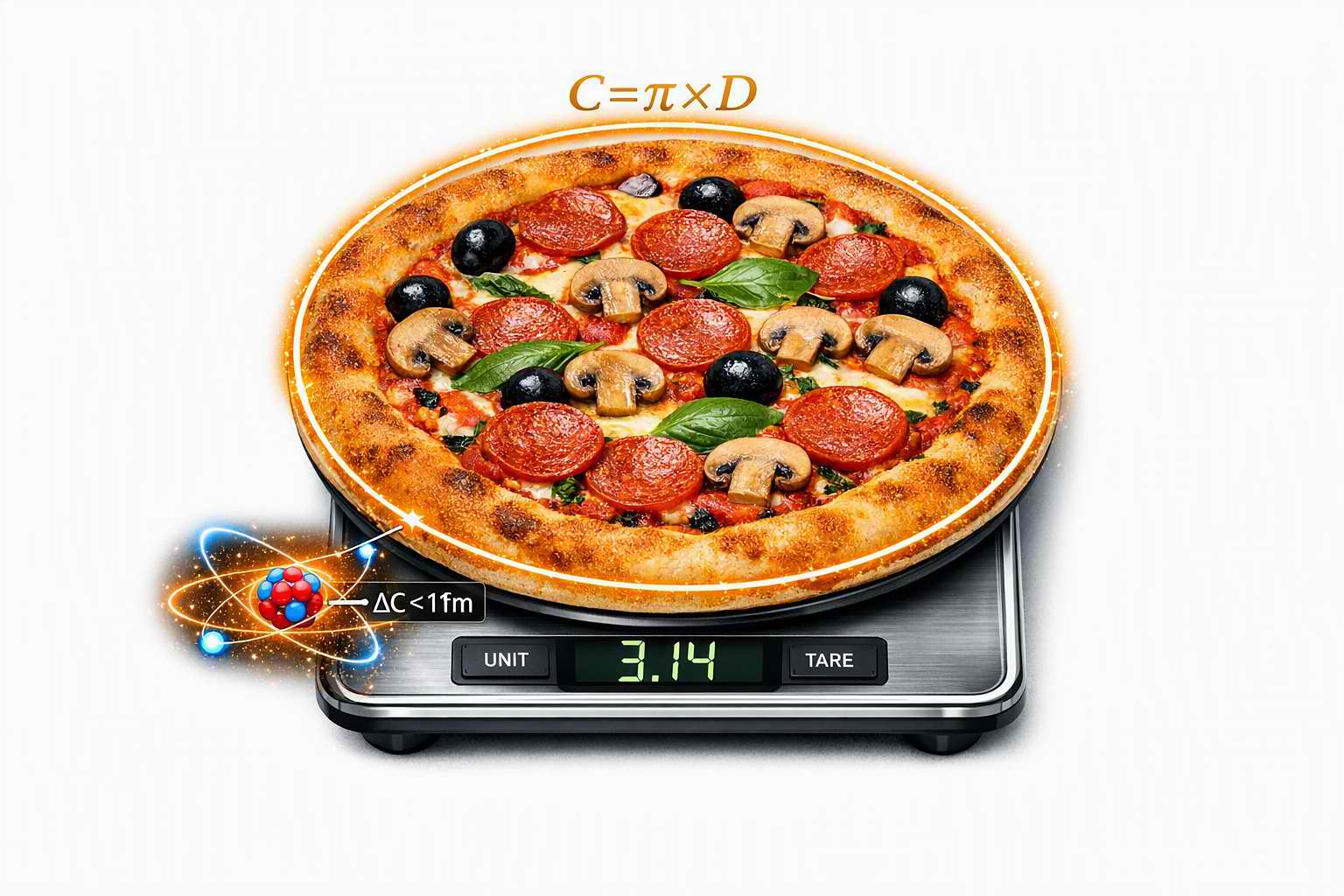
Example: A Pizza
The diameter of a pizza is approximately
$$D_{Pizza} \approx 0.30\ m$$
This time we set the target accuracy to the diameter of an atomic nucleus
$$1\ \text{fm} = 10^{-15}\ m$$
Applying the same formula leads to
$$\Delta \pi \leq \frac{10^{-15}}{0.30}$$
$$\Delta \pi \leq 3.3 \times 10^{-15}$$
That corresponds to roughly 15 decimal places of $\pi$.
So if you use
$$\pi_{15} = 3.141592653589793$$
you can calculate the circumference of a pizza with an error smaller than the diameter of an atomic nucleus.
Example: The Observable Universe
Now let us scale things up.
The diameter of the observable universe is estimated at roughly
$$D_{Universe} \approx 8.8 \times 10^{26}\ m$$
Using the same formula with a target accuracy of 1 mm, as in the Earth example, leads to
$$\Delta \pi \leq \frac{0.001}{8.8 \times 10^{26}}$$
$$\Delta \pi \leq 1.14 \times 10^{-30}$$
That corresponds to roughly 30 decimal places of $\pi$.
So if you use
$$\pi_{30} = 3.141592653589793238462643383279$$
you can calculate the circumference of the entire observable universe with an error smaller than one millimeter.
Conclusion
Ten digits of $\pi$ are enough for planetary scale.
Fifteen digits are enough to measure a pizza to the width of an atomic nucleus.
Thirty digits are enough for cosmic scale.
Beyond that, the digits describe no physical quantity we can measure, only the internal consistency of mathematics itself.
Fifteen digits are also exactly what NASA uses to navigate spacecraft across the solar system, the same precision that measures a pizza to the width of an atomic nucleus.
They have not yet missed a planet.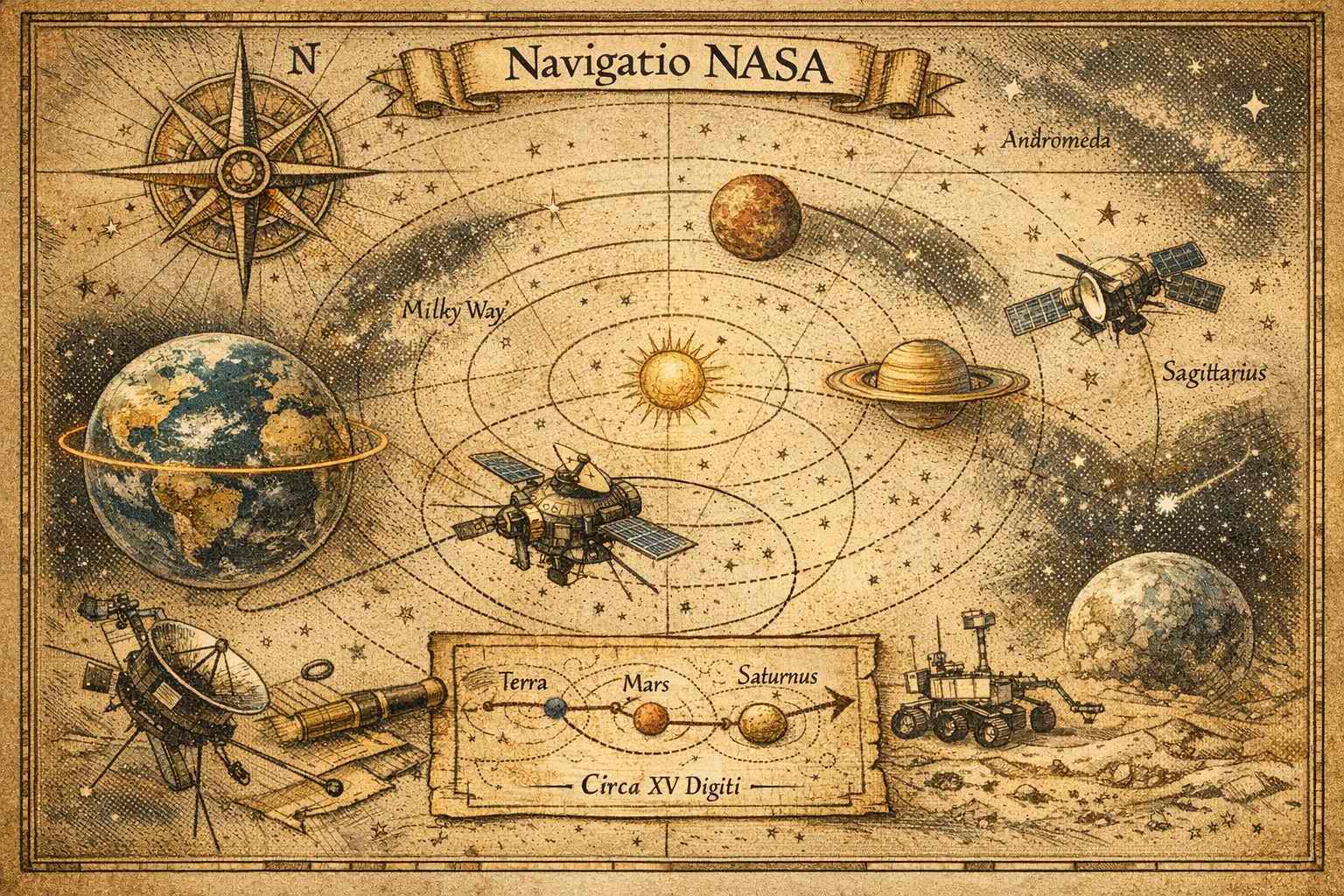
Interplanetary navigation with finite precision
See also Engineering Pi Day
-
The lab has seen many upgrades.
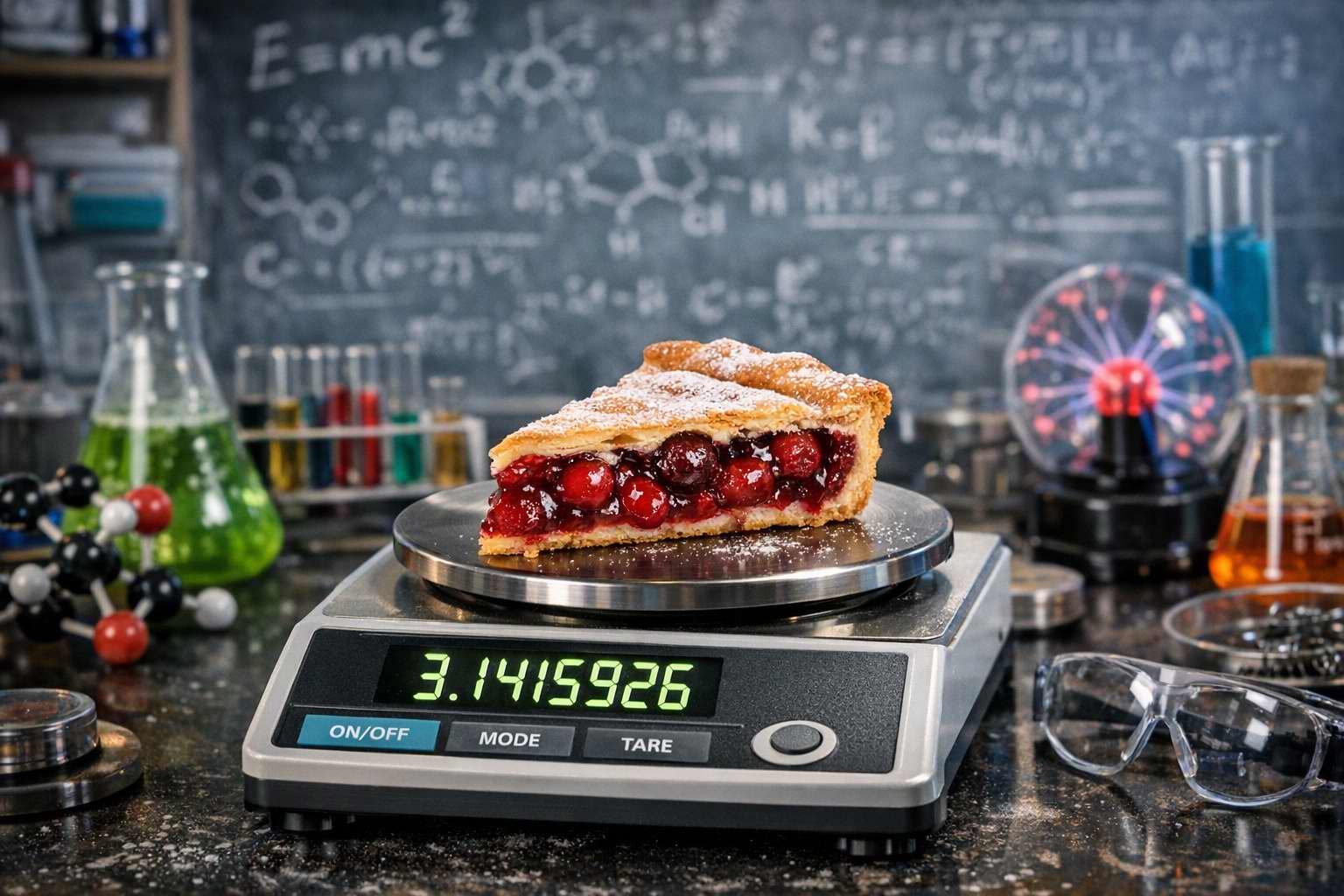
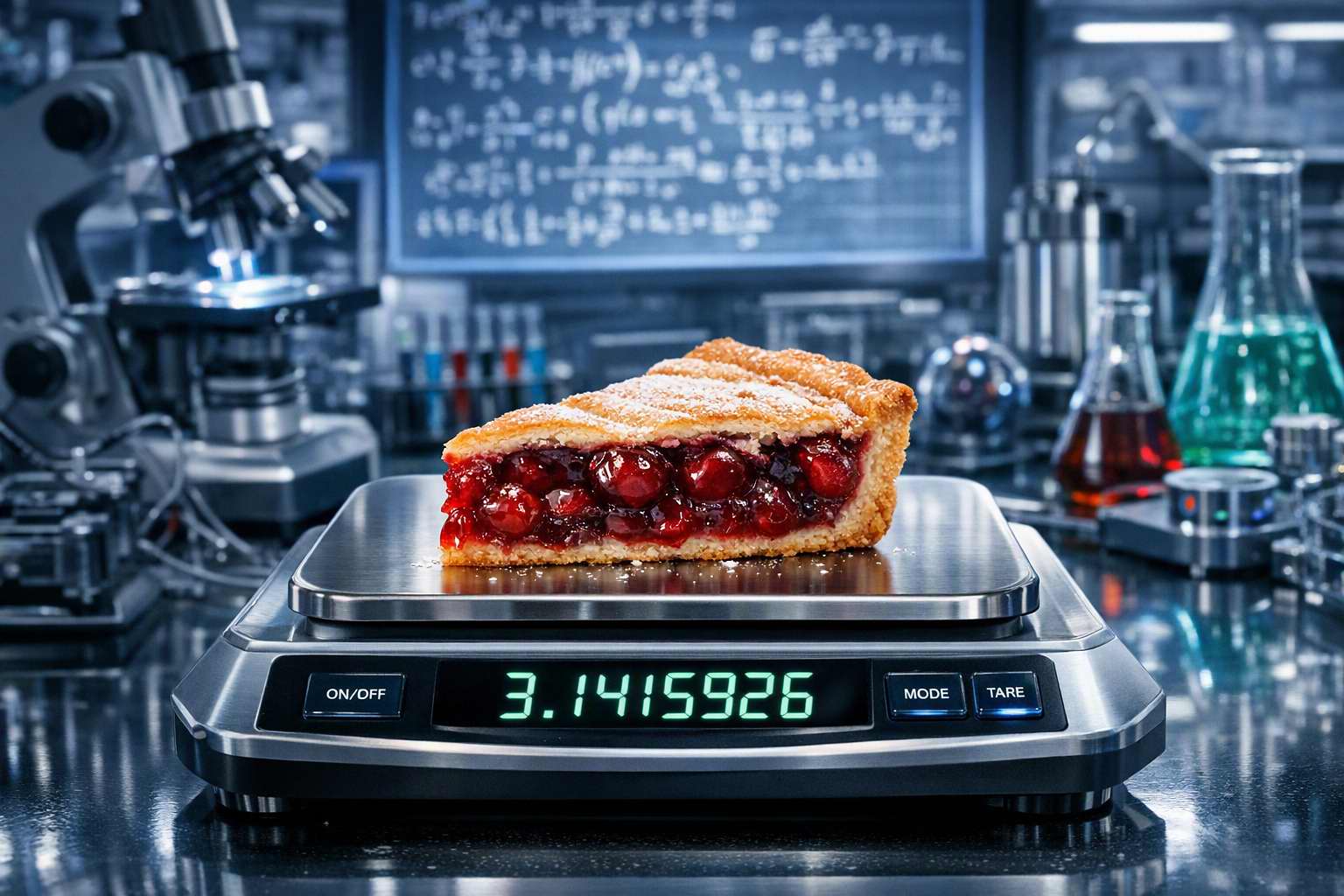
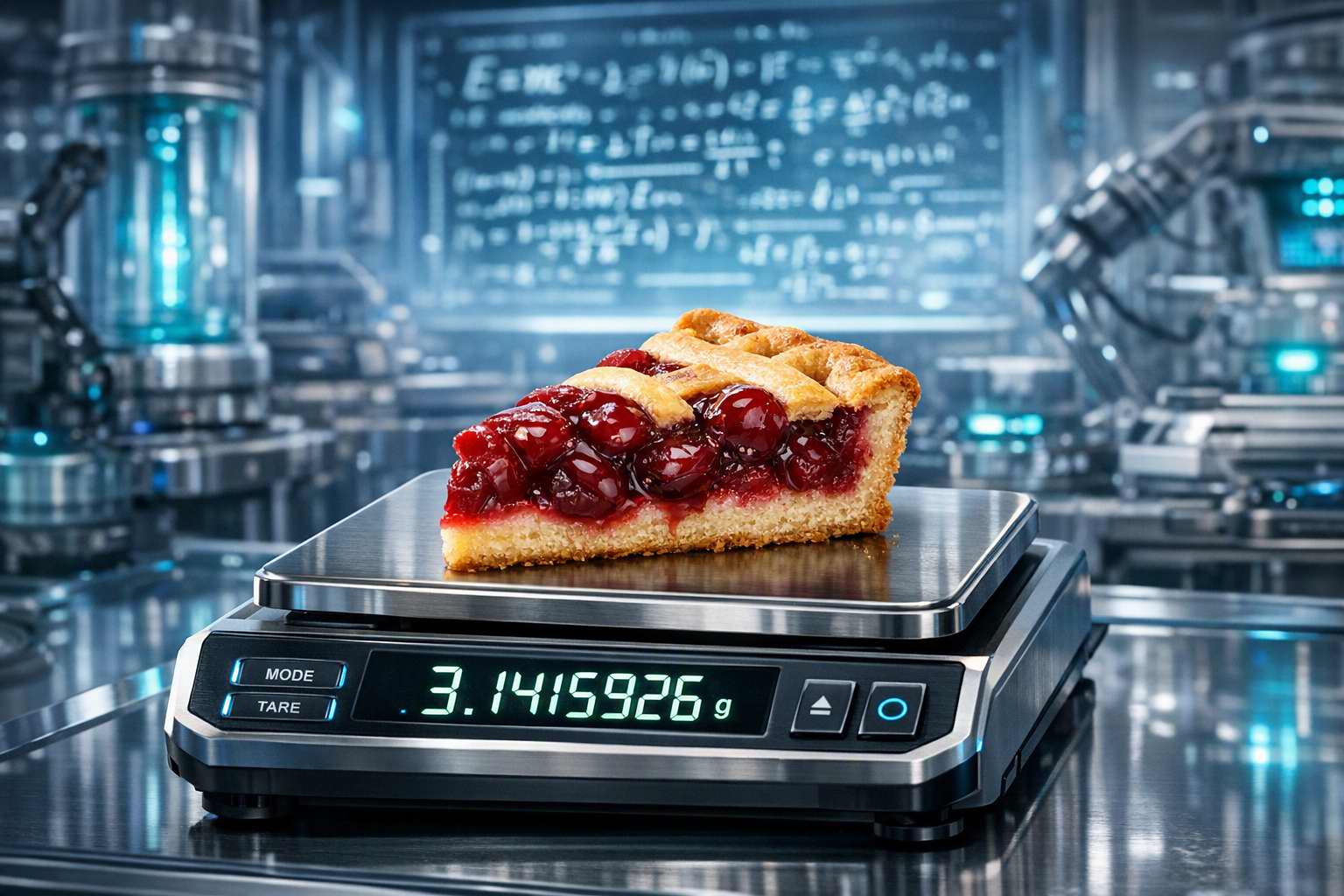 The Pie remained entirely indifferent.
Even they could not find a pattern.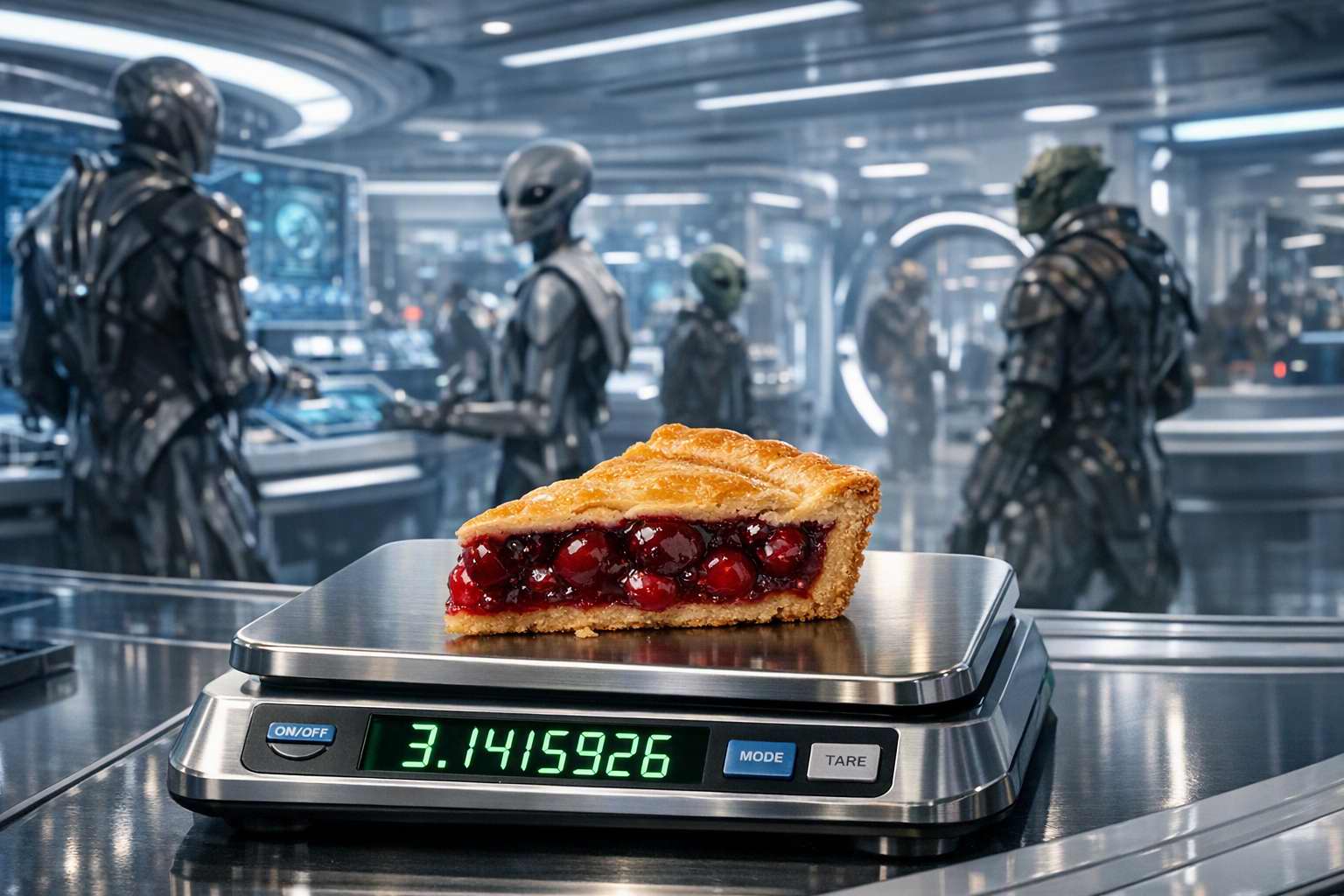
Archimedes' office, circa 250 BC. The Pie was already indifferent.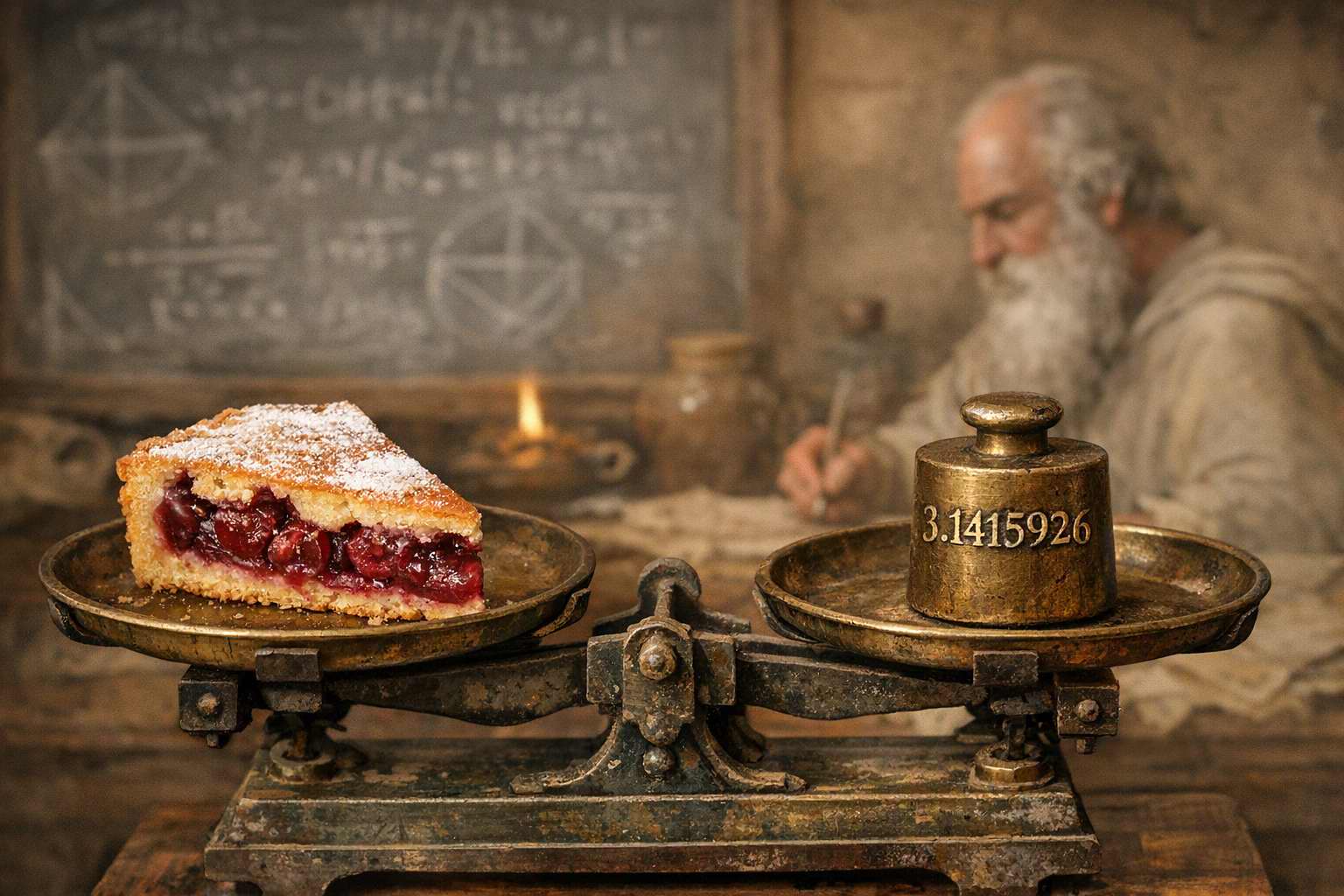 ↩
↩ -
Archimedes of Syracuse (c. 287-212 BC) derived his bounds on π in Measurement of a Circle. A result that stood as the standard approximation for centuries. ↩
-
$$\pi_{314}=3.14159265358979323846264338327950288419716939937510582097494459230781640628620899862803482534211706798214808651328230664709384460955058223172535940812848111745028410270193852110555964462294895493038196442881097566593344612847564823378678316527120190914564856692346034861045432664821339360726024914127372458700660631$$ ↩
-
Seite 1 von 9
Ältere Beiträge →