cPicture

🔍 Suche...
🔍
Alle Begriffe müssen vorkommen (UND), "Phrase" für exakte Treffer, r"regex" für Muster (oder ').
  • cPicture 4.10

    📅 28. Februar 2026 · ⏱️ 1 min

    cPicture is updated to version 4.10

    • added new JPEG10 Lossless Exposure & Contrast Adjustment



      Exposure compensation from -2EV to +2EV:


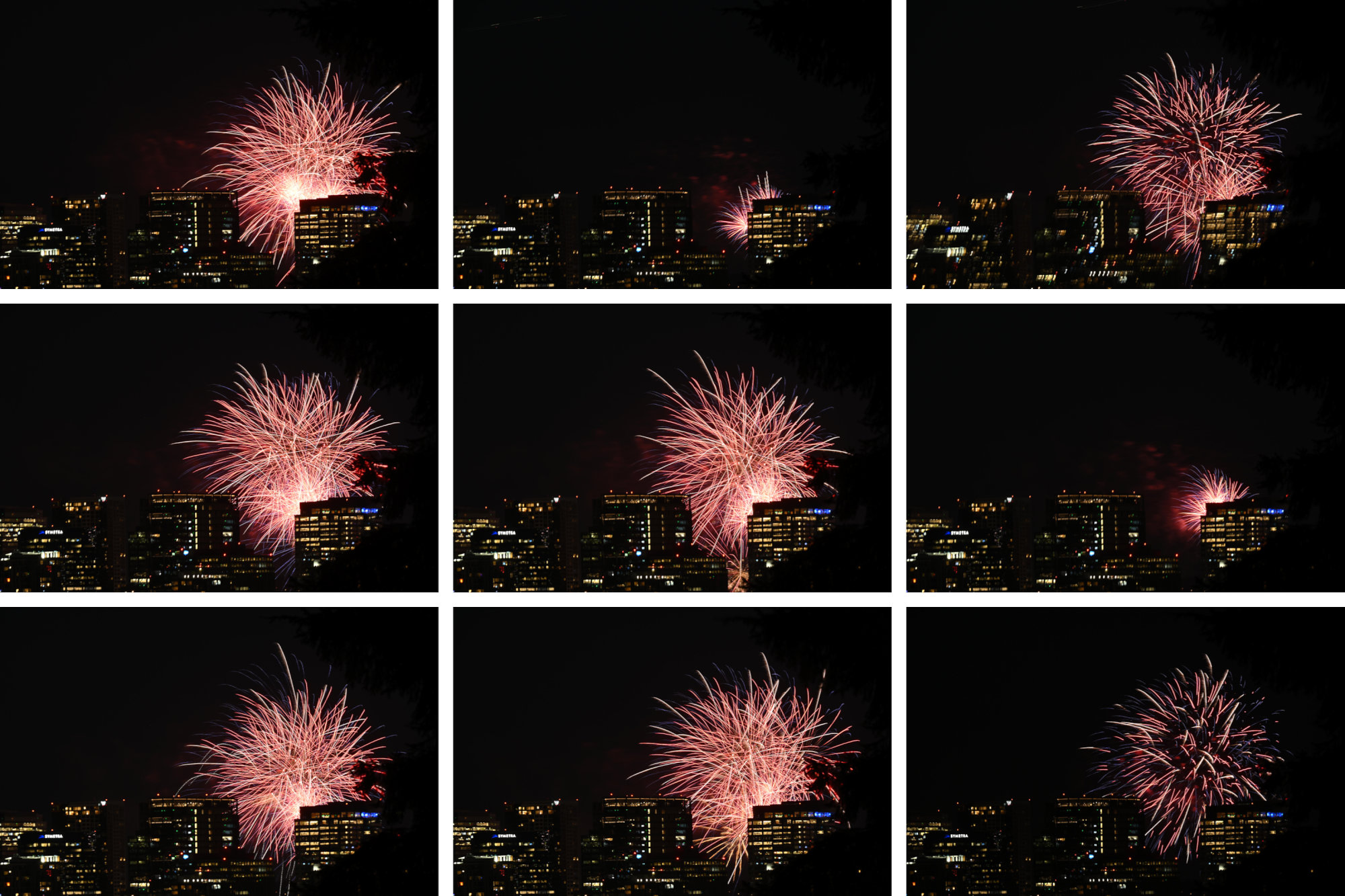
      Contrast from -1CV to +1CV:

      See this blog entry

    • Updated format plugin version to 4.10
    • Maintenance update and minor changes


    cPicture is a portable application consisting of a single .exe file and optional plugin files.

    Download the MSI file to copy the app to a folder or use the 'Check for updates' button in the 'Other' category.

    Download German 64bit Installer MSI
    Download English 64bit Installer MSI
    More languages are available from the cPicture site.
    Alternative download from github

    See the Download Instructions for more details.

    For questions, please mail to: cpicture

  • Lossless Exposure & Contrast Adjustment in JPEG10

    📅 28. Februar 2026 · ⏱️ 6 min

    Lossless Tonal Adjustments in JPEG's DCT Domain: Exposure Compensation and Multi-Band Contrast

    Most JPEG workflows treat exposure (brightness) and contrast as inherently "lossy": decode pixels, apply curves, then re-encode. That approach works, but it always introduces an additional step of quantization error.

    In this github fork of the IJG JPEG-10 code, I added two options to jpegtran that operate directly on quantized DCT coefficients:

    • -exposure-comp EV
    • -contrast DC LOW MID HIGH

    Both are applied during transcoding, so they combine naturally with existing jpegtran operations such as rotation, flipping, cropping, marker copying, and progressive conversion.


    https://github.com/jurgen178/jpeg10
    Download Windows x64 binary: jpegtran.zip


    Quick Usage
    jpegtran [standard options] [-exposure-comp EV] [-contrast DC LOW MID HIGH] input.jpg output.jpg

    Examples:

    # Brighten by 1 stop
    jpegtran -copy all -exposure-comp 1 input.jpg output.jpg
    
    # Darken by 0.5 stops
    jpegtran -copy all -exposure-comp -0.5 input.jpg output.jpg
    
    # Contrast (uniform: DC=LOW=MID=HIGH)
    jpegtran -copy all -contrast -1   -1   -1   -1   input.jpg out-contrast-u-1.jpg
    jpegtran -copy all -contrast -0.5 -0.5 -0.5 -0.5 input.jpg out-contrast-u-0.5.jpg
    jpegtran -copy all -contrast  0.5  0.5  0.5  0.5 input.jpg out-contrast-u+0.5.jpg
    jpegtran -copy all -contrast  1    1    1    1   input.jpg out-contrast-u+1.jpg
    
    # Contrast (band-specific examples)
    jpegtran -copy all -contrast 0 0 0.6 0   input.jpg out-contrast-mid+0.6.jpg
    jpegtran -copy all -contrast 0 0 0 0.4   input.jpg out-contrast-high+0.4.jpg
    jpegtran -copy all -contrast 0 0.4 0 0   input.jpg out-contrast-low+0.4.jpg
    
    # Combine: rotate 90°, brighten 0.5 EV, and add uniform contrast +0.5
    jpegtran -copy all -rot 90 -exposure-comp 0.5 -contrast 0.5 0.5 0.5 0.5 input.jpg output.jpg

    Both switches accept fractional values. Practical ranges:

    Option    Practical range     Neutral
    -exposure-comp EV -3 … +3 0
    -contrast DC LOW MID HIGH -2 … +2 0


    Integrated into cPicture with live preview:


    Background: DCT Coefficient Basics

    A JPEG image is encoded as a grid of DCT blocks (with 8×8 Elements in size). Each block has one DC coefficient and 63 AC coefficients. But each MCU might have more than one block depending on the color subsampling.

    • DC[0] represents the (level-shifted) average sample value of the block. The relationship to pixel mean is:

      $$\mu = \frac{DC_\text{unquant}}{N} + \text{center}$$

      where $N$ is the DCT block size of 8 and $\text{center} = 2^{\text{precision}-1}$ (e.g. 128 for 8‑bit).

    • AC[1..N²−1] represent spatial frequency components (texture, edges, contrast).

    Both DC and AC are stored quantized: the actual stored integer is $\text{round}(\text{value} / Q_k)$, where $Q_k$ is the quantization step for coefficient $k$.


    -exposure-comp EV — Exposure Compensation


    Exposure compensation from -2EV to +2EV:


    Concept

    A photographic EV step corresponds to doubling (or halving) the amount of light. Applied in linear light:

    $$\text{gain} = 2^{EV}$$

    Because JPEG samples are gamma-coded (sRGB), pixel values cannot be multiplied directly. Instead:

    1. Estimate a representative level from the DC blocks.
    2. Compute the equivalent additive pixel-domain offset by applying the gain in linear light at that reference level.
    3. Translate the offset into a quantized DC delta.
    4. Add the delta to every DC coefficient.

    Only DC is modified. AC coefficients are not modified, so local contrast and texture are preserved.

    Reference Level — Log-Average

    A geometric mean (log-average) of all block mean levels is used as the exposure reference:

    $$\bar{L} = \exp\!\left(\frac{1}{B}\sum_{i=1}^{B} \ln(L_i + 1)\right) - 1$$

    where $L_i$ is the intensity mean of block $i$ (clamped to $[0, \text{MAX}]$) and $B$ is the total number of blocks.

    sRGB Linearisation

    The gain is applied in linear light:

    $$u_\text{ref} = \frac{\bar{L}}{\text{MAX}}$$

    $$u_\text{ref,lin} = f_\text{lin}(u_\text{ref})$$

    $$u_\text{new,lin} = \min(u_\text{ref,lin} \cdot \text{gain},\; 1.0)$$

    $$u_\text{new} = f_\text{sRGB}(u_\text{new,lin})$$

    The sRGB transfer functions used:

    $$f_\text{lin}(u) = \begin{cases} u / 12.92 & u \le 0.04045 \\ \left(\dfrac{u + 0.055}{1.055}\right)^{2.4} & u > 0.04045 \end{cases}$$

    $$f_\text{sRGB}(u) = \begin{cases} 12.92\,u & u \le 0.0031308 \\ 1.055\,u^{1/2.4} - 0.055 & u > 0.0031308 \end{cases}$$

    Pixel-Domain Offset → Quantized DC Delta

    $$\Delta_\text{samples} = (u_\text{new} - u_\text{ref}) \cdot \text{MAX}$$

    Clamped to available headroom/shadow room to limit clipping, then converted to a quantized DC delta:

    $$\Delta_{DC} = \text{round}\!\left(\frac{\Delta_\text{samples} \cdot N}{Q_0}\right)$$

    where $N$ is the DCT block size and $Q_0$ is the DC quantization step.

    Component Policy
    Color space Components adjusted
    YCbCr, BG_YCC, YCCK Luma only (component 0)
    RGB/BG_RGB + subtract-green transform Green/base only (component 1)
    CMYK, all others All components

    For CMYK and YCCK the delta is computed in an inverted intensity domain ($I = \text{MAX} - \text{sample}$) so that +EV brightens and −EV darkens.


    -contrast DC LOW MID HIGH — Contrast Adjustment


    Contrast from -1CV to +1CV:


    Concept

    This option provides four separate controls (all in stops):

    • DC controls the DC coefficient (block mean)
    • LOW, MID, HIGH control the AC coefficients in frequency order

    All controls are interpreted as log2 gains (stops). For a value $x$, the gain is:

    $$g(x) = 2^{x}$$

    So +1 doubles, -1 halves.

    DC

    DC is scaled by:

    $$g_\mathrm{DC} = 2^{DC}$$

    and applied as:

    $$DC' = \mathrm{clamp}(\mathrm{round}(g_\mathrm{DC} \cdot DC))$$

    AC (low/mid/high weighting)

    AC coefficients are processed in zigzag order (the JPEG natural order). Let $z$ be the AC position with $z = 1 \ldots A$, where $A$ is the number of AC coefficients.

    Define a normalized position:

    $$t = \begin{cases} \dfrac{z-1}{A-1} & A > 1 \\ 0 & A = 1 \end{cases}$$

    Triangular weights:

    • low weight fades out from low frequencies

    $$w_\mathrm{low} = \max(0, 1 - 2t)$$

    • mid weight peaks in the middle

    $$w_\mathrm{mid} = 1 - |2t - 1|$$

    • high weight fades in toward high frequencies

    $$w_\mathrm{high} = \max(0, 2t - 1)$$

    Per-coefficient exponent and gain:

    $$v(z) = LOW\cdot w_\mathrm{low} + MID\cdot w_\mathrm{mid} + HIGH\cdot w_\mathrm{high}$$

    $$g(z) = 2^{v(z)}$$

    Applied to each AC coefficient:

    $$AC'[z] = \mathrm{clamp}(\mathrm{round}(g(z)\cdot AC[z]))$$

    If DC = LOW = MID = HIGH = X, then all coefficients are scaled by the same gain $2^X$ (uniform contrast adjustment).

    Component Policy

    Same as -exposure-comp:

    • YCbCr/BG_YCC/YCCK: luma only
    • RGB subtract-green: base/green only
    • otherwise: all components


    Ordering and Composition

    Both -exposure-comp and -contrast are applied as a post step after any geometric transform (-rot, -flip, -crop, …). The tonal operations work on the final output coefficient arrays, so the order of switches on the command line does not matter.


    Implementation notes
    • Core implementation:
      • transupp.c: do_exposure_comp() and do_contrast()
      • transupp.h: adds new fields to jpeg_transform_info
    • CLI parsing:
      • jpegtran.c
    • Feature flags and parameters are stored in jpeg_transform_info in transupp.h


    Summary
    • -exposure-comp EV shifts brightness by changing only DC coefficients, with EV evaluated in linear light (sRGB transfer) at a log-average reference.
    • -contrast DC LOW MID HIGH scales DC and AC coefficients, with AC gains varying smoothly over frequency order using low/mid/high controls.
    • Both run in the DCT domain and integrate naturally into the lossless-transformation workflow of jpegtran.


    Example pictures
  • cPicture 4.9

    📅 30. Januar 2026 · updates · ⏱️ 1 min

    cPicture is updated to version 4.9

    • updated to JPEG10 including the new lossless negate

    • added video cut feature (Alt-X) to cut

      • video frame
      • video length
      • audio

        See this blog entry for examples of the new video crop feature.

    • updated plugin interface to support the new JPEG10 and video cut features

    • added convert functions for mp3 and mp4


    • Maintenance update and minor changes


    cPicture is a portable application consisting of a single .exe file and optional plugin files.

    Download the MSI file to copy the app to a folder or use the 'Check for updates' button in the 'Other' category.

    Download German 64bit Installer MSI
    Download English 64bit Installer MSI
    More languages are available from the cPicture site.
    Alternative download from github

    See the Download Instructions for more details.

    For questions, please mail to: cpicture

  • cPicture 4.8

    📅 31. Juli 2025 · updates · ⏱️ 1 min

    cPicture is updated to version 4.8

    • Added distance option to index print feature
    • Customization to the clipboard copy (Alt-C) options and menu selection when run to simplify data copy
    • Maintenance update and minor changes

    cPicture is a portable application consisting of a single .exe file and optional plugin files.

    Download the MSI file to copy the app to a folder or use the 'Check for updates' button in the 'Other' category.

    Download German 64bit Installer MSI
    Download English 64bit Installer MSI
    More languages are available from the cPicture site.
    Alternative download from github

    See the Download Instructions for more details.

    For questions, please mail to: cpicture

  • cPicture 4.7

    📅 15. Mai 2025 · updates · ⏱️ 1 min

    cPicture is updated to version 4.7

    • Added index print feature to add EXIF data or any text to the film strip
      any picture data can be printed at the top and bottom film stripe


      Use either the index print function, or use the macro processing.
      Example macro definition to print the exposure data at the top, and the file name at the bottom:

      exposure data print
            index_print 6 "" "" "" "" "%[sh] %[fn] %[is]" "%fe" 0 0 50 50 1


      Example macro definition:

      flower data print
            index_print 6 "" "" "" "" "Flower %d" "%wx%h , file size=%fs" 1 2 50 50 1

    • Maintenance update and minor changes


    cPicture is a portable application consisting of a single .exe file and optional plugin files.

    Download the MSI file to copy the app to a folder or use the 'Check for updates' button in the 'Other' category.

    Download German 64bit Installer MSI
    Download English 64bit Installer MSI
    More languages are available from the cPicture site.
    Alternative download from github

    See the Download Instructions for more details.

    For questions, please mail to: cpicture

Seite 1 von 14 Ältere Beiträge →

Blog-Übersicht Chronologisch

KATEGORIEN

updates • Uncategorized


Erstellt mit BitBlog!