Redmond Downtown Park and Bridges
Redmond Downtown Park
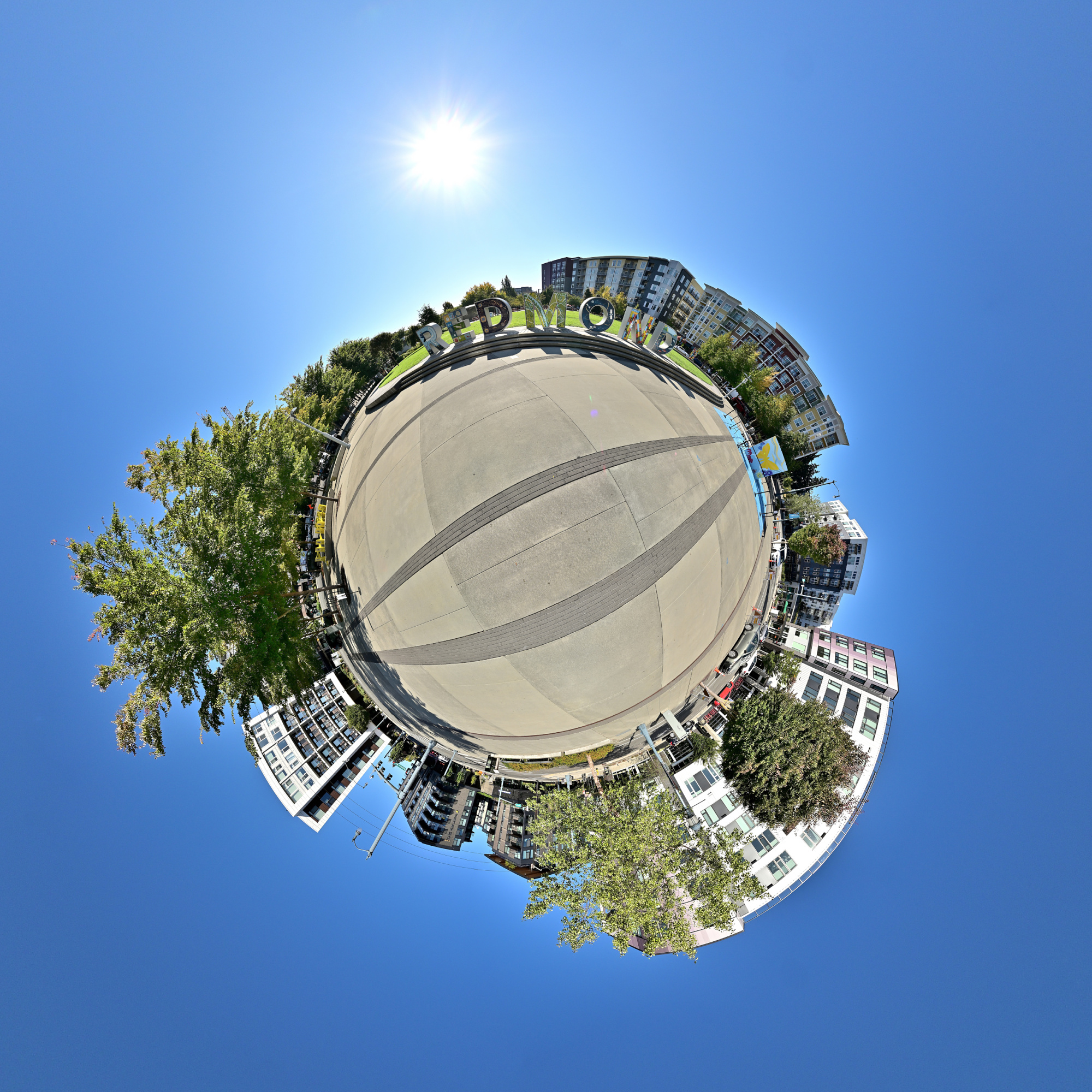
Redmond Downtown Park seamlessly integrates a central lawn, vibrant plazas, and modern pathways into the core of the neighborhood.
Interactive Panorama Redmond Downtown Park 1 360x180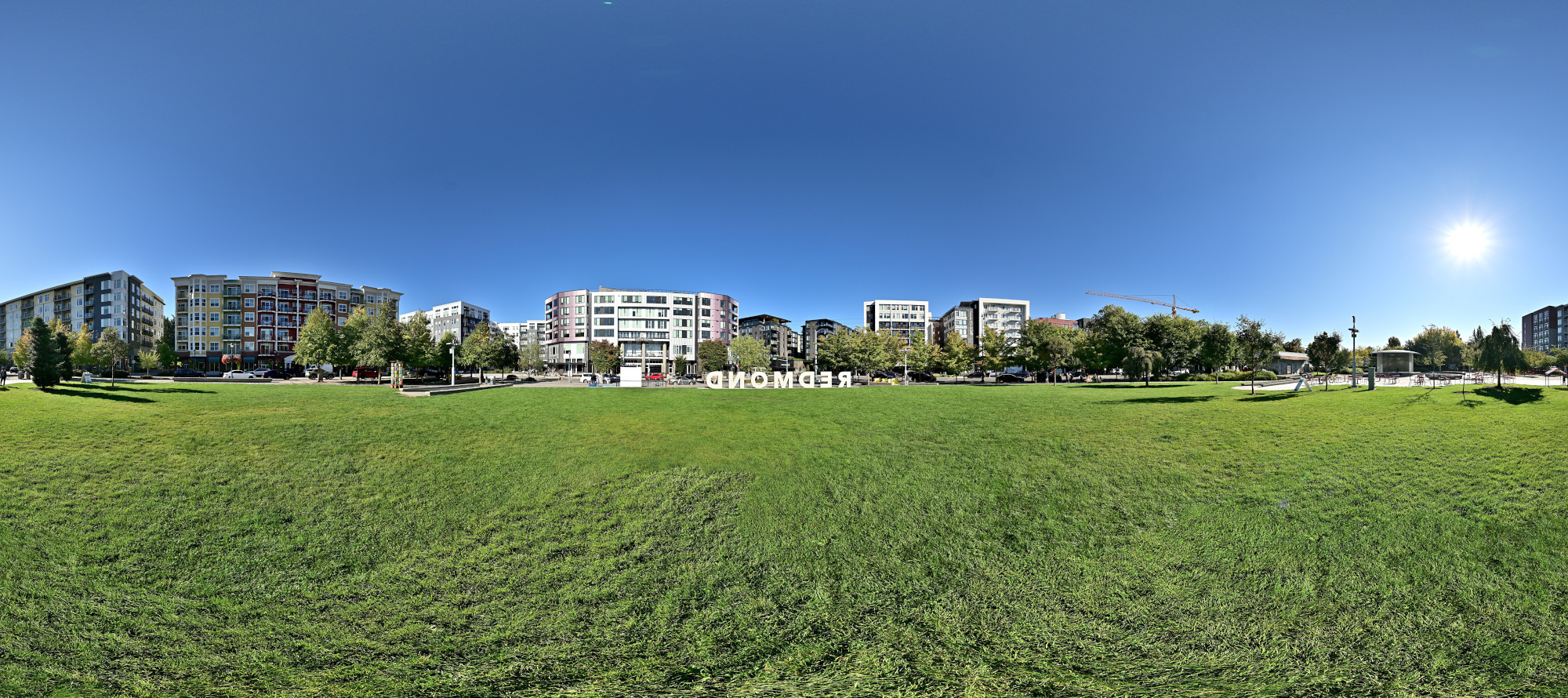
1/1000s f/5,6 ISO 100/21° f=7,5mm
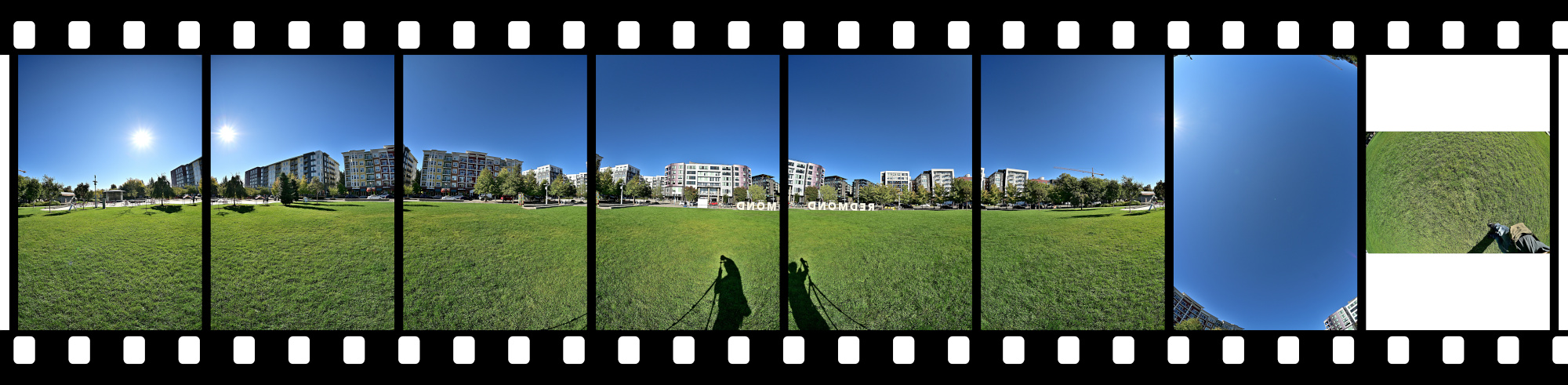
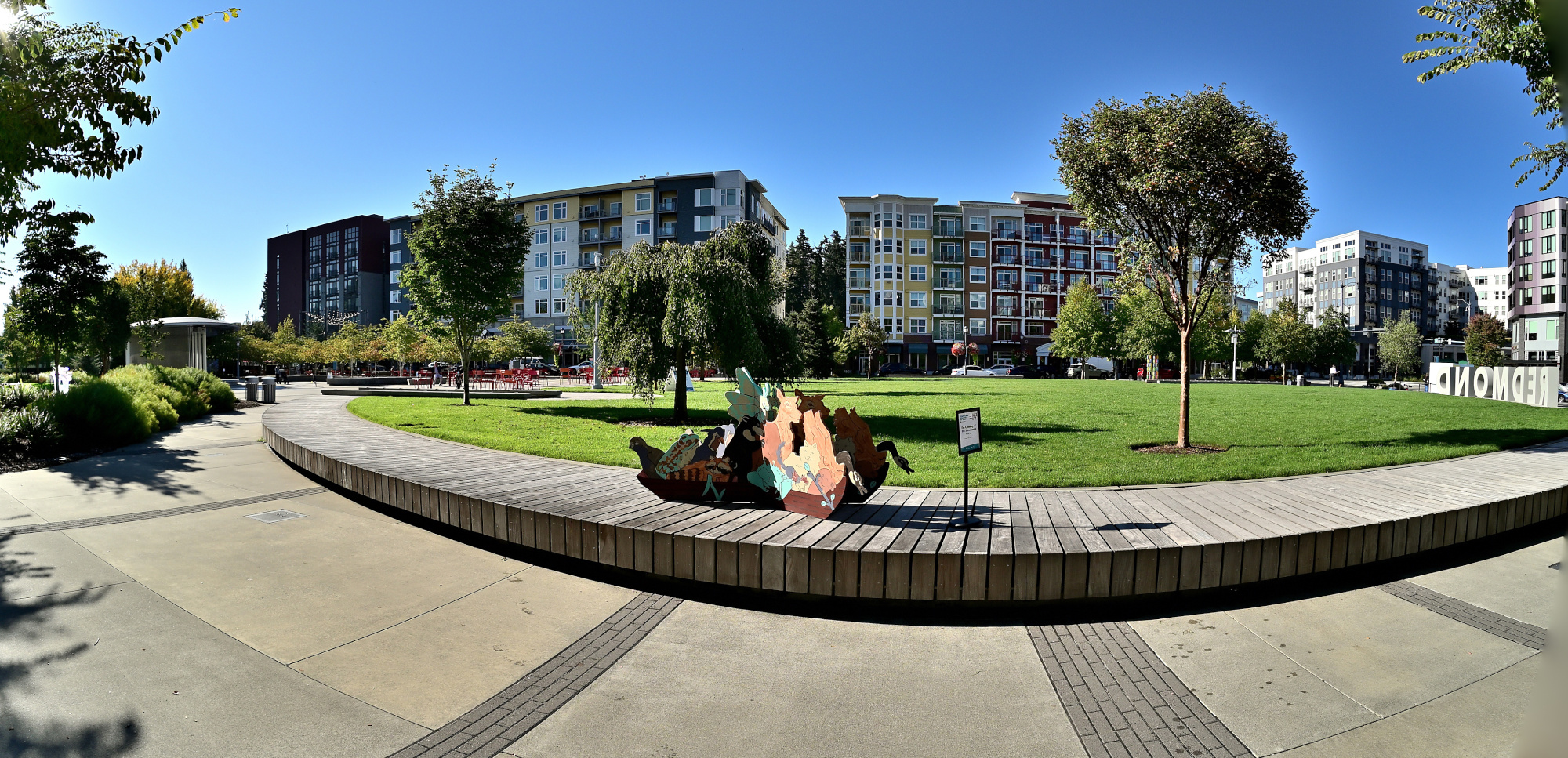
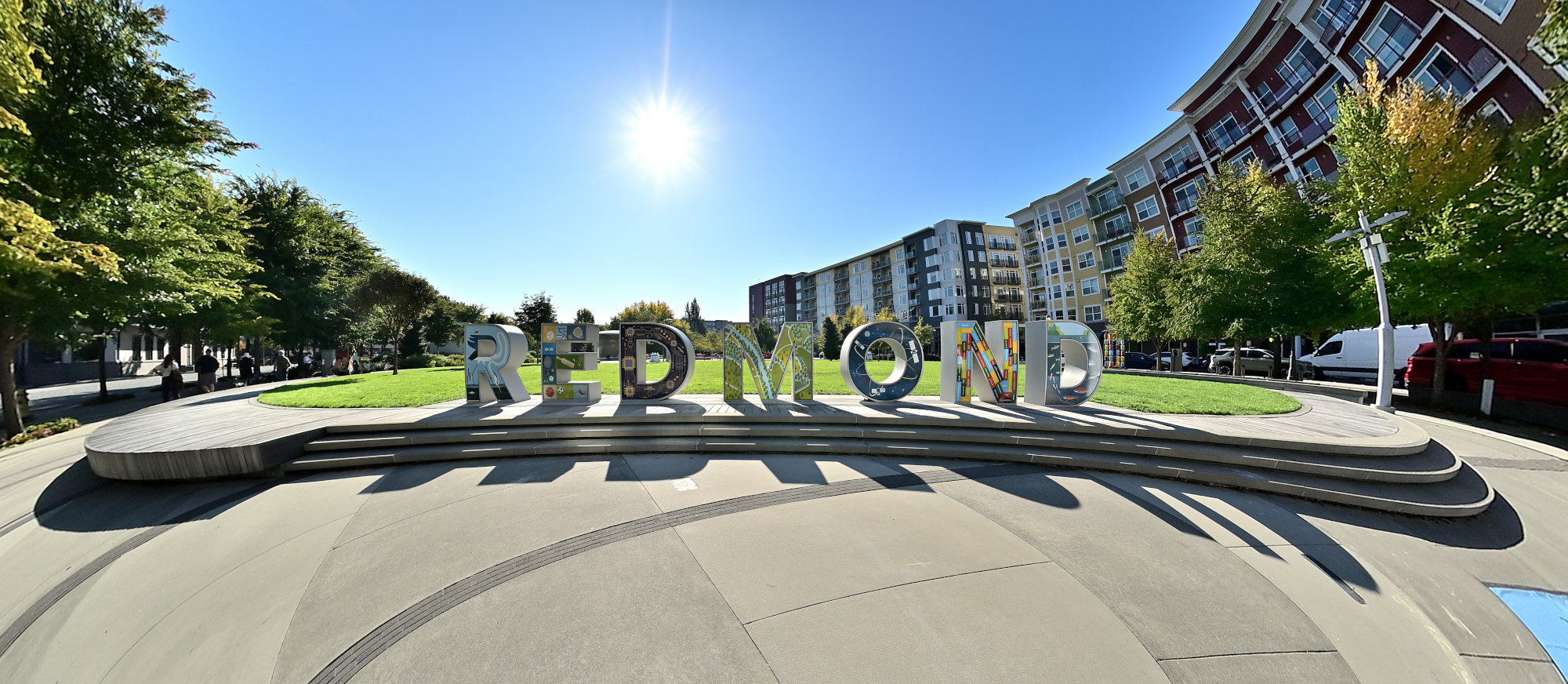
Projection is mirrored to correctly display the REDMOND letters.
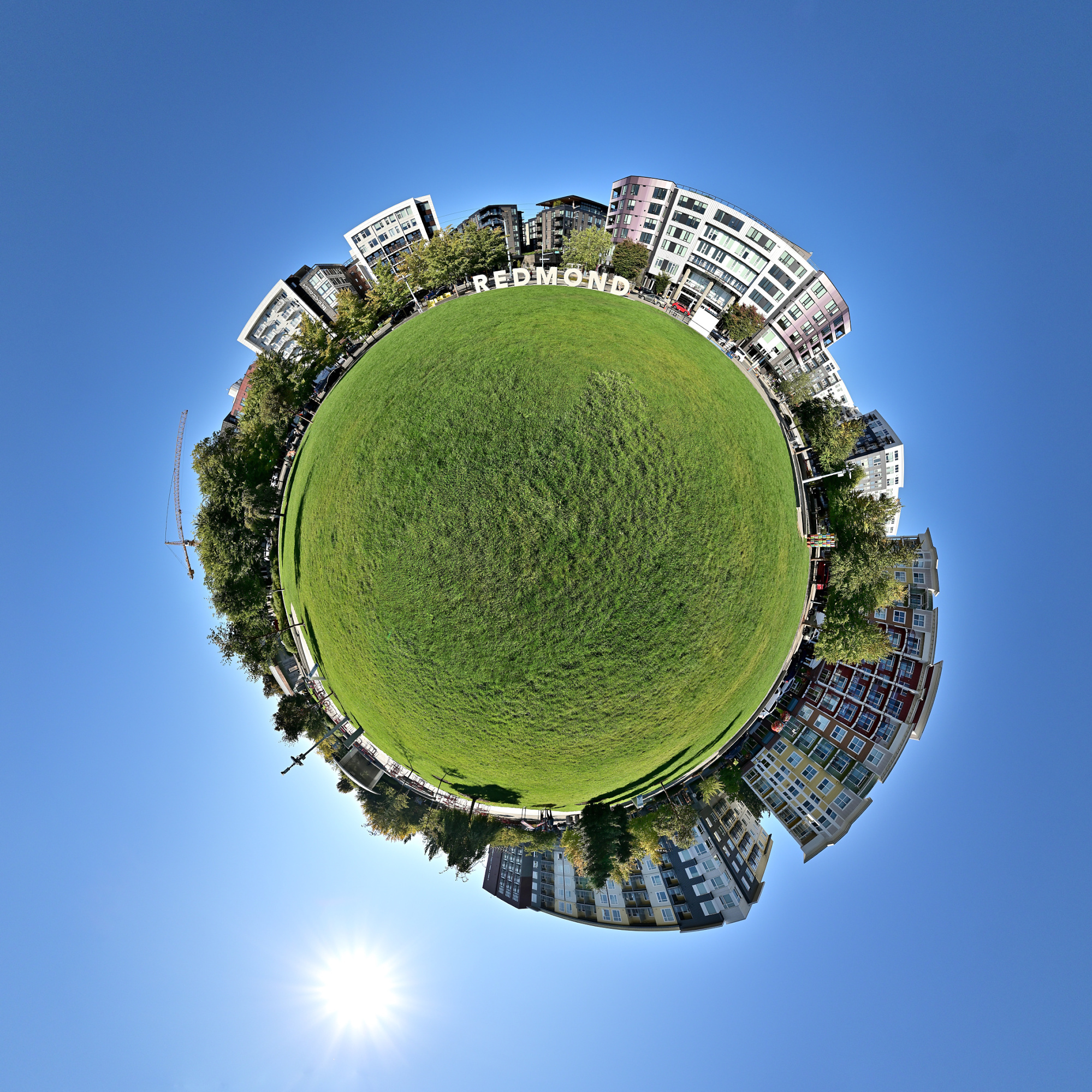
Original Projection
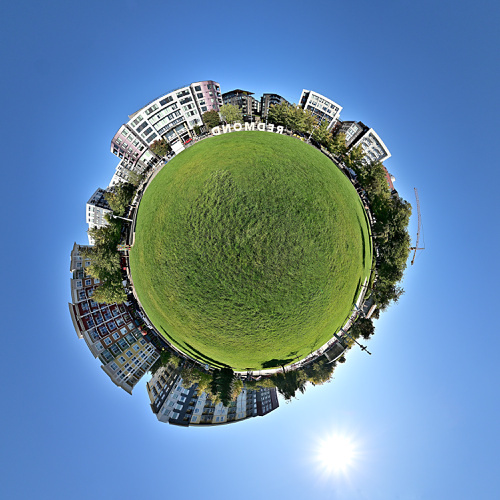
REDMOND Sign
Interactive Panorama Redmond Downtown Park 2 360x180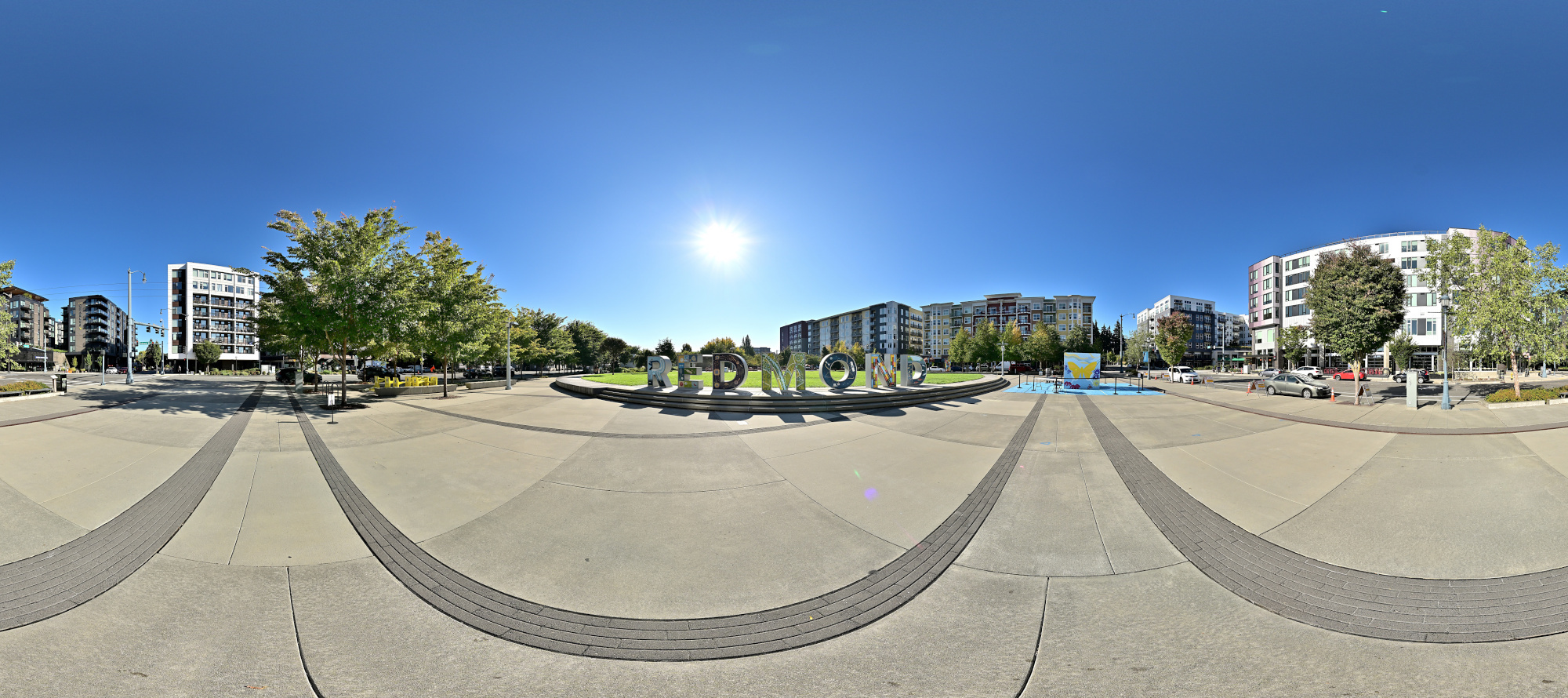
1/800s f/5,6 ISO 100/21° f=7,5mm
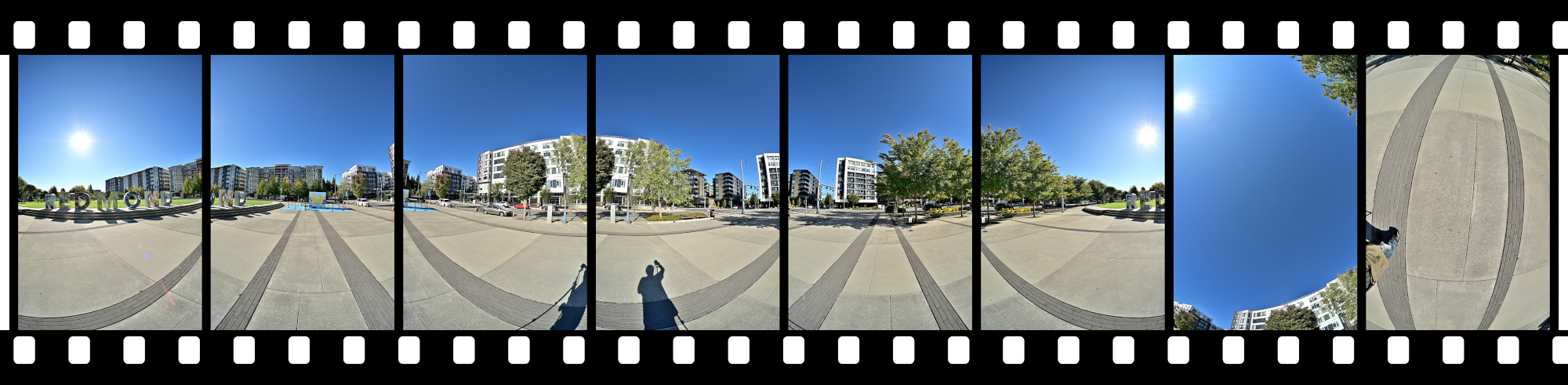
The World around Redmond.
Transversal Mercator Projection straightens out REDMOND.
Buoyant Pavilion
My panorama for the WWP event Deception features the Buoyant Pavilion in Redmond Downtown Park.
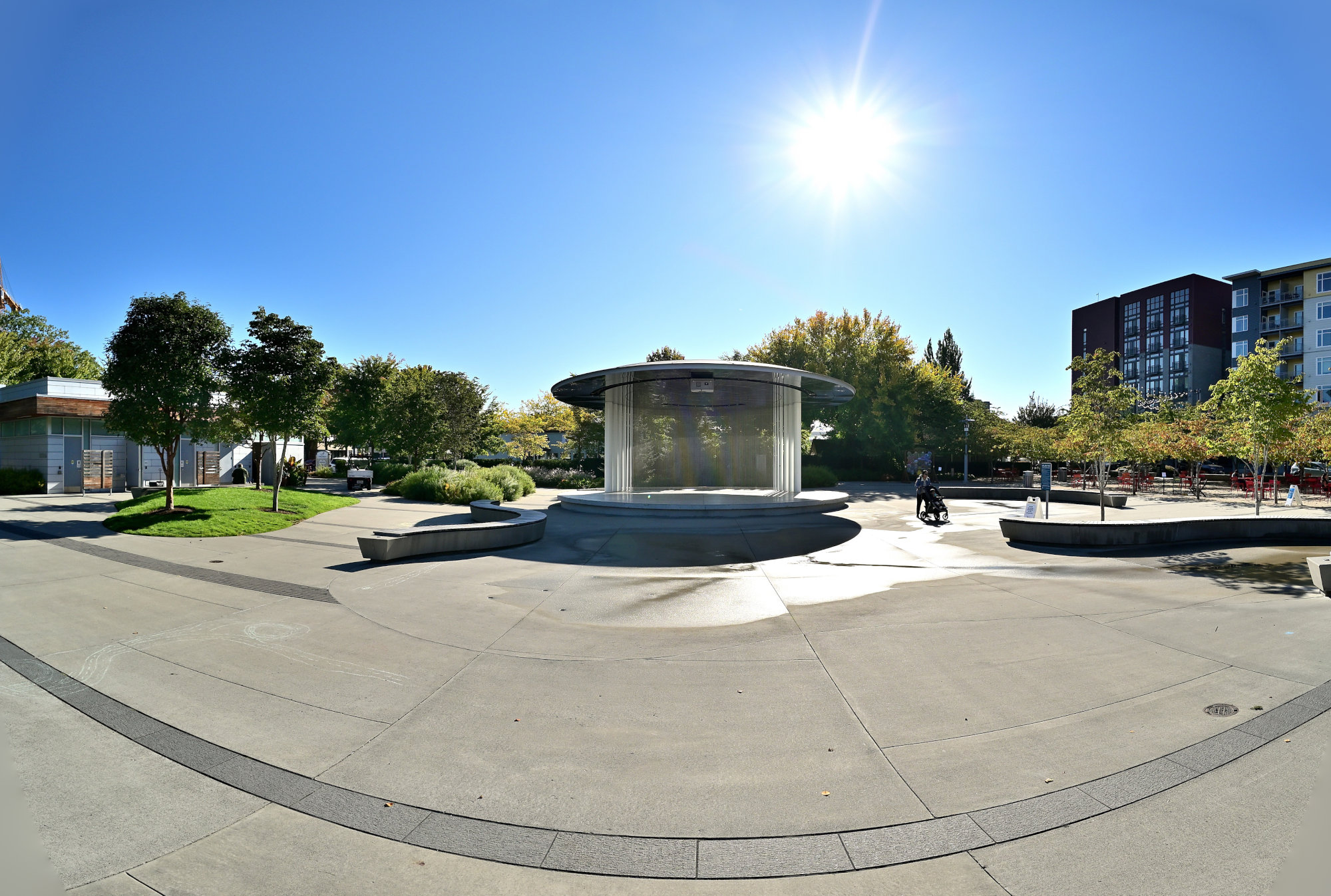
The Pavilion was designed by artist Jill Anholt, who wanted to create an inhabitable sculpture that bridges Redmond's history and its tech-driven future. The concept is inspired by the historic wetlands landscape that once existed on this very site, which is represented by the reflective water surfaces and floating elements.
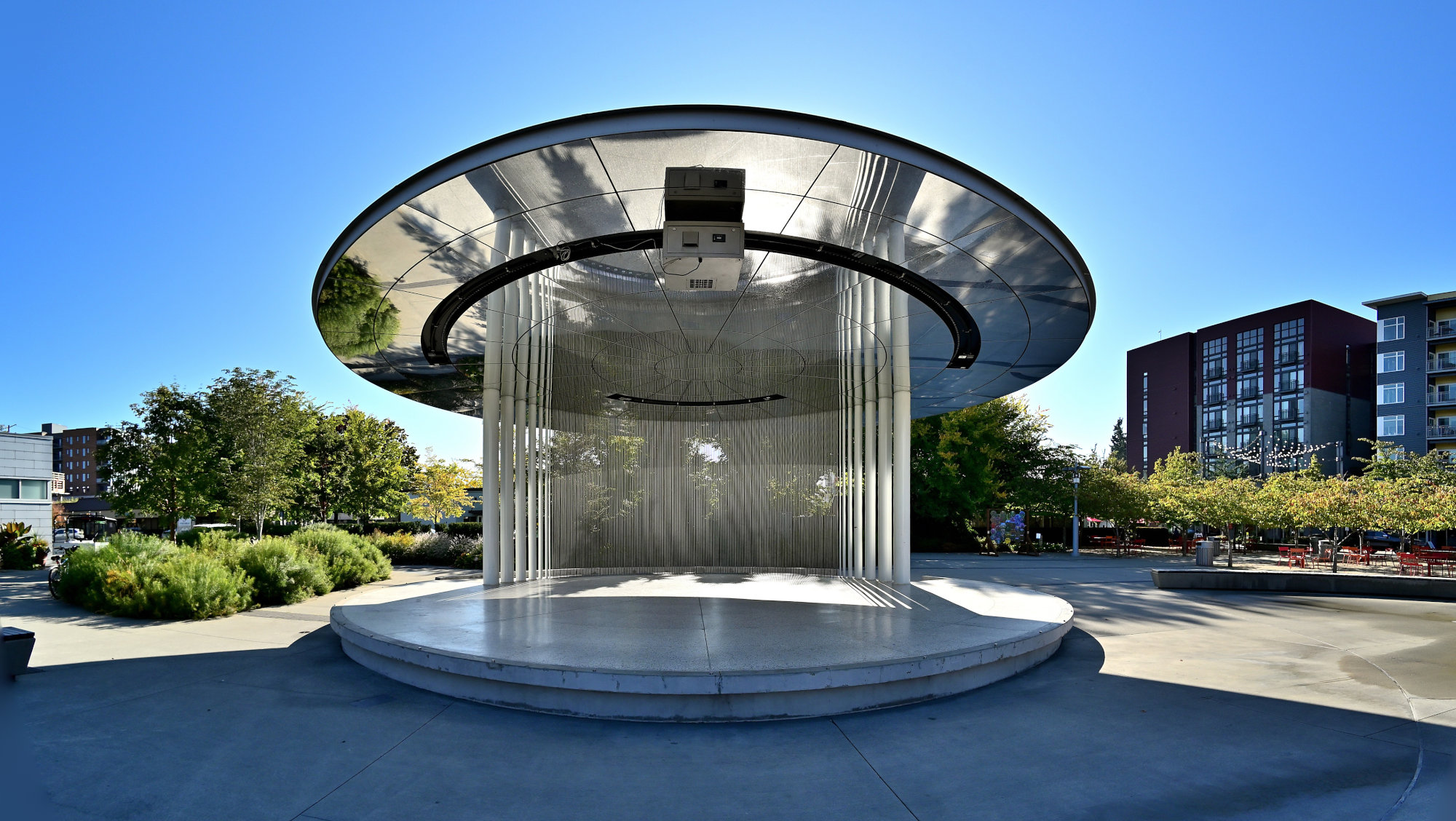
Anholt mixed this history with Redmond's modern identity as a major digital hub. Standing directly under the massive mirrored ceiling, the real surroundings and the architecture blur.
In a quiet visual deception of space, the heavy structure appears weightlessly suspended over thin, water-rimmed rods, catching both the natural park setting and the city's energy in an infinite loop.
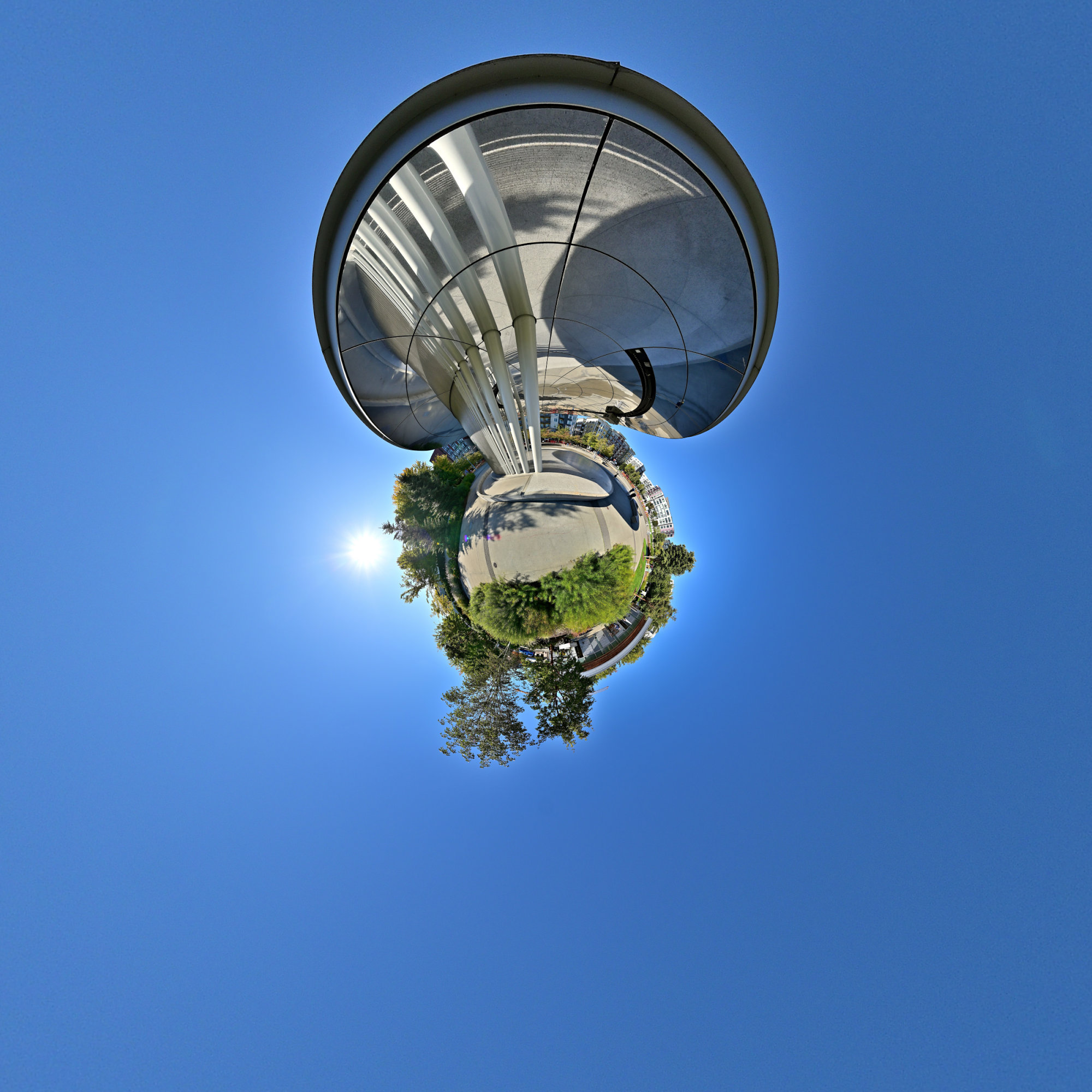
Interactive Panorama Buoyant Pavilion 1 360x180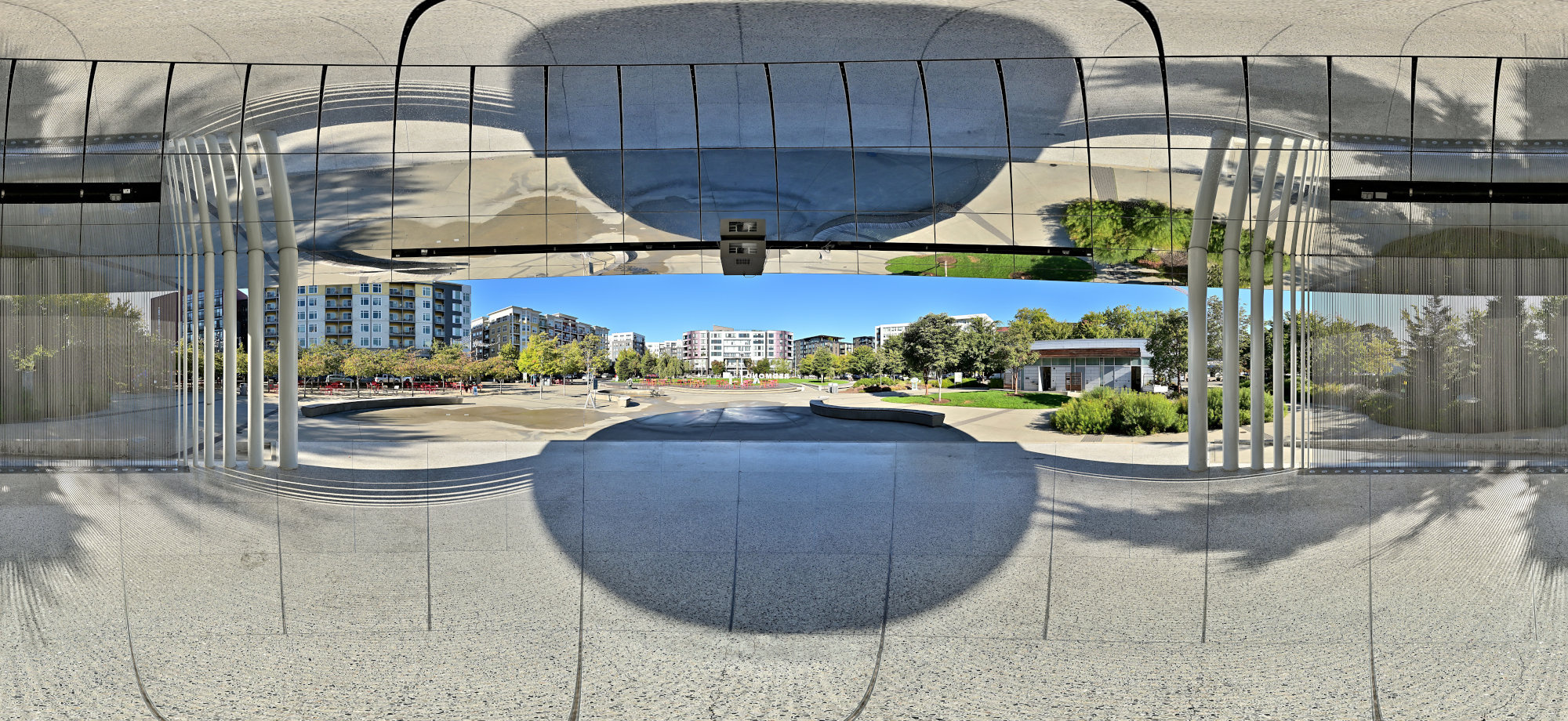
1/500s f/5,6 ISO 100/21° f=7,5mm
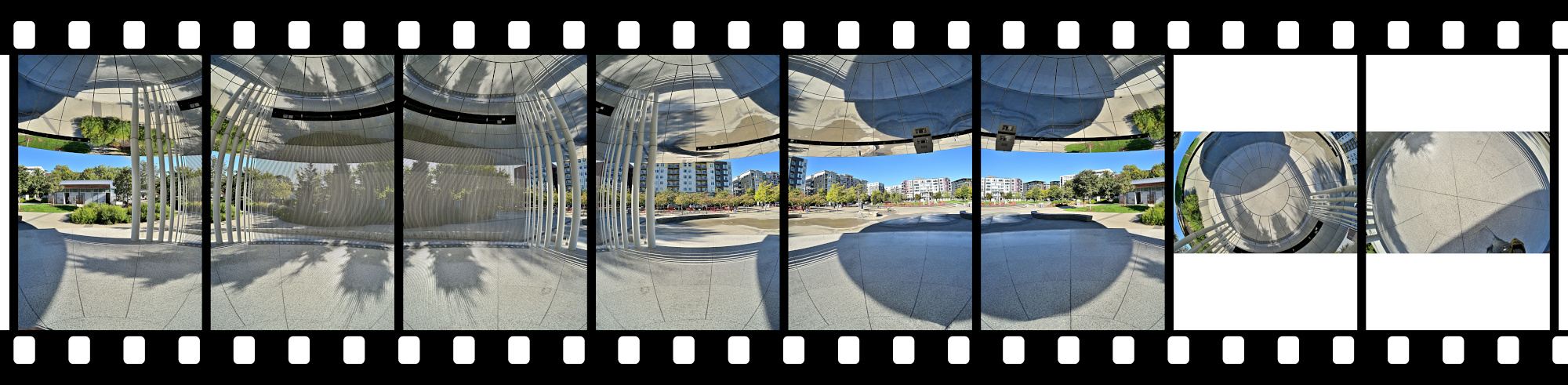
Looking through the stargate portal of the Buoyant Pavilion.
Interactive Panorama Buoyant Pavilion 2 360x180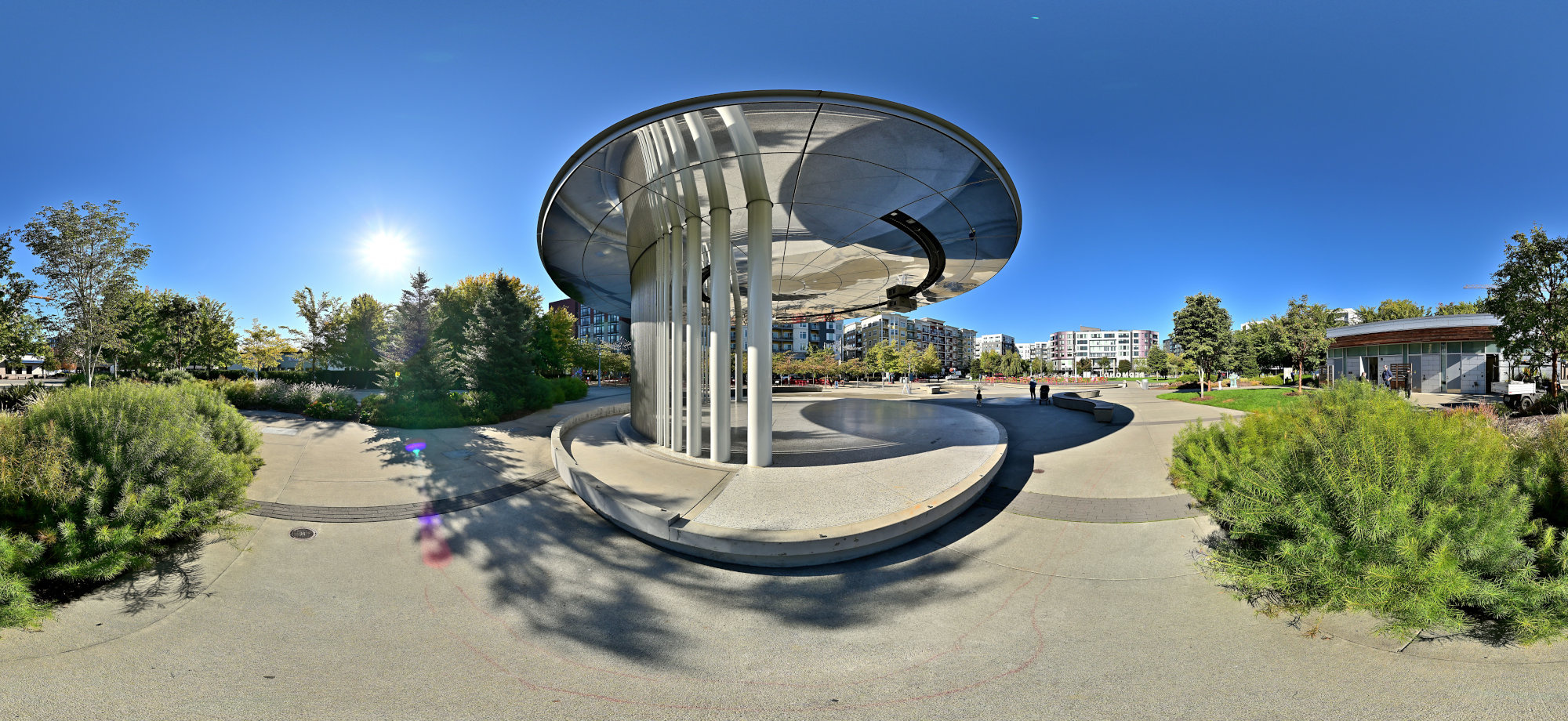
1/800s f/5,6 ISO 100/21° f=7,5mm

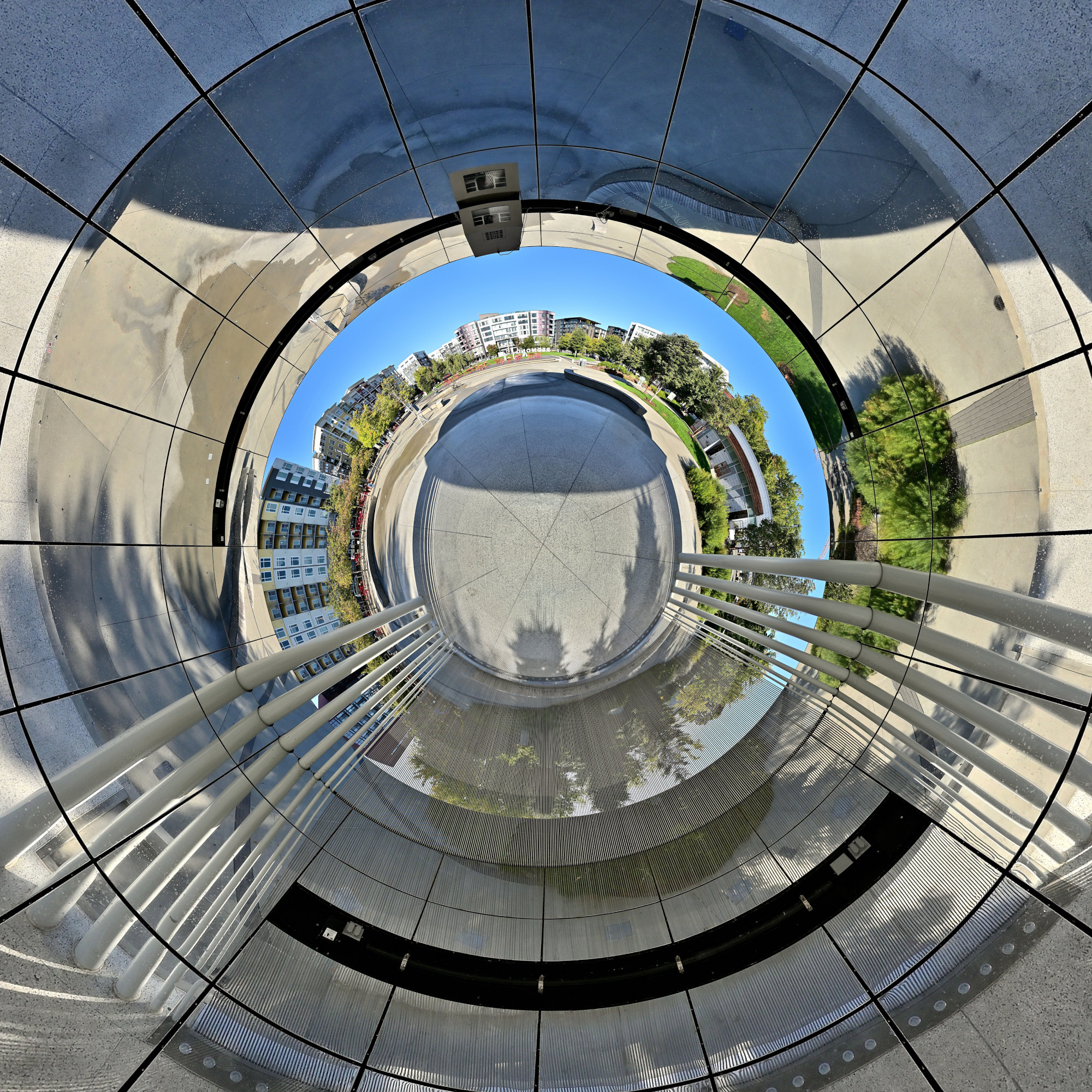
Planet Redmond. Composition: One pavilion, trees, and a bit of skyline.
Sammamish River Trestle
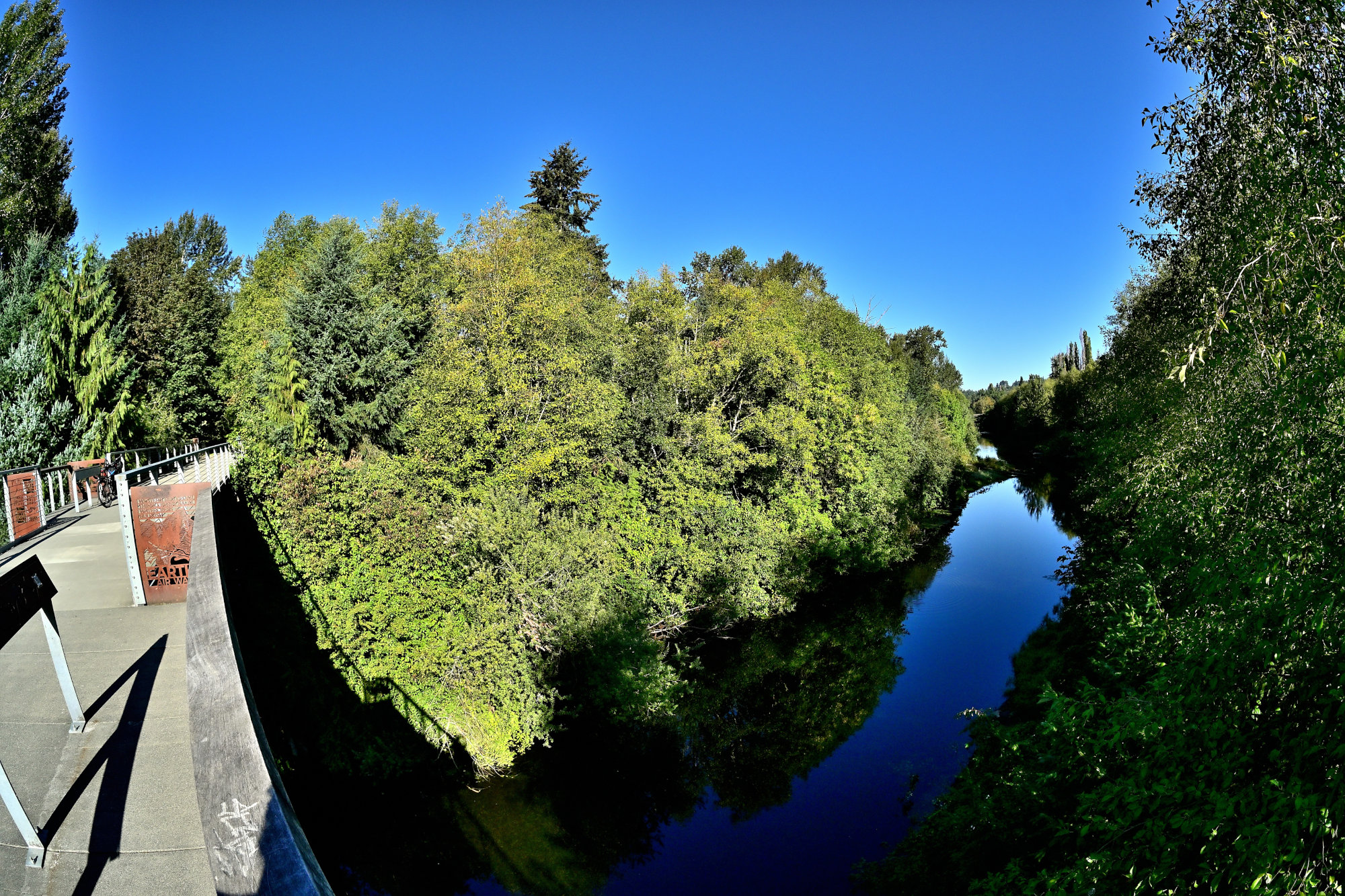
Once it was a railway bridge, built to haul heavy timber and freight across a changing landscape. Today, the Sammamish River Trestle serves a beautifully different purpose.
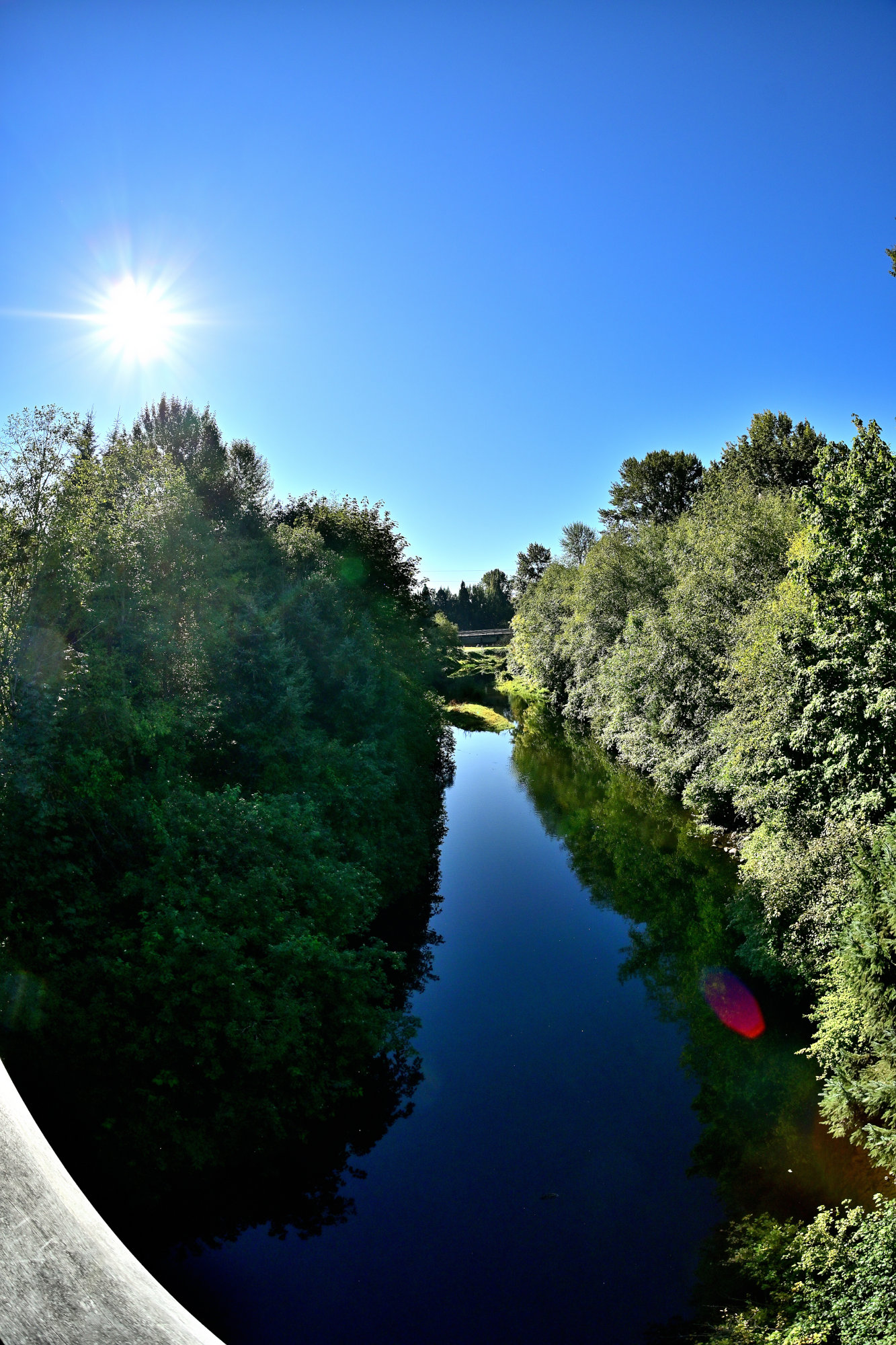
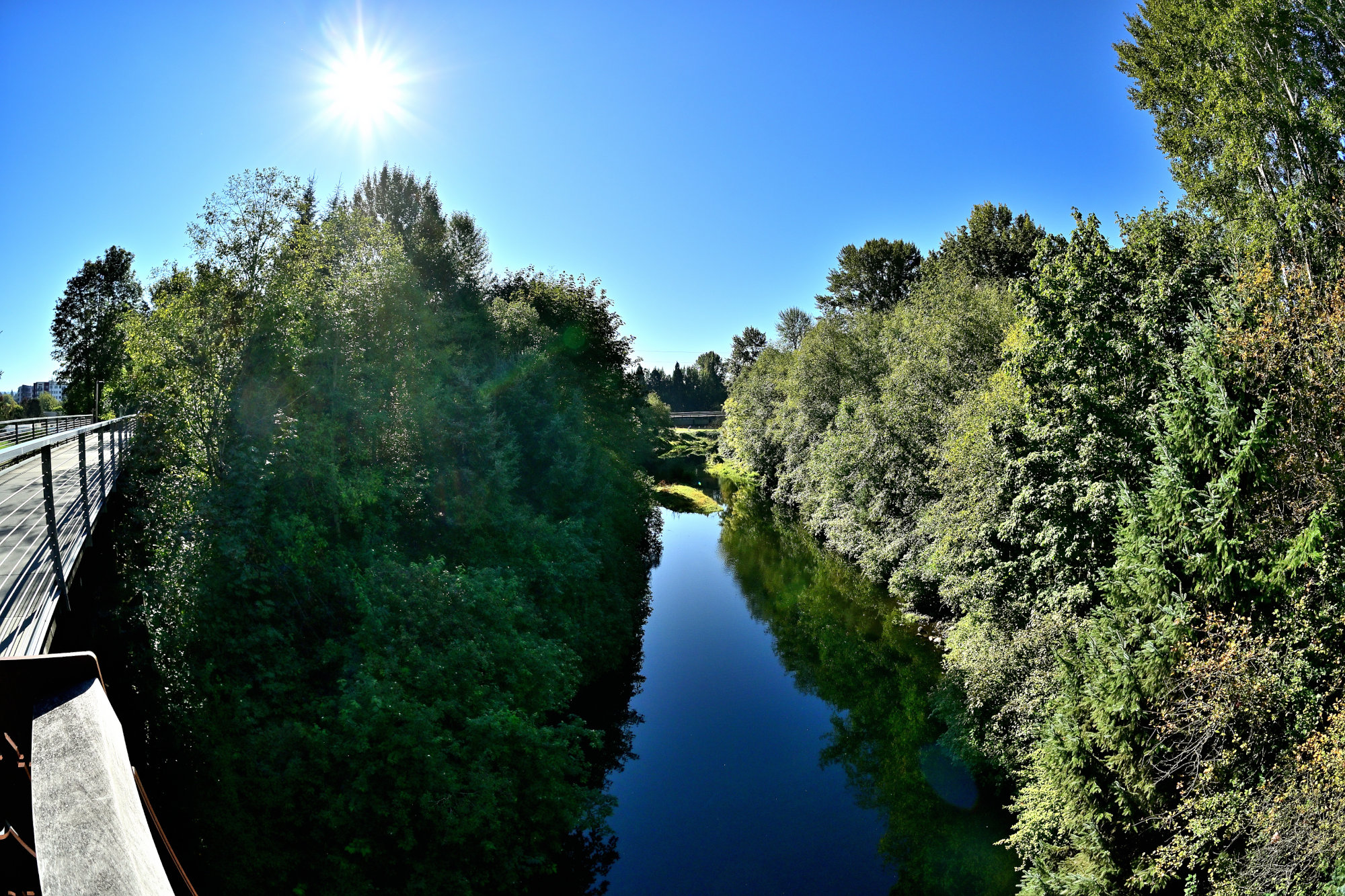
The view from this historic structure presents a peaceful illusion of absolute wilderness. It completely hides the surrounding Redmond tech hub behind dense trees and calm, slow-moving currents, effortlessly deceiving visitors into believing they are miles away from any urban environment.
Trestles: Frames, Crossbeams, and Heritage
The word trestle originates from the Old French word trestel, meaning a crossbeam or a supporting frame, which was originally derived from the Latin transtrum for a beam. In engineering and architecture, a trestle is a rigid framework composed of short beams and slanted legs. These legs are often configured in a series of inverted V shapes called bents, which are designed to support an elevated bridge structure.
In the 19th and early 20th centuries, timber trestle bridges became iconic staples of American railroading. They were brilliant because they could be erected rapidly using local timber to span deep valleys, swamps, and rivers without requiring massive stone masonry or expensive ironwork.
Bridging the Past and Present
The story of the Sammamish River Trestle begins in the late 1880s. Before the arrival of iron tracks, the marshy Sammamish Valley relied on slow water routes like pole-drawn barges and small steam-powered scows to transport goods. That changed in early 1888 when the Seattle, Lake Shore and Eastern Railway (SLS&E) pushed its tracks directly through Redmond.
The railway built this trestle over the river to overcome the challenging, flood-prone wetlands. For over 30 years, it acted as the lifeblood of Redmond's early economy, moving passengers and hauling massive loads of logs from the logging boom straight to local mills and global markets.
Eventually, as the logging era faded and alternative transport grew, commercial freight service dwindled and finally stopped by the early 2000s. Instead of being demolished, this piece of industrial history was preserved, retrofitted with pedestrian walkways, and seamlessly incorporated into the modern Sammamish River Trail network. Standing on it today, you are quite literally walking on the historic skeleton of the transportation line that put Redmond on the map.
Interactive Panorama Sammamish River Trestle 360x180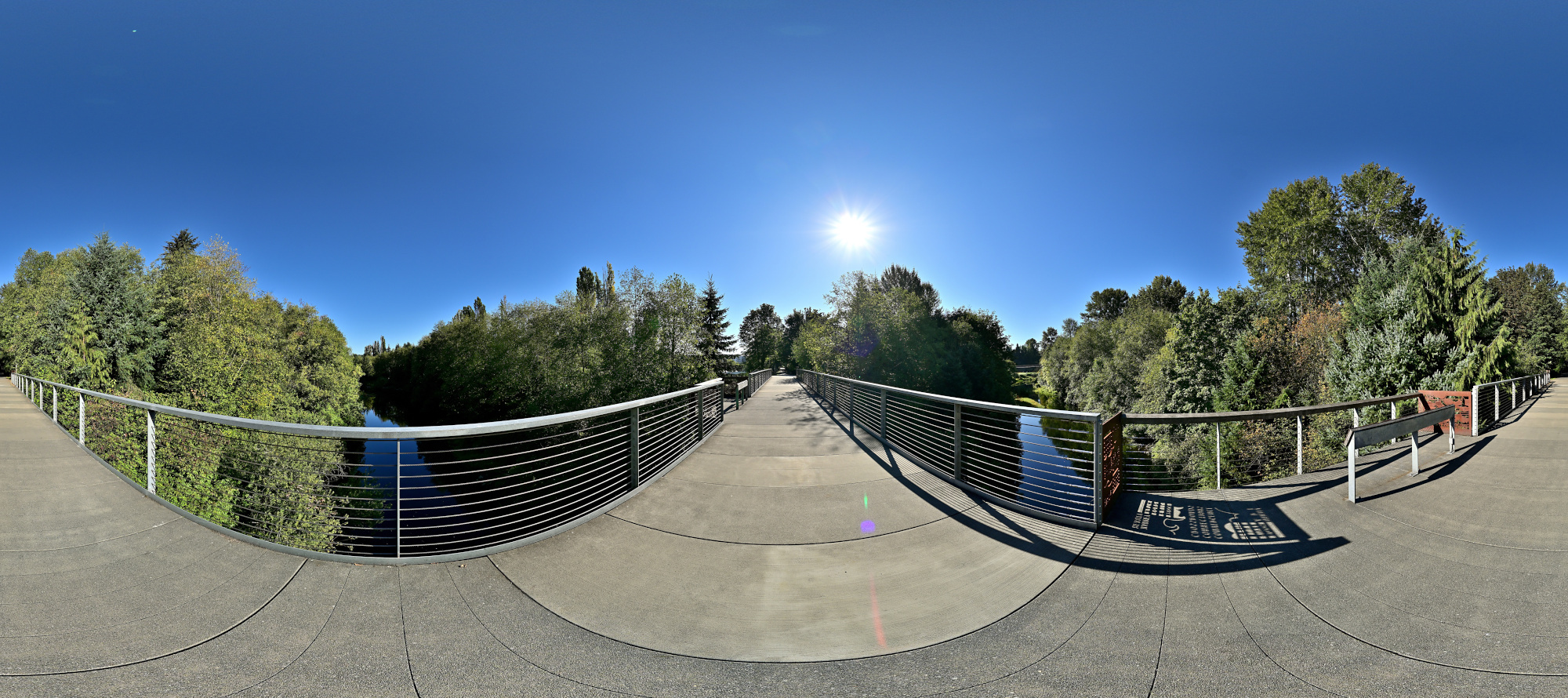
1/1000s f/5,6 ISO 100/21° f=7,5mm
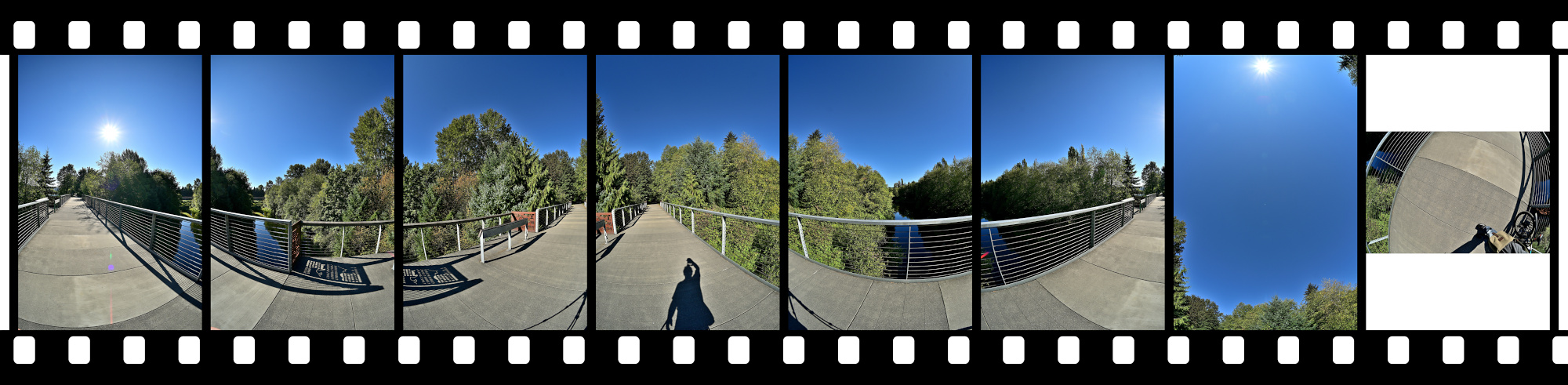
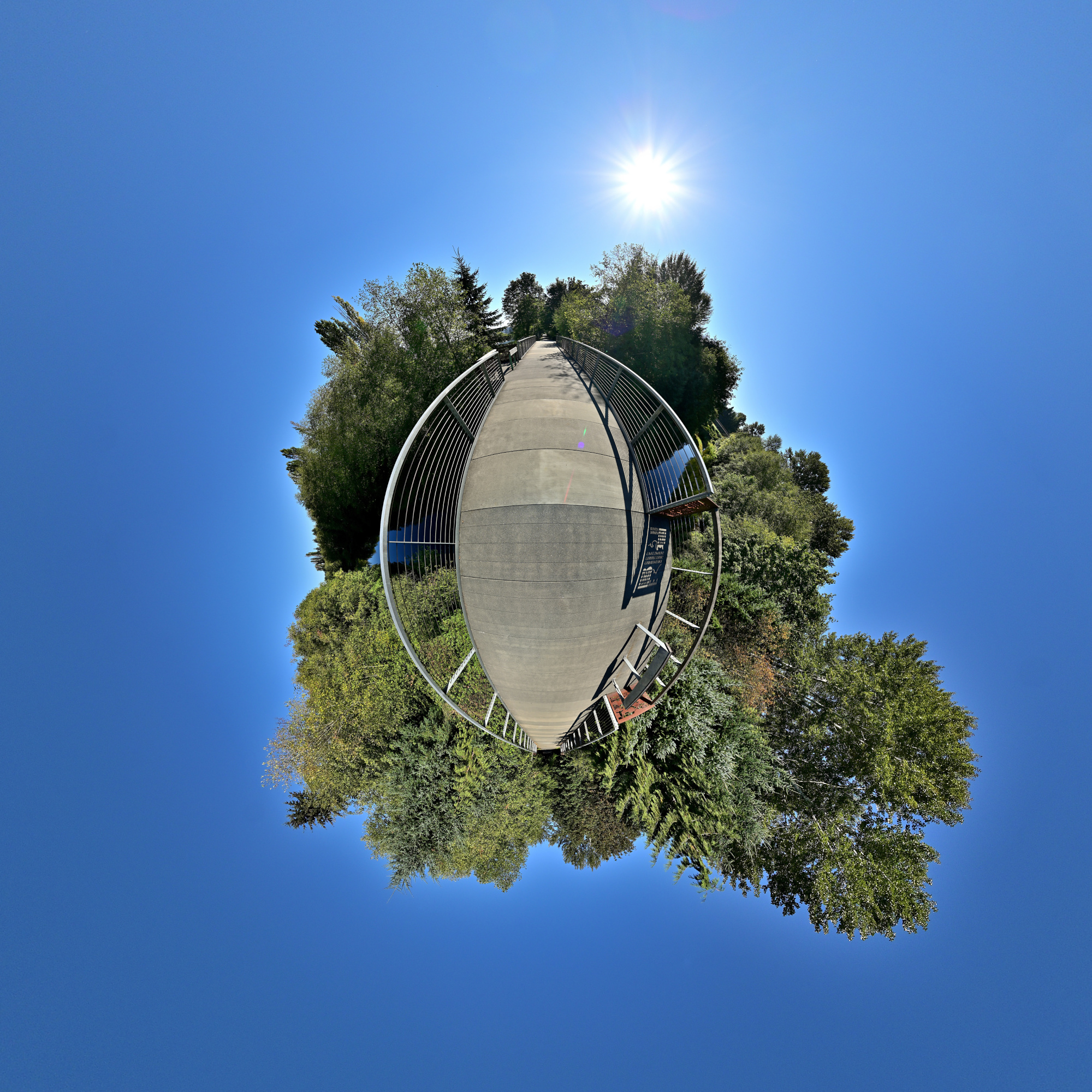
A bridge that spans the world of Redmond.
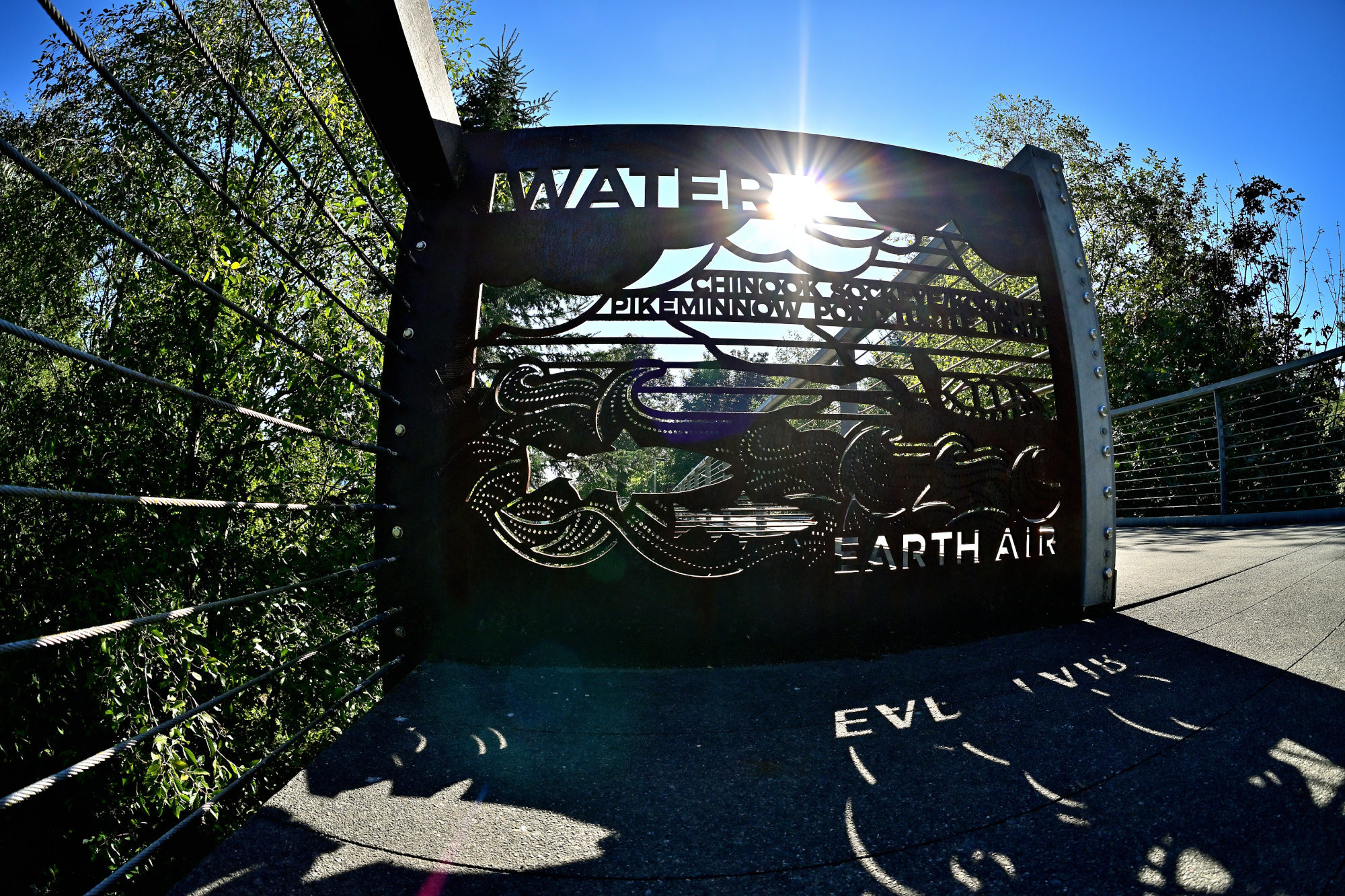
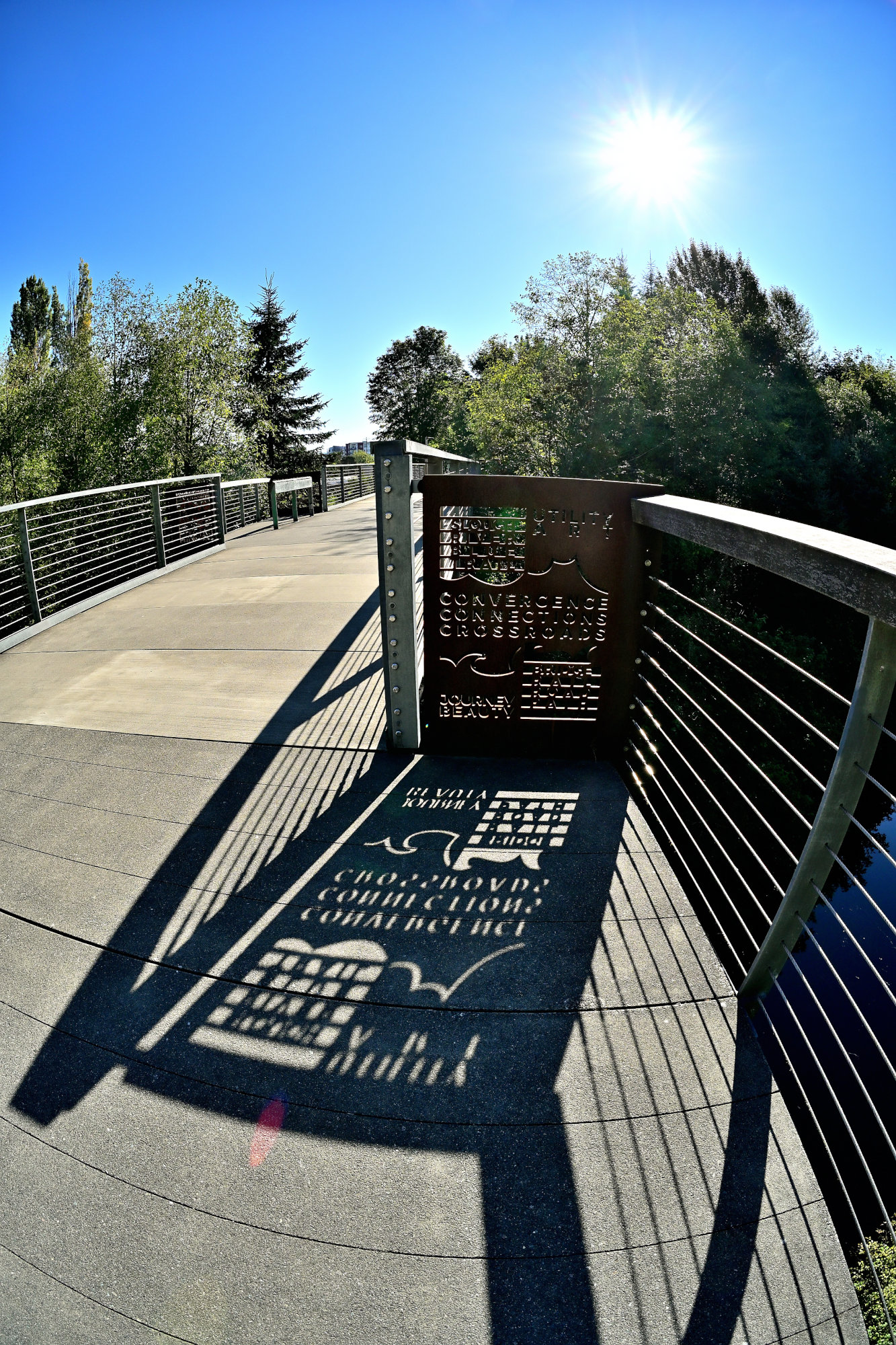
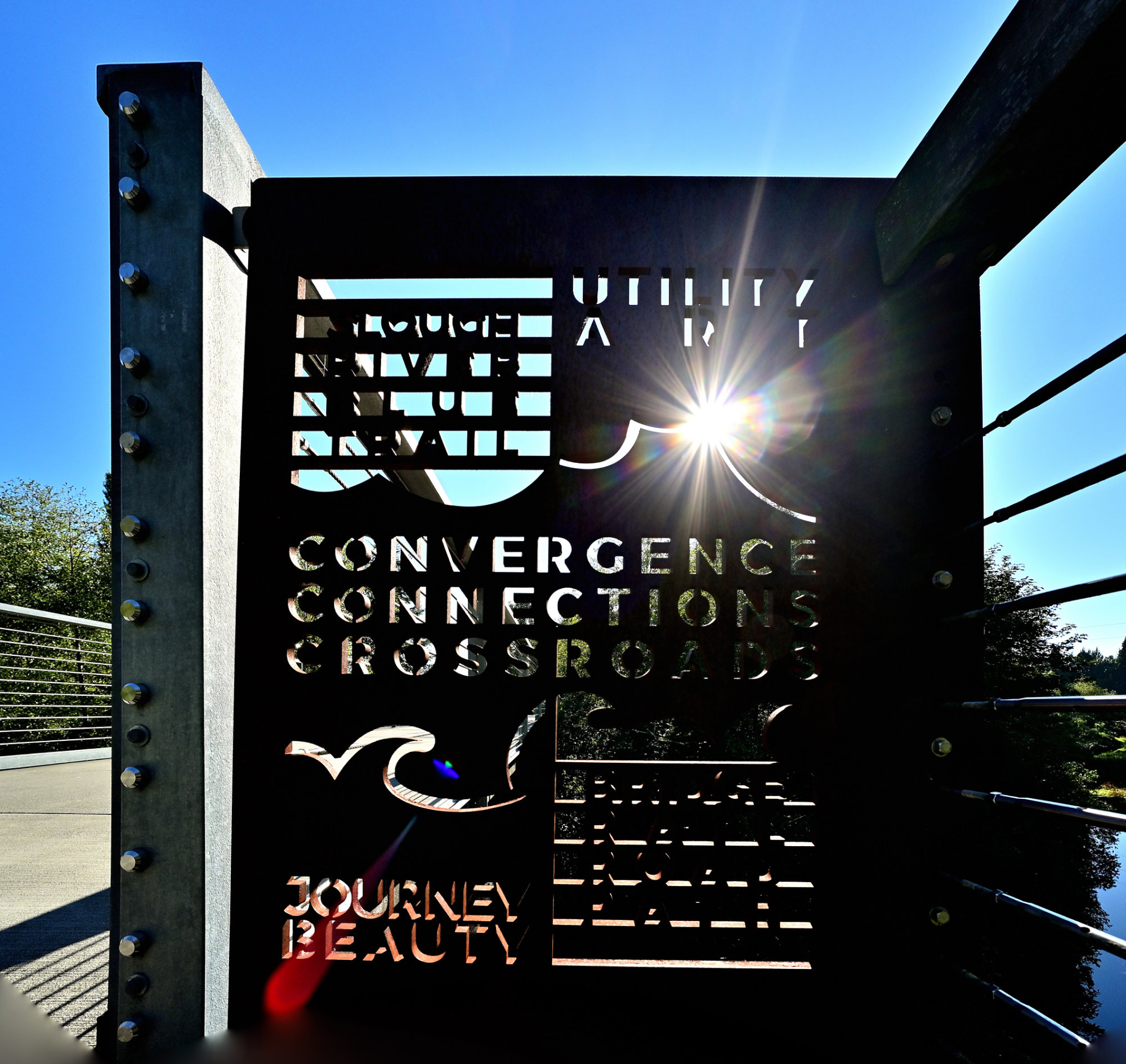
Framed in Steel with Stories Cut from Half Inch Plate
These massive handrail plates double as an open-air gallery along the trestle. Cut directly into the heavy steel are bold silhouettes of local wildlife and clear links to early railroad history. This unique metalwork reflects an art installation based on the themes of Earth, Air, and Water, inspired by the work of Redmond's very first Poet Laureate, Rebecca Meredith.
Overlake Village Station Pedestrian Bridge
This viewpoint showcases the interior of the bridge, highlighting a masterful architectural deception created by local artist Leo Saul Berk. Titled Verdant, the installation features 1026 vertical aluminum louvers decorated with over 156k hand-painted rectangles.
From either end of the walkway, the louvers seamlessly blend together to trick the viewer into seeing a solid, lush green wall. However, as pedestrians and cyclists move past the gaps, the visual illusion shatters, breaking the forest scene apart to expose the State Route 520 traffic passing directly beneath.
Interactive Panorama Overlake Village Station Pedestrian Bridge 360x180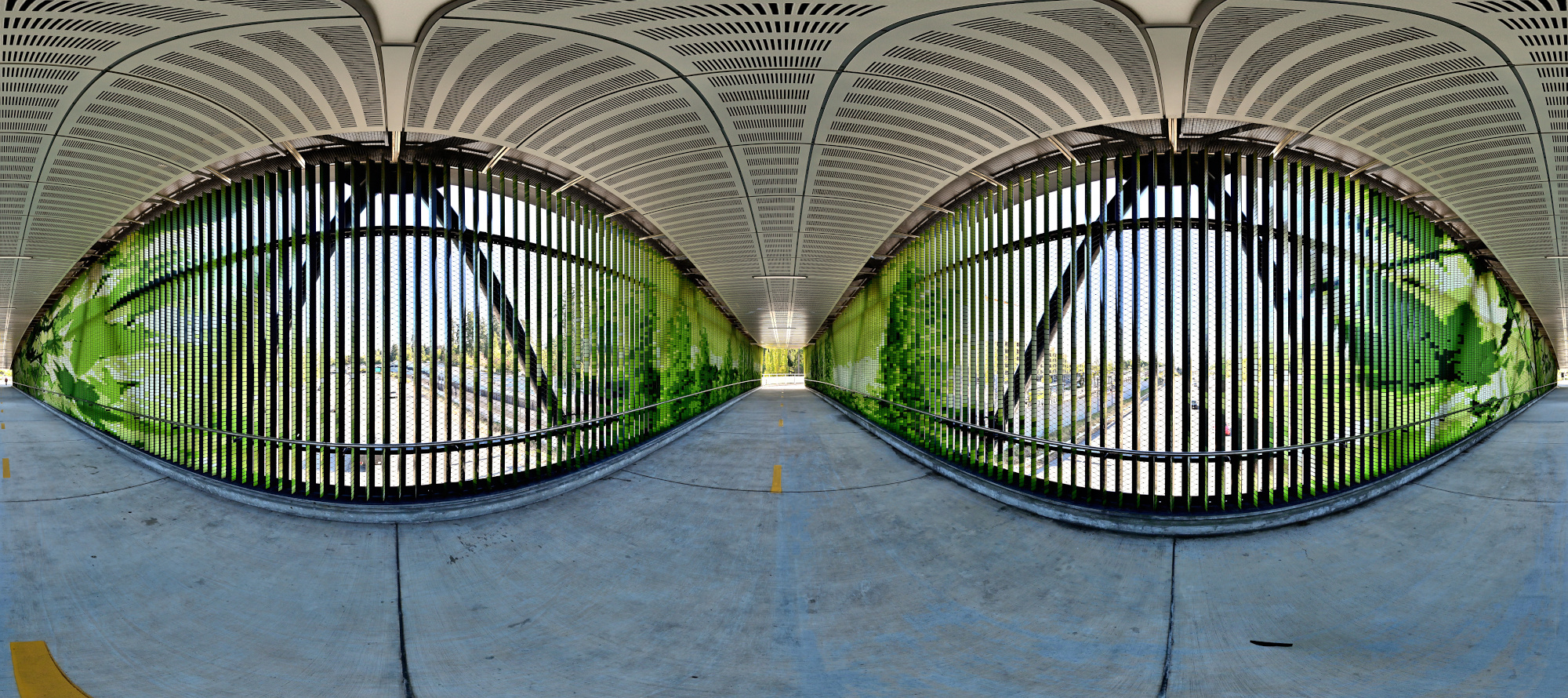
1/100s f/5,6 ISO 100/21° f=7,5mm
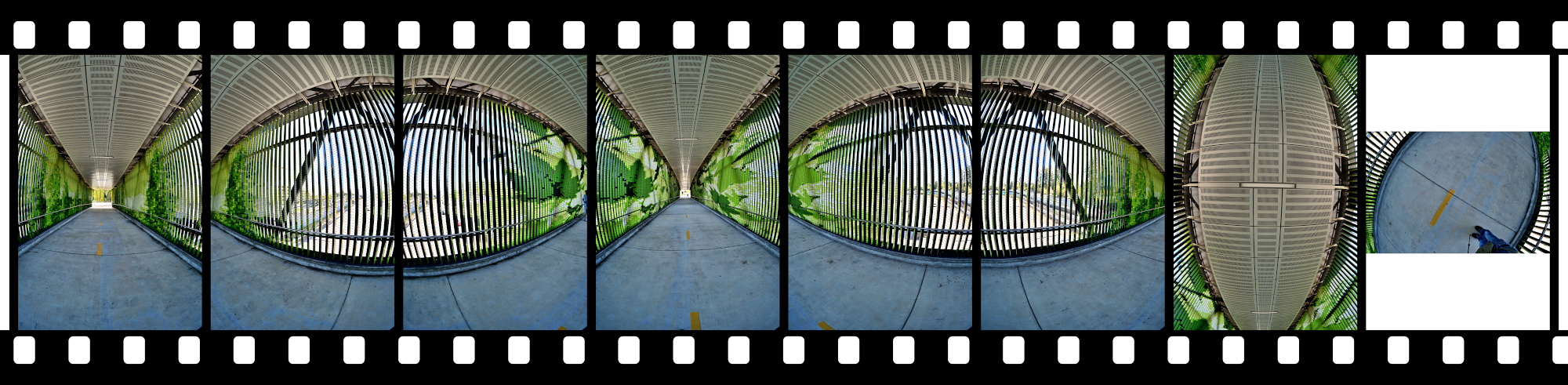
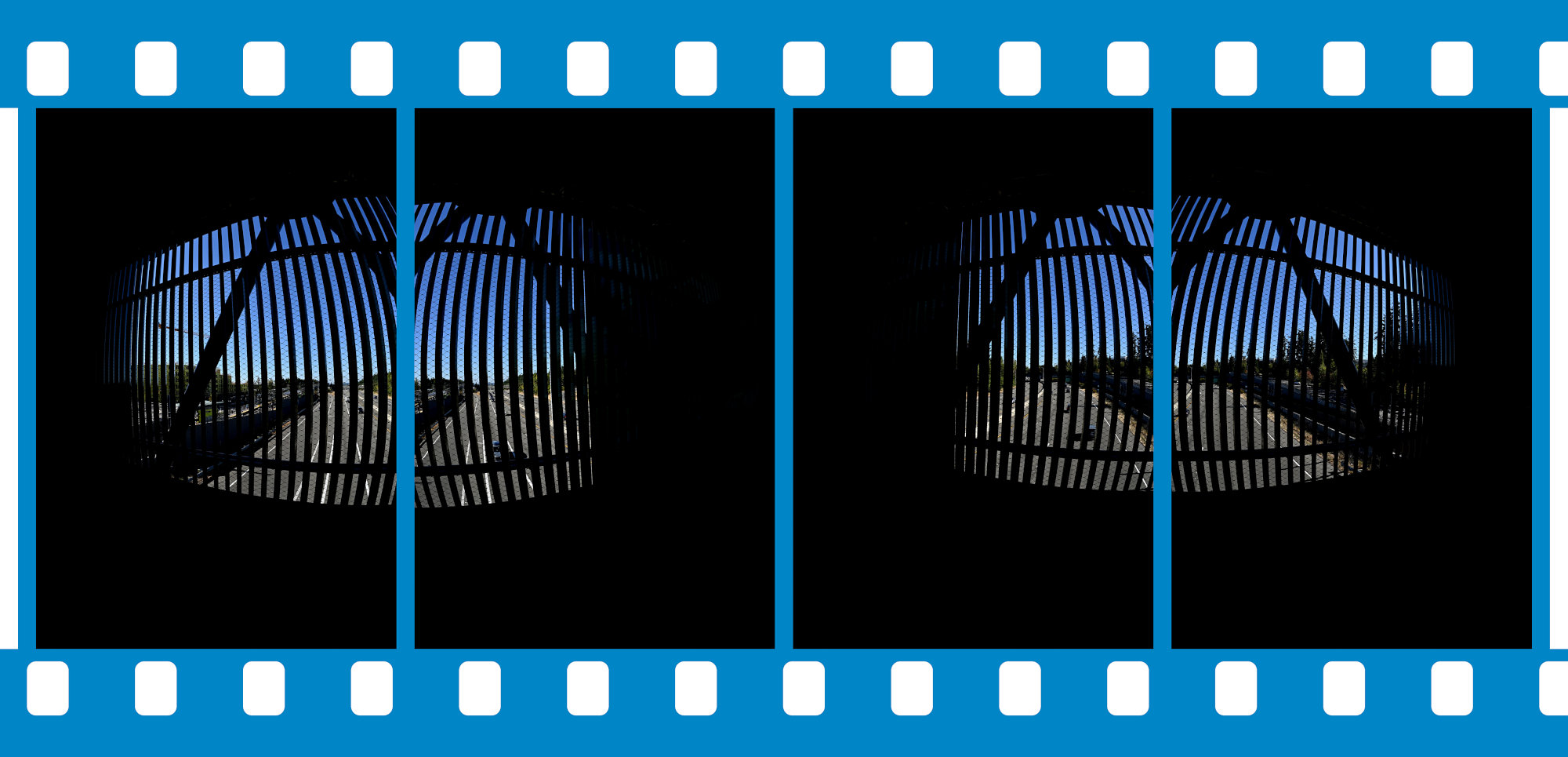
Our eyes have a higher dynamic range than a camera. When we look at a bridge, we can see both the dark interior and the bright sky clearly. A camera cannot do this in a single photo. This picture is exposed for the bright sky, so the sky looks natural. However, the camera makes the louvers and beams look much darker than they would appear to our eyes.
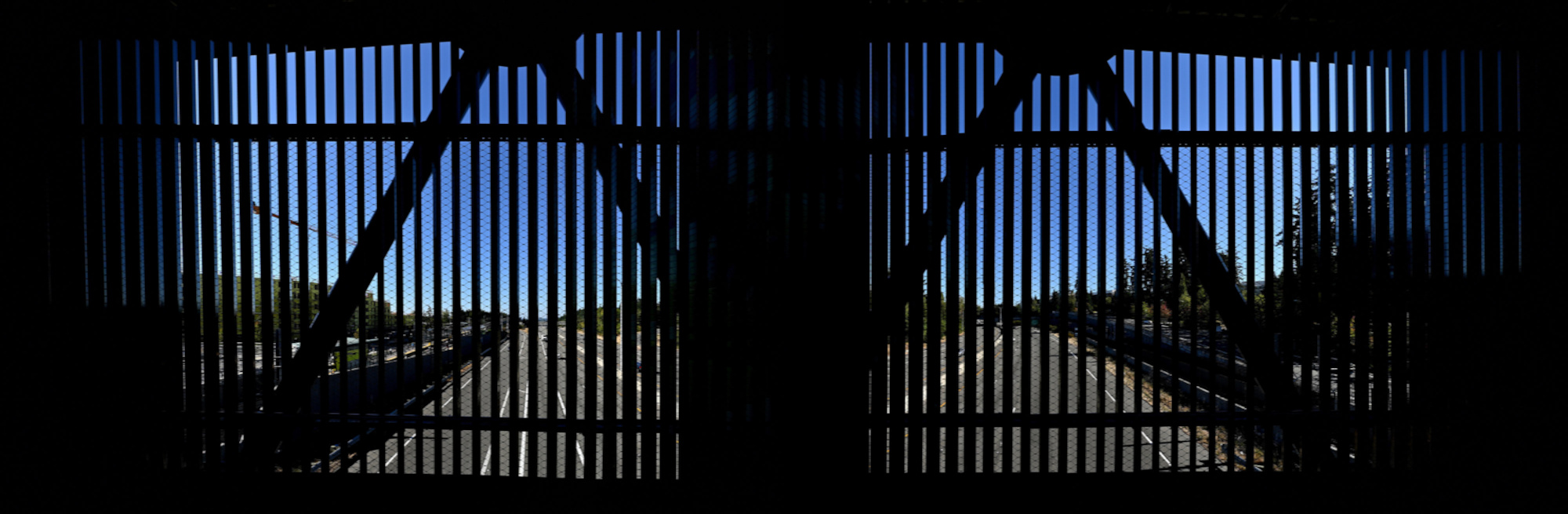
1/640s f/5,6 ISO 100/21° f=7,5mm